

Farrow and Ball Tallow vs. RAL Classic Pastel green
We understand how important it is to remember the details. The colors, each with their own unique beauty and value, are truly special. It's important to note that the colors have different hues. Farrow and Ball 203 leans towards orange hues, while RAL Classic RAL 6019 is green.
Farrow and Ball 203 and RAL Classic RAL 6019 differ significantly in saturation. Farrow and Ball 203 is more saturated.
They differ in their values, Farrow and Ball 203 radiating a lighter essence compared to RAL 6019.
Supported paint brands for comparison: Behr, Benjamin Moore, Farrow and Ball, Dulux, Jotun, Little Greene, NCS, Ral Classic, Ral Design, Ral Effect, Sherwin Williams, Valspar, Tikkurila
First color
Second color

| Farrow and Ball Tallow | RAL Classic Pastel green |
|---|---|
| Shared hue scale | |
12 | |
| Hue | |
| 35°orange | 97°green |
| Saturation | |
| 90% | 26%less saturated |
| Lightness?Simple 0–100% measure derived from the minimum and maximum sRGB channels. Use CIE L* for perceptual lightness. | |
| 92% | 74%darker |
| LRV?Light Reflectance Value measures the percentage of light reflected by a color, from 0 for absolute black to 100 for pure white. | |
| 86.57 | 58.29looks darker |
| CIE L?Perceptual lightness. CIE Lab lightness ranges from 0 for black to 100 for diffuse white. | |
| 94.465 | 80.424looks darker |
| Color difference ΔE*₀₀?CIE color difference. Smaller is closer: about 0–1 is imperceptible, 1–2 just noticeable, 2–5 a small difference, 5–10 clear, and more than 10 very different. | |
| 18.248 | |
| Temperature | |
| Warm | Cool |
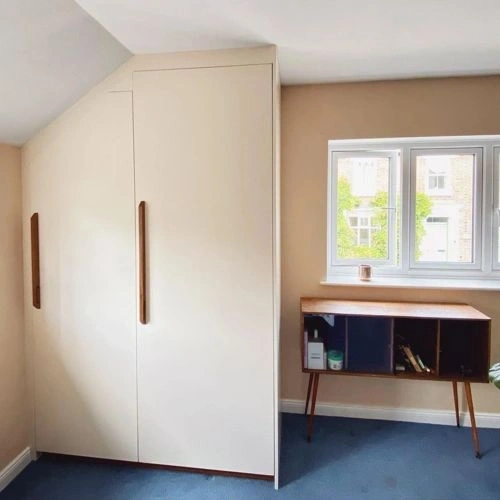

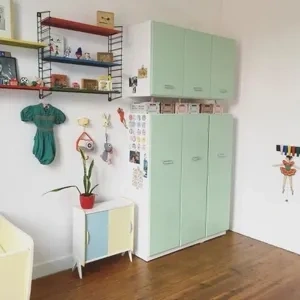
Please note that the color shown on this page is a representation and might not exactly match the real shade of the cards, fan decks, or color collections. Your monitor, browser, and screen angle can all affect how the paint looks, so it may not be the same as what you see here. All information on this page is based on RGB and HEX values provided by manufacturers.
It's important to keep in mind that the same color may appear differently on various surfaces due to the nature of those surfaces. For example, the same shade will look different on a rough wall compared to the smooth surface of cabinets.
Color comparisons featuring Farrow and Ball Tallow

203 Tallow vs PPU5-10 Heavy Cream


203 Tallow vs S 0804-Y50R

203 Tallow vs S 3030-Y10R

203 Tallow vs CB1 Hog Plum

203 Tallow vs 228 Shakespeare Tan

203 Tallow vs SW6127 Ivoire

203 Tallow vs SW6658 Welcome White

203 Tallow vs 20 Buff

203 Tallow vs 9908 Acid Drop

203 Tallow vs 9802 Butterweed

203 Tallow vs CC3 Citrona

203 Tallow vs 214 Arsenic

203 Tallow vs OC-13 Soft Chamois

203 Tallow vs OC-10 White Sand

203 Tallow vs AF-195 Terra Bella

203 Tallow vs 1432 Freesia

203 Tallow vs 9907 Double Cream

203 Tallow vs 53 Cane

203 Tallow vs SW9174 Moth Wing

203 Tallow vs CB9 Au Lait

203 Tallow vs 310 Beverly

203 Tallow vs S 0510-G70Y

203 Tallow vs SW9171 Felted Wool

203 Tallow vs 308 Tabernacle

203 Tallow vs 60 Smoked Trout

203 Tallow vs M280-2 Lunaria

203 Tallow vs 11 Stone White

203 Tallow vs HC-130 Webster Green

203 Tallow vs 203 Brighton

203 Tallow vs 67YY 82/072 Cosy Cashmere

203 Tallow vs 9902 Bombazine

203 Tallow vs 9909 Vichyssoise

203 Tallow vs 1487 Herbal Escape

203 Tallow vs 95 Marine Blue

203 Tallow vs 2059-10 Marine Blue