

Farrow and Ball Emerald Green W53
Contentsshow +hide -
| Official page: | Emerald Green W53 |
| Code: | W53 |
| Name: | Emerald Green |
| Brand: | Farrow and Ball |
What color is Farrow and Ball Emerald Green?
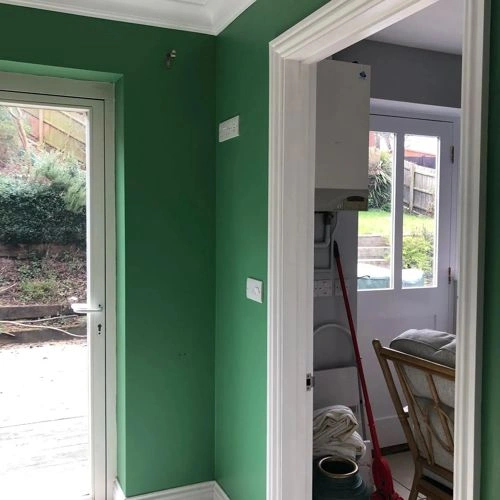
Farrow and Ball Emerald Green W53 is a softened mid-tone green with a gently muted, leafy character rather than a bright jewel-green finish. Its balanced mix of green with slight coolness keeps it fresh on walls, while the restrained saturation gives it enough softness for larger rooms. In daylight, Emerald Green reads clearer and more natural; under lower or warmer light, it can appear deeper and slightly more subdued. It suits kitchen cabinetry, garden-facing living rooms, or a painted interior door, especially alongside warm off-whites, pale wood, aged brass, and natural stone. For contrast, pair this shade with dusty pinks, clay-toned ceramics, or dark charcoal details.
Try before you buy

100% accurate
reusable paint samples
Peel, stick,
and repeat
Twice painted
with real paint

Next day
delivery
What are Farrow and Ball Emerald Green undertones?
Emerald Green reads as a midtone, softly saturated green with a clear yellow-green lean rather than a blue-green cast. The supplied digital sample looks fresh and moderately bright, with enough grayness to keep the color from feeling overly intense. Farrow & Ball describes it as a “bright, uncomplicated green,” which fits its visibly direct green character, though the sample also shows a slight warm, yellowward bias. Warm artificial light may bring that yellow-green bias forward, while cool daylight can make the green appear a little cleaner and less warm.
Manufacturer information used in this description: official color page.
HEX value:
RGB code:
115, 163, 113
Is Farrow and Ball Emerald Green cool or warm?
warm
cool
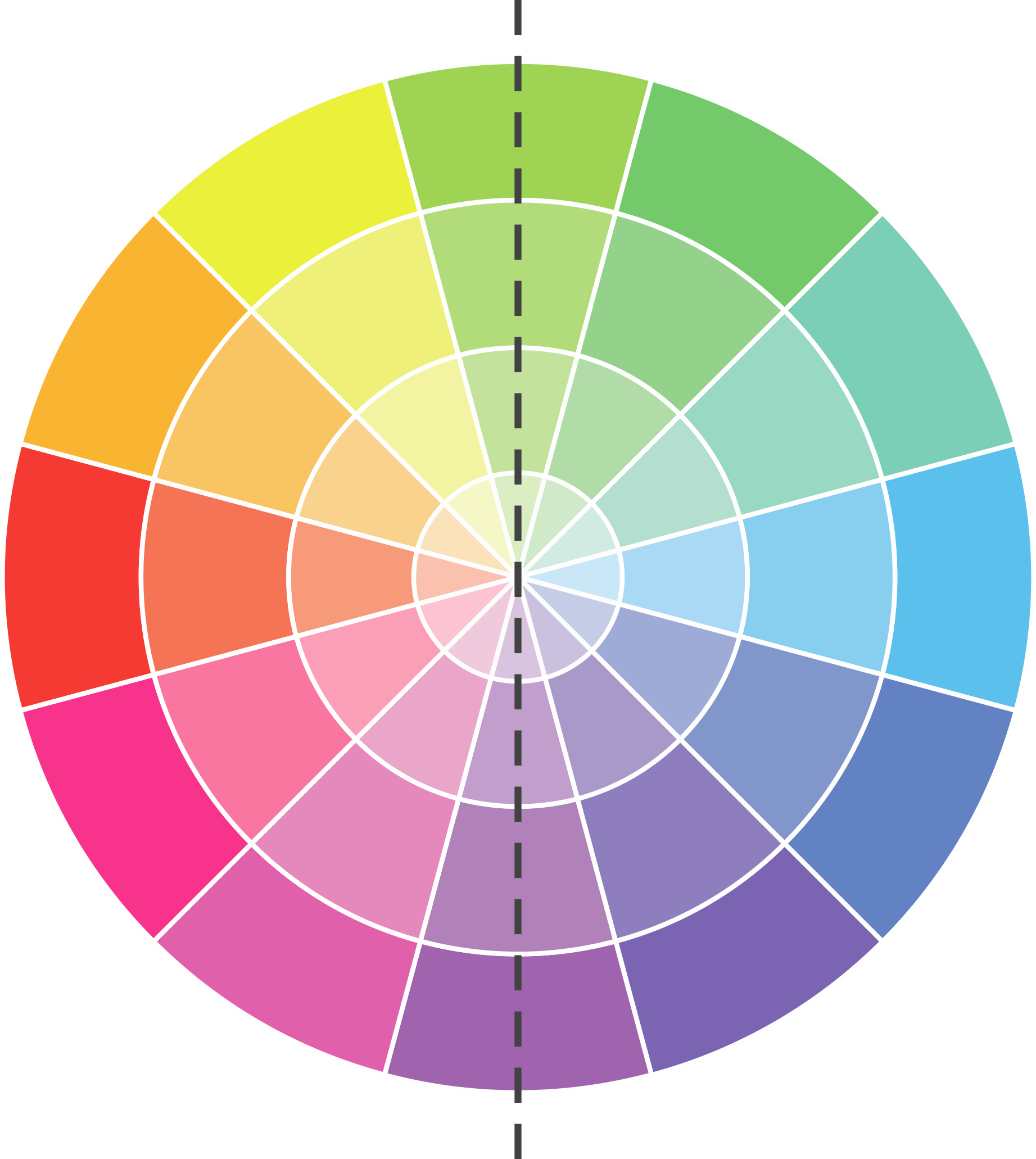
With a hue of 118°, this Green leans cool, but it is near the neutral line and may feel warmer in certain lighting.
W53 Emerald Green HSL code: 118, 21%, 54%
Hue - degree on a color wheel from 0 to 360. 0 is red, 120 is green, and 240 is blue.
Saturation is expressed as a percentage. At 0%, it appears as a shade of grey, and at 100%, it is in full color.
Lightness is also a percentage value. 0% is black, and 100% is white.
How light temperature affects Emerald Green
Natural Lighting. During the day, natural light shifts from about 2000 K at sunrise/sunset to 5500–6500 K at noon.
In addition, natural-light temperature depends on its direction:
| Direction of sunlight | Visible temp. | Hue | Duration |
|---|---|---|---|
| North | Cool | Bluish | All day |
| East | Warm | Yellow | Before noon |
| West | Warm | Orange-red | After noon |
| South | Warm | Orange-yellow | All day |
Artificial Lighting. When choosing bulbs, pay attention to their color temperature in Kelvins.
Use the slider to see how this Green shade looks under different lighting:
Coordinating colors.
Colors that go with Farrow and Ball Emerald Green:
Complementary color scheme
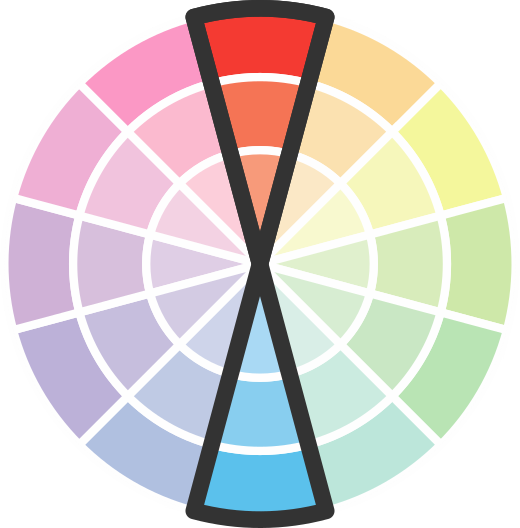
This color scheme is a combination of two shades that are opposite each other on the color wheel. The high contrast between these colors creates a vibrant and dynamic visual effect. For the color Emerald Green with a yellow hue, complementary colors are those with a purple hue close to 298, such as Farrow and Ball Pelt.
W53
Emerald Green


Color codes
We have collected almost every possible color code you could ever need.
Not sure what the difference between HEX and RGB is? We break down color models in plain language. Understanding color models
| Format | Code |
|---|---|
| HEX | #73a371 |
| RGB Decimal | 115, 163, 113 |
| RGB Percent | 45.10%, 63.92%, 44.31% |
| HSV | Hue: 118° Saturation: 30.67% Value: 63.92% |
| HSL | hsl(118, 21.37, 54.12) |
| CMYK | Cyan: 29.45 Magenta: 0.0 Yellow: 30.67 Key: 36.08 |
| YIQ | Y: 142.948 I: -12.536 Q: -25.714 |
| XYZ | X: 23.147 Y: 31.031 Z: 20.388 |
| CIE Lab | L:62.534 a:-26.267 b:20.982 |
| CIE Luv | L:62.534 u:-23.924 v:32.232 |
| Decimal | 7578481 |
| Hunter Lab | 55.705, -23.313, 17.293 |

Color equivalents
CB6
Raw Tomatillo
Farrow and Ball

70GY 30/254
Amazon Jungle 2
Dulux
70GY 38/330
Dublin Bay 5
Dulux
50GY 37/335
Moorland Magic 2
Dulux
Paradise Green 4
Dulux
90GY 28/319
Crushed Pine 2
Dulux


70GY 35/455
Grecian Garland 1
Dulux
198
Aquamarine - Deep
Little Greene

67GY 40/437
Poison Ivy
Dulux
Pixie Green
Dulux
76
Folly Green
Farrow and Ball
33
Pea Green
Farrow and Ball
Paradise Green 5
Dulux
RAL 6021
Pale Green
RAL Classic

30GY 38/368
Celtic Moor 2
Dulux
86
Garden
Little Greene

L380
Tikkurila

287
Yeabridge Green
Farrow and Ball
