

Farrow and Ball Romesco CB4
Contentsshow +hide -
| Official page: | Romesco CB4 |
| Code: | CB4 |
| Name: | Romesco |
| Brand: | Farrow and Ball |
What color is Farrow and Ball Romesco?
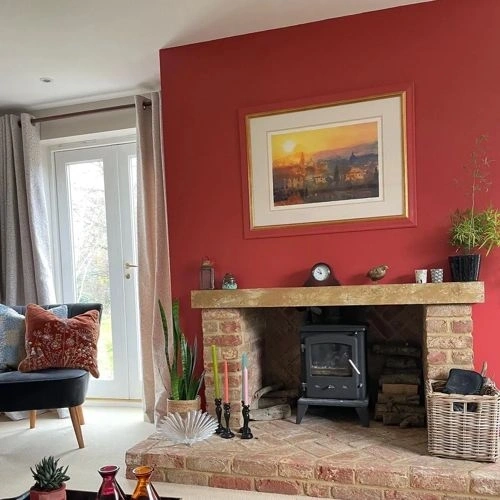
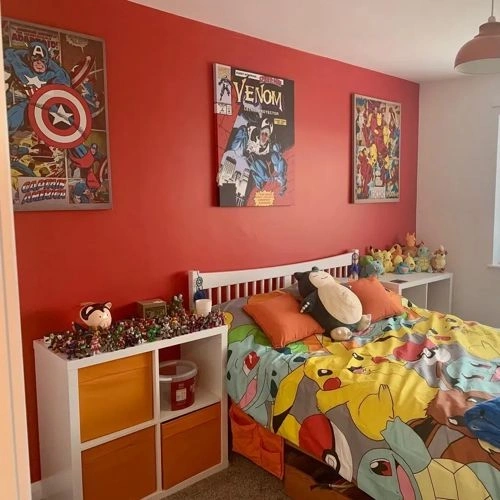
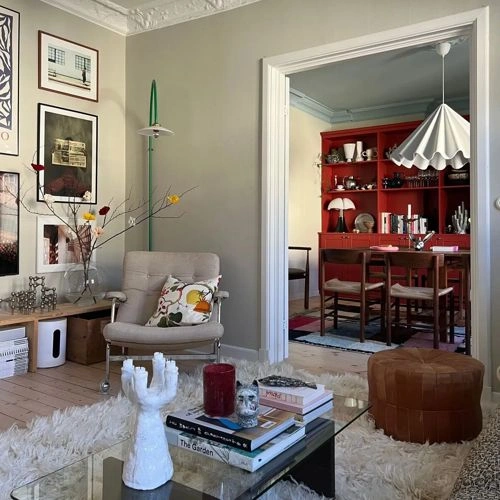
Farrow and Ball Romesco CB4 is a warm, earthy red with a softened brick character and a gentle terracotta cast. Its mid-to-deep depth gives walls clear presence without reading as an overly bright primary red. In strong daylight, Romesco shows its lively red warmth, while evening light draws it toward a richer, more grounded rust tone. It suits dining rooms, entryways, or a kitchen island particularly well, and can make cabinetry feel substantial and architectural. Pair it with warm off-whites, natural oak, aged brass, limestone, or deep olive accents for a room with layered, tactile contrast.
Try before you buy

100% accurate
reusable paint samples

Peel, stick,
and repeat

Twice painted
with real paint

Next day
delivery
What are Farrow and Ball Romesco undertones?
Romesco reads as a midtone, strongly saturated red with a warm, slightly yellow-leaning character in the supplied digital sample. That relative warmth can make it look closer to a tomato or paprika red than to a blue-based crimson, though the exact appearance will depend on the paint finish and surrounding colors. Farrow & Ball describes it as a “rich, brilliant red”; the manufacturer does not state a specific undertone. Warm artificial light may emphasize its yellow-red warmth, while cool daylight can make the red appear a little cleaner or less warm.
Manufacturer information used in this description: official color page.
HEX value:
RGB code:
186, 72, 69
Is Farrow and Ball Romesco cool or warm?
warm
cool
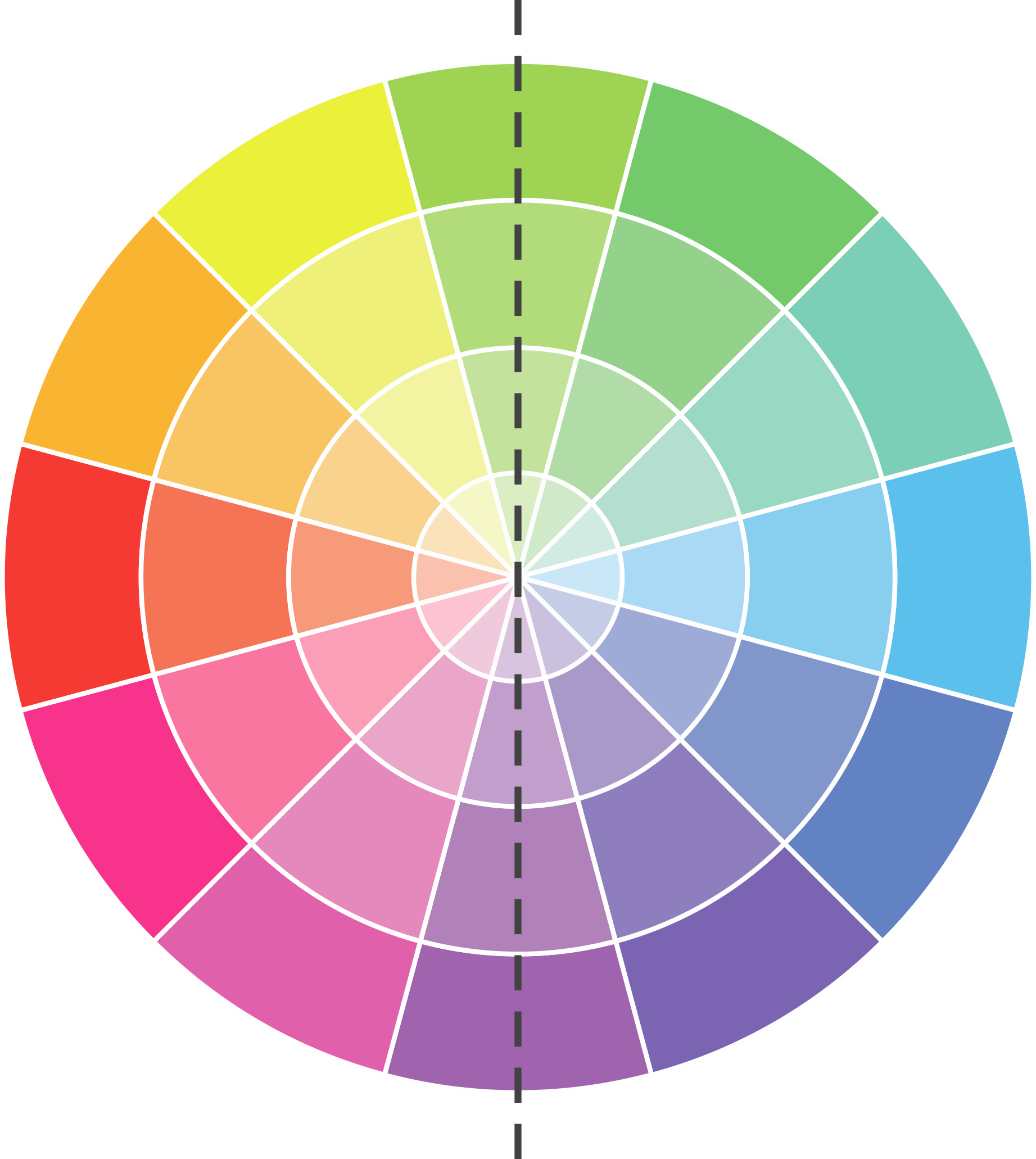
At 2° on the HSL hue wheel, this dark red sits firmly on the warm side.
CB4 Romesco HSL code: 2, 46%, 50%
Hue - degree on a color wheel from 0 to 360. 0 is red, 120 is green, and 240 is blue.
Saturation is expressed as a percentage. At 0%, it appears as a shade of grey, and at 100%, it is in full color.
Lightness is also a percentage value. 0% is black, and 100% is white.
How light temperature affects Romesco
Natural Lighting. During the day, natural light shifts from about 2000 K at sunrise/sunset to 5500–6500 K at noon.
In addition, natural-light temperature depends on its direction:
| Direction of sunlight | Visible temp. | Hue | Duration |
|---|---|---|---|
| North | Cool | Bluish | All day |
| East | Warm | Yellow | Before noon |
| West | Warm | Orange-red | After noon |
| South | Warm | Orange-yellow | All day |
Artificial Lighting. When choosing bulbs, pay attention to their color temperature in Kelvins.
Use the slider to see how this dark red shade looks under different lighting:
Coordinating colors.
Colors that go with Farrow and Ball Romesco:
Monochromatic color scheme
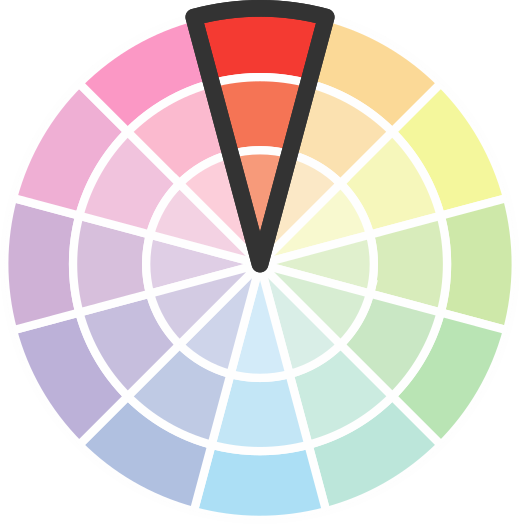
This scheme consists of various shades, tints, and tones of a single color. While it offers a perfect combination of hues, without accent décor it may become monotonous.
Lighter shades
CB4
Romesco

Darker shades
CB4
Romesco

Complementary color scheme
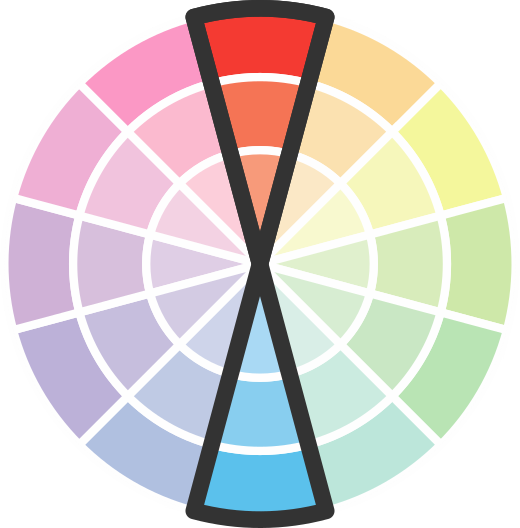
This color scheme is a combination of two shades that are opposite each other on the color wheel. The high contrast between these colors creates a vibrant and dynamic visual effect. For the color Romesco with a red hue, complementary colors are those with a green hue close to 182, such as Farrow and Ball Stone Blue and Yonder.


Color codes
We have collected almost every possible color code you could ever need.
Not sure what the difference between HEX and RGB is? We break down color models in plain language. Understanding color models
| Format | Code |
|---|---|
| HEX | #ba4845 |
| RGB Decimal | 186, 72, 69 |
| RGB Percent | 72.94%, 28.24%, 27.06% |
| HSV | Hue: 2° Saturation: 62.9% Value: 72.94% |
| HSL | hsl(2, 45.88, 50.0) |
| CMYK | Cyan: 0.0 Magenta: 61.29 Yellow: 62.9 Key: 27.06 |
| YIQ | Y: 105.744 I: 68.897 Q: 23.182 |
| XYZ | X: 23.643 Y: 15.507 Z: 7.377 |
| CIE Lab | L:46.32 a:45.834 b:25.916 |
| CIE Luv | L:46.32 u:85.445 v:19.874 |
| Decimal | 12208197 |
| Hunter Lab | 39.378, 38.262, 16.458 |
Color equivalents
212
Blazer
Farrow and Ball

10YR 15/500
Pepper Red
Dulux
2625
Monroe
Jotun
RAL 3018
Strawberry red
RAL Classic

Roasted Red
Dulux

10YR 16/407
Thai Magic 1
Dulux
9916
Harissa
Farrow and Ball
02YR 20/536
Wild Poppy
Dulux
Mahogany Red
Dulux
Red Beacon
Dulux
20207
Statement Red
Jotun
30YR 15/550
Volcanic Splash 4
Dulux
10YR 21/436
Lost Coral
Dulux
304
Bamboozle
Farrow and Ball

Volcanic Red
Dulux
10YR 13/437
Burnt Autumn 1
Dulux
00YR 15/410
Red Stallion 3
Dulux
247
Terre d' Egypte
Farrow and Ball