

Little Greene Air Force Blue 260
Contentsshow +hide -
- Little Greene 260 on kitchen cabinets (2 photos)
- Little Greene Air Force Blue reviews (9 photos)
- What are Little Greene Air Force Blue undertones?
- Is Air Force Blue 260 cool or warm?
- How light temperature affects on Air Force Blue
- Monochromatic color scheme
- Complementary color scheme
- Color comparison and matching
- Color codes
- Color equivalents
| Official page: | Air Force Blue 260 |
| Code: | 260 |
| Name: | Air Force Blue |
| Brand: | Little Greene |
| Collections: | Colours of England |
What color is Little Greene Air Force Blue?
Little Greene Air Force Blue 260 is a muted mid-tone blue with a noticeable blue-green cast and softened grey undertone. It reads cool and slightly weathered rather than bright, giving walls clear color without becoming sharp or overly nautical. In strong daylight, the greenish side of the blue may come forward, while lower or north-facing light can make it appear smokier and more subdued. Use it on kitchen cabinetry, a study wall, or exterior joinery alongside warm off-whites, pale oak, aged brass, and natural linen. For contrast, pair Air Force Blue with earthy clay tones or a deep charcoal rather than a competing vivid blue.
Little Greene 260 on kitchen cabinets (2 photos)
Want a stylish kitchen? View real-life photo examples of this fascinating cool blue hue is paired with backsplashes, countertops, and hardware.
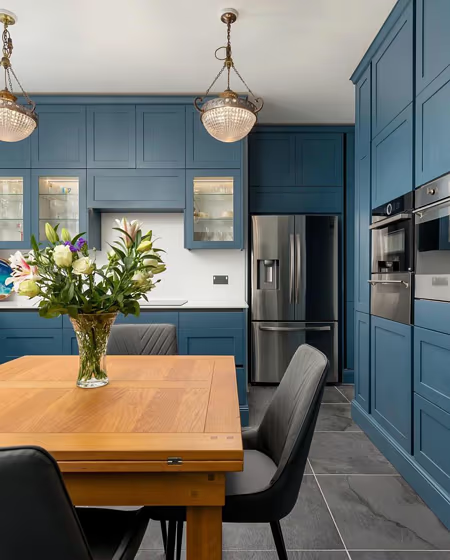
@haigkitchens
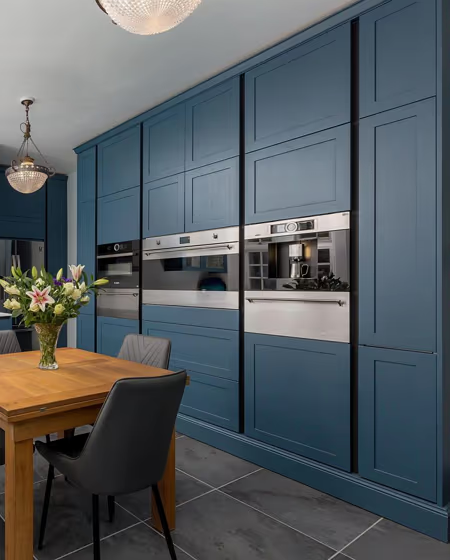
@haigkitchens
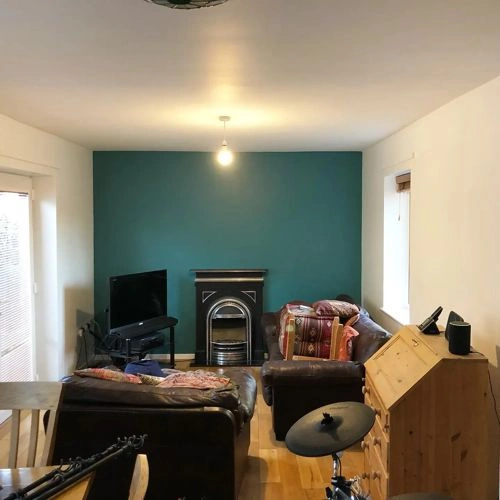
Little Greene Air Force Blue reviews (9 photos)
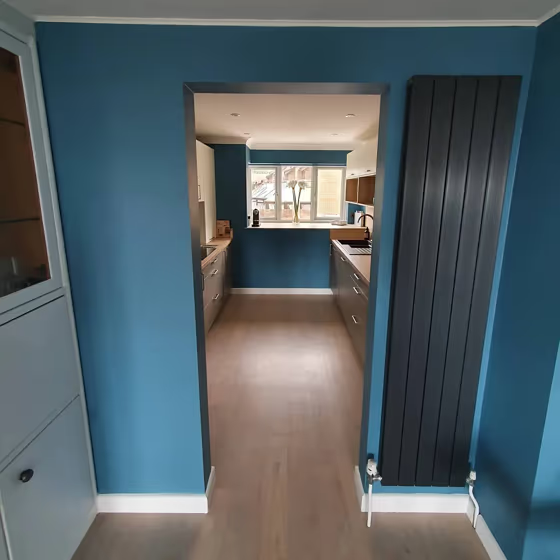
View the photos of real spaces painted with this blue that were not included in specific categories. Close-ups, painted furniture, storages and dressers, hallways, stairs and ceilings.
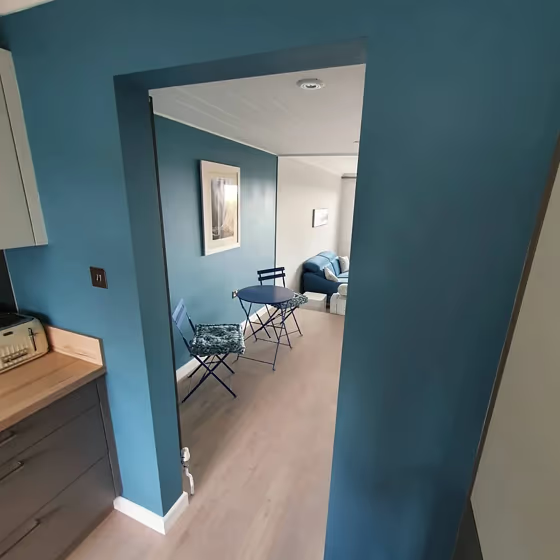
@calicopainters
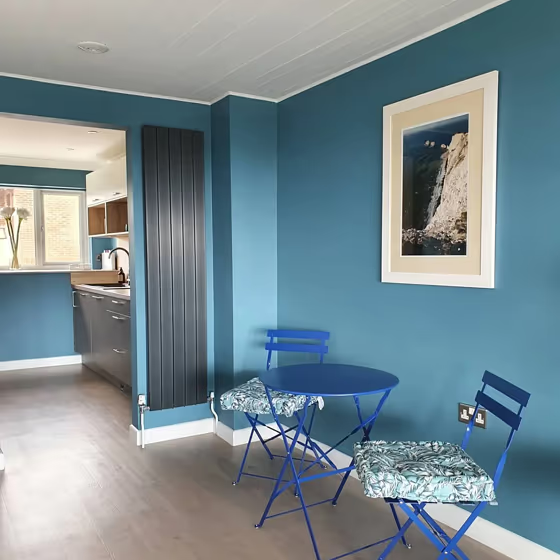
@calicopainters
@calicopainters
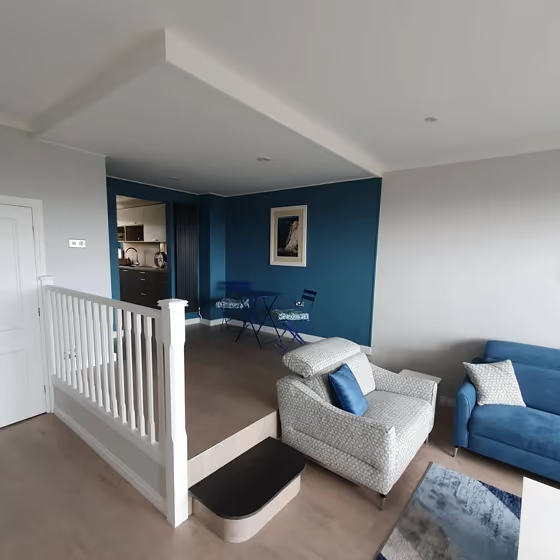
@calicopainters
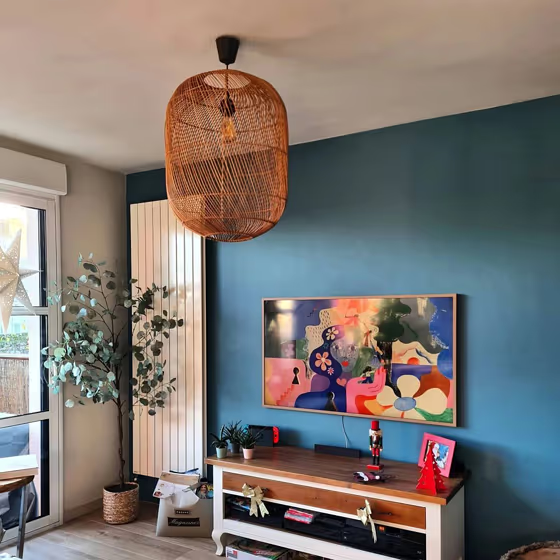
@la_maison_de_giul
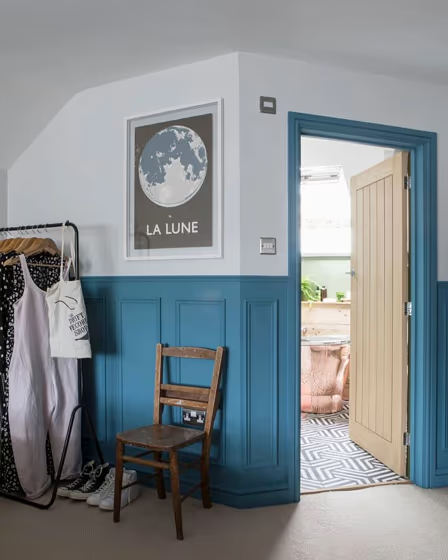
@emuplops
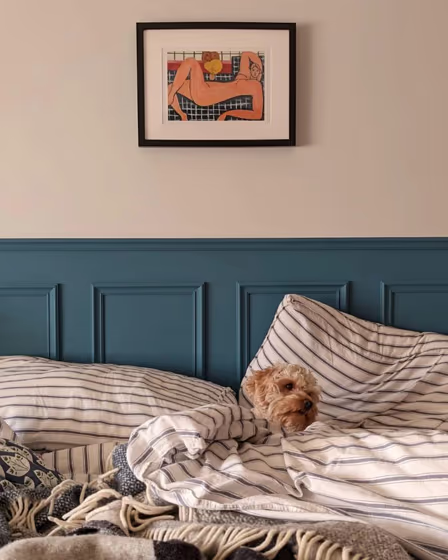
@emuplops
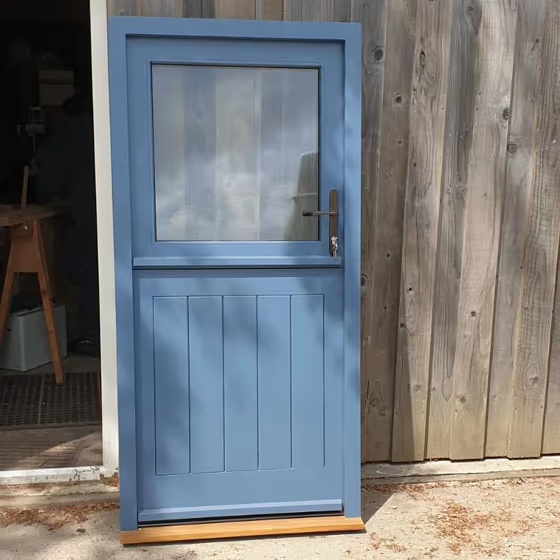
@thehilljoinery
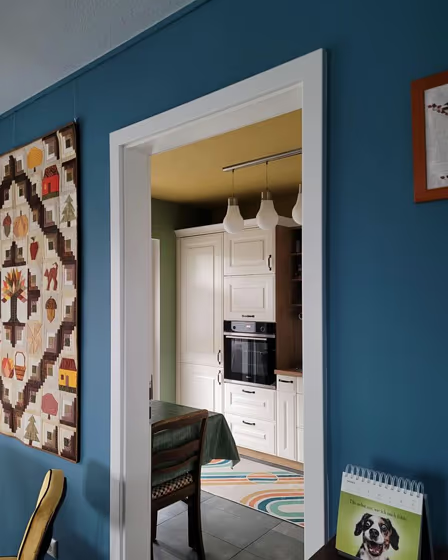
@sew.knits.chris
Try before you buy

100% accurate
reusable paint samples

Peel, stick,
and repeat

Twice painted
with real paint

Next day
delivery
What are Little Greene Air Force Blue undertones?
This is a midtone, softly saturated blue with a clear blue-green direction. Its relative undertone is a slight green bias, which keeps it from reading as a violet or purely neutral blue. Overall, it has a muted but noticeable color presence rather than the depth of navy or the brightness of a primary blue. Warm artificial light may make it look a little grayer or more subdued, while cool daylight may make the blue-green cast easier to notice.
Manufacturer information used in this description: official color page.
HEX value:
RGB code:
85, 135, 153
Is Little Greene Air Force Blue cool or warm?
warm
cool
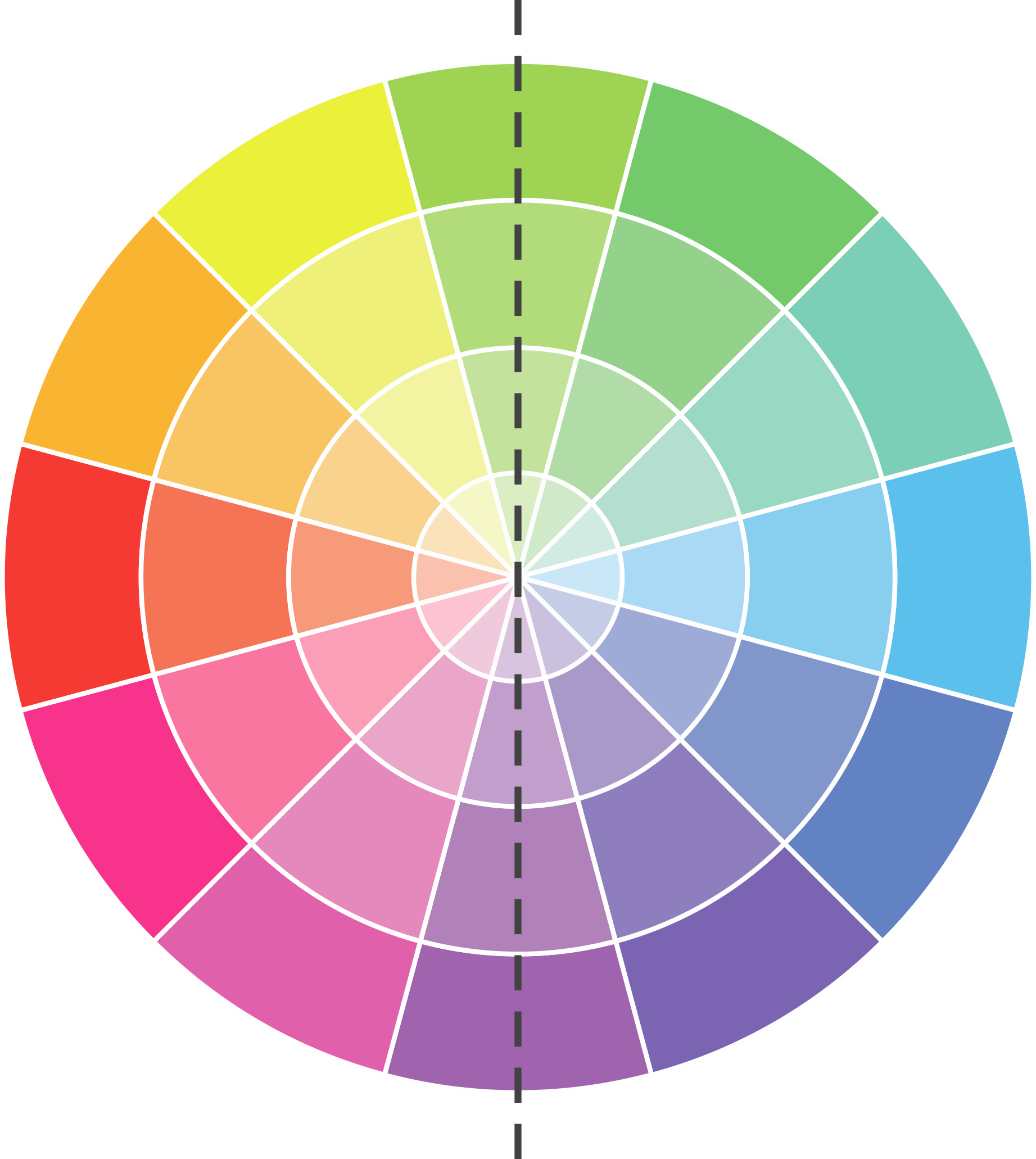
With a hue of 196°, this dark blue reads cool based on its HSL hue position.
260 Air Force Blue HSL code: 196, 29%, 47%
Hue - degree on a color wheel from 0 to 360. 0 is red, 120 is green, and 240 is blue.
Saturation is expressed as a percentage. At 0%, it appears as a shade of grey, and at 100%, it is in full color.
Lightness is also a percentage value. 0% is black, and 100% is white.
How light temperature affects Air Force Blue
Natural Lighting. During the day, natural light shifts from about 2000 K at sunrise/sunset to 5500–6500 K at noon.
In addition, natural-light temperature depends on its direction:
| Direction of sunlight | Visible temp. | Hue | Duration |
|---|---|---|---|
| North | Cool | Bluish | All day |
| East | Warm | Yellow | Before noon |
| West | Warm | Orange-red | After noon |
| South | Warm | Orange-yellow | All day |
Artificial Lighting. When choosing bulbs, pay attention to their color temperature in Kelvins.
Use the slider to see how this dark blue shade looks under different lighting:
Coordinating colors.
Colors that go with Little Greene Air Force Blue:
Monochromatic color scheme
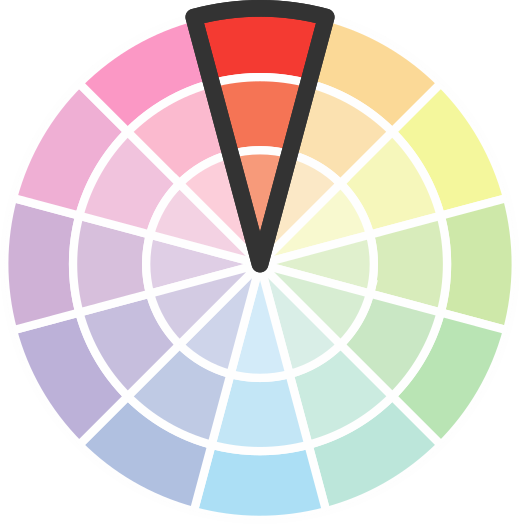
This scheme consists of various shades, tints, and tones of a single color. While it offers a perfect combination of hues, without accent décor it may become monotonous.
Lighter shades
260
Air Force Blue

Complementary color scheme
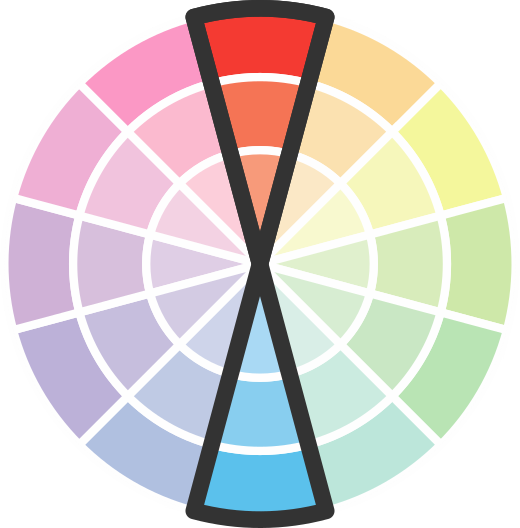
This color scheme is a combination of two shades that are opposite each other on the color wheel. The high contrast between these colors creates a vibrant and dynamic visual effect. For the color Air Force Blue with a green hue, complementary colors are those with a red hue close to 16, such as Little Greene Perennial Grey and Dash of Soot.



Color codes
We have collected almost every possible color code you could ever need.
Not sure what the difference between HEX and RGB is? We break down color models in plain language. Understanding color models
| Format | Code |
|---|---|
| HEX | #558799 |
| RGB Decimal | 85, 135, 153 |
| RGB Percent | 33.33%, 52.94%, 60.00% |
| HSV | Hue: 196° Saturation: 44.44% Value: 60.0% |
| HSL | hsl(196, 29, 47) |
| CMYK | Cyan: 44.44 Magenta: 11.76 Yellow: 0.0 Key: 40.0 |
| YIQ | Y: 122.102 I: -35.579 Q: -4.975 |
| XYZ | X: 18.158 Y: 21.558 Z: 33.333 |
| CIE Lab | L:53.555 a:-11.837 b:-14.871 |
| CIE Luv | L:53.555 u:-23.212 v:-20.122 |
| Decimal | 5605273 |
| Hunter Lab | 46.43, -11.447, -10.063 |
Color equivalents
70BG 25/220
Liberty Blue 2
Dulux

206
Tivoli
Little Greene

50BG 19/144
Celestial Cloud 1
Dulux

70BG 28/169
Stonewashed Blue
Dulux

RAL 5024
Pastel blue
RAL Classic

30BG 23/124
Jewelled Creek 2
Dulux
90BG 20/241
Luna Landscape 2
Dulux
70BG 18/156
Winter Teal 1
Dulux
326
Etruria
Little Greene

50BG 21/328
Hawaiian Blue 4
Dulux
10BG 21/141
Teal Voyage
Dulux

90BG 21/302
Celestial Blue 4
Dulux
104
Blue Verditer
Little Greene

10BG 26/134
Maritime Teal
Dulux

70BG 24/380
Azure Fusion 4
Dulux
10BG 22/195
Inky Pool 2
Dulux
90BG 29/267
Celestial Blue 5
Dulux
5517
Blue Whale
Jotun