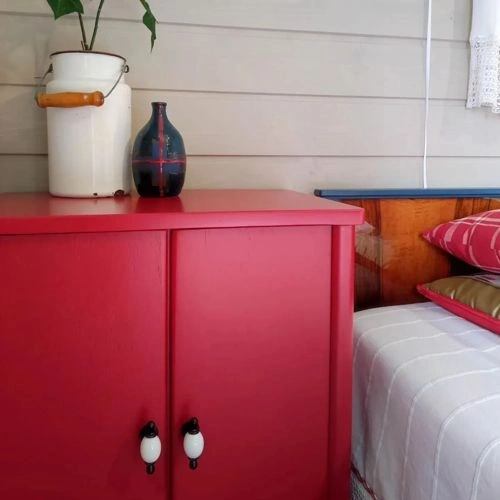
Little Greene Atomic Red 190
Contentsshow +hide -
- Atomic Red for exterior (2 photos)
- Little Greene Atomic Red reviews (3 photos)
- What are Little Greene Atomic Red undertones?
- Is Atomic Red 190 cool or warm?
- How light temperature affects on Atomic Red
- Monochromatic color scheme
- Complementary color scheme
- Color comparison and matching
- Color codes
- Color equivalents
| Official page: | Atomic Red 190 |
| Code: | 190 |
| Name: | Atomic Red |
| Brand: | Little Greene |
| Collections: | Colours of England |
What color is Little Greene Atomic Red?
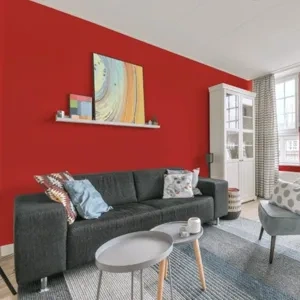
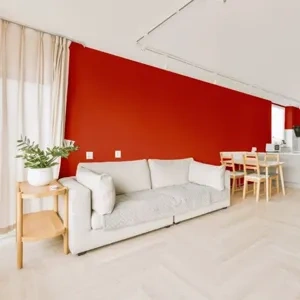
Little Greene Atomic Red 190 is a deep, high-impact red with a warm, subtly earthy cast. Its strong saturation gives it real presence, reading darker and more enveloping in low light while showing a clearer scarlet character in bright daylight. Use it on a dining room wall, a front door, or painted cabinetry where a concentrated dose of color feels intentional. Atomic Red looks particularly sharp beside chalky off-whites, charcoal, blackened metal, and warm natural woods. For a less dramatic scheme, limit this shade to trim, shelving, or a single architectural feature and surround it with quieter neutral finishes.
Atomic Red for exterior (2 photos)
Looking for a fresh new look for your house exterior or starting from skretch? We’ve collected pictures of real-life homes that have been painted with this warm red hue. Find inspiration for your house’s exterior, front doors, gates, shutters, frames or windows.
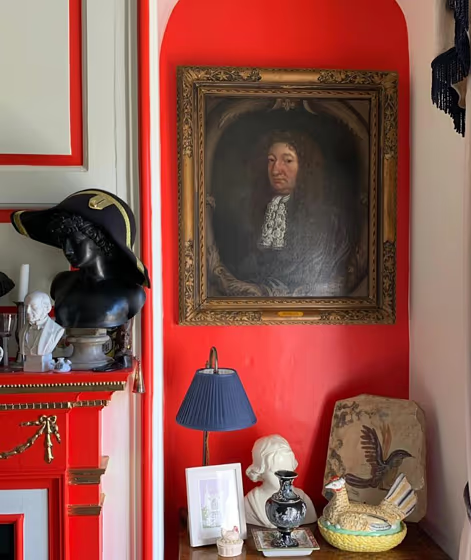
@rolandwoodwardltd
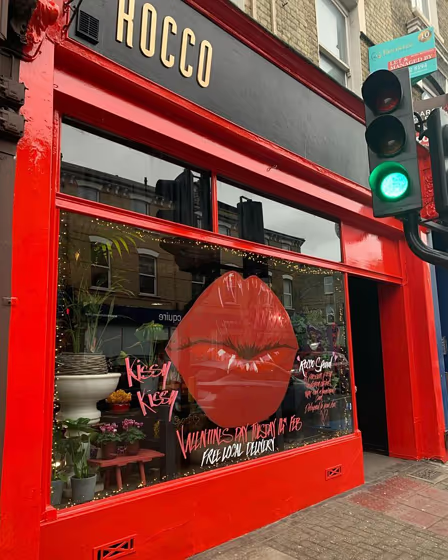
@roccoflowers
Little Greene Atomic Red reviews (3 photos)
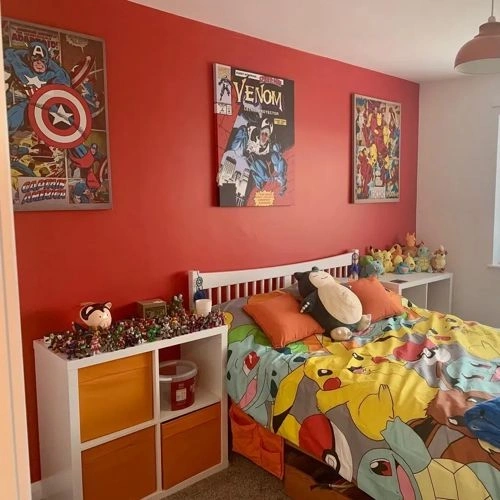
View the photos of real spaces painted with this red that were not included in specific categories. Close-ups, painted furniture, storages and dressers, hallways, stairs and ceilings.
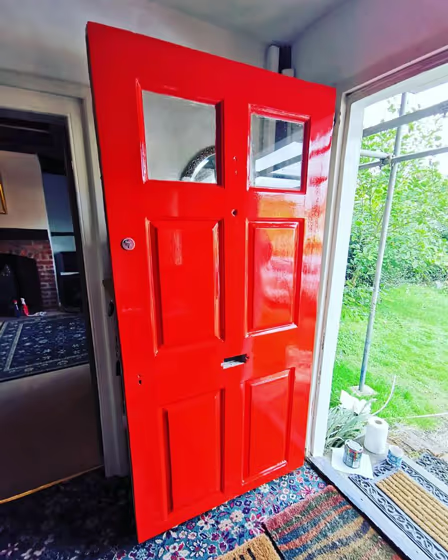
@laurenwilliamsondesign
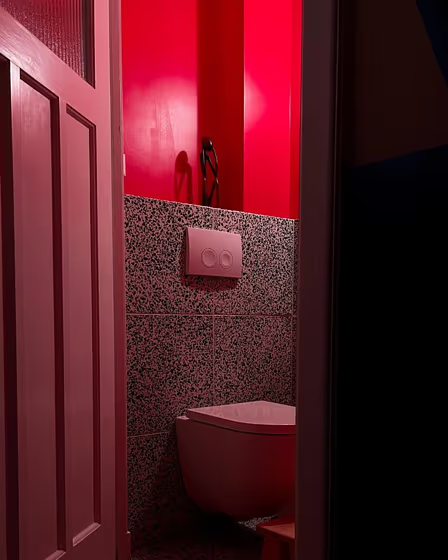
@lenham
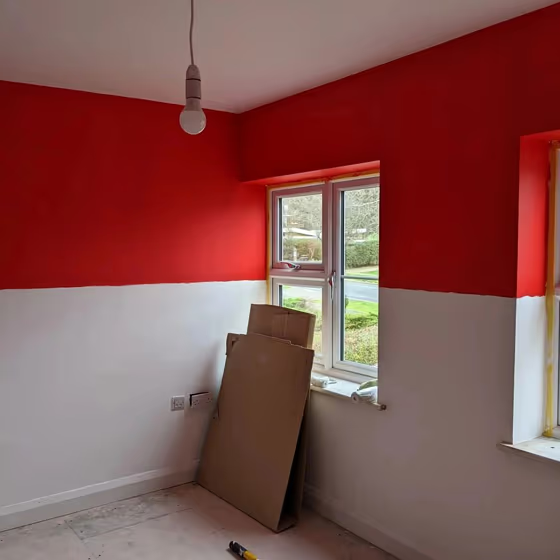
@gardensandgranddesigns
Try before you buy

100% accurate
reusable paint samples

Peel, stick,
and repeat

Twice painted
with real paint

Next day
delivery
What are Little Greene Atomic Red undertones?
Atomic Red reads as a midtone, highly saturated red with a strong, clear presence. Within the red family, the supplied digital sample appears slightly warm and yellow-leaning rather than blue-leaning, giving it a scarlet-like character. Warm artificial light may make that warmth more noticeable, while cool daylight can make the red look a little less warm.
Manufacturer information used in this description: official color page.
HEX value:
RGB code:
189, 37, 32
Is Little Greene Atomic Red cool or warm?
warm
cool
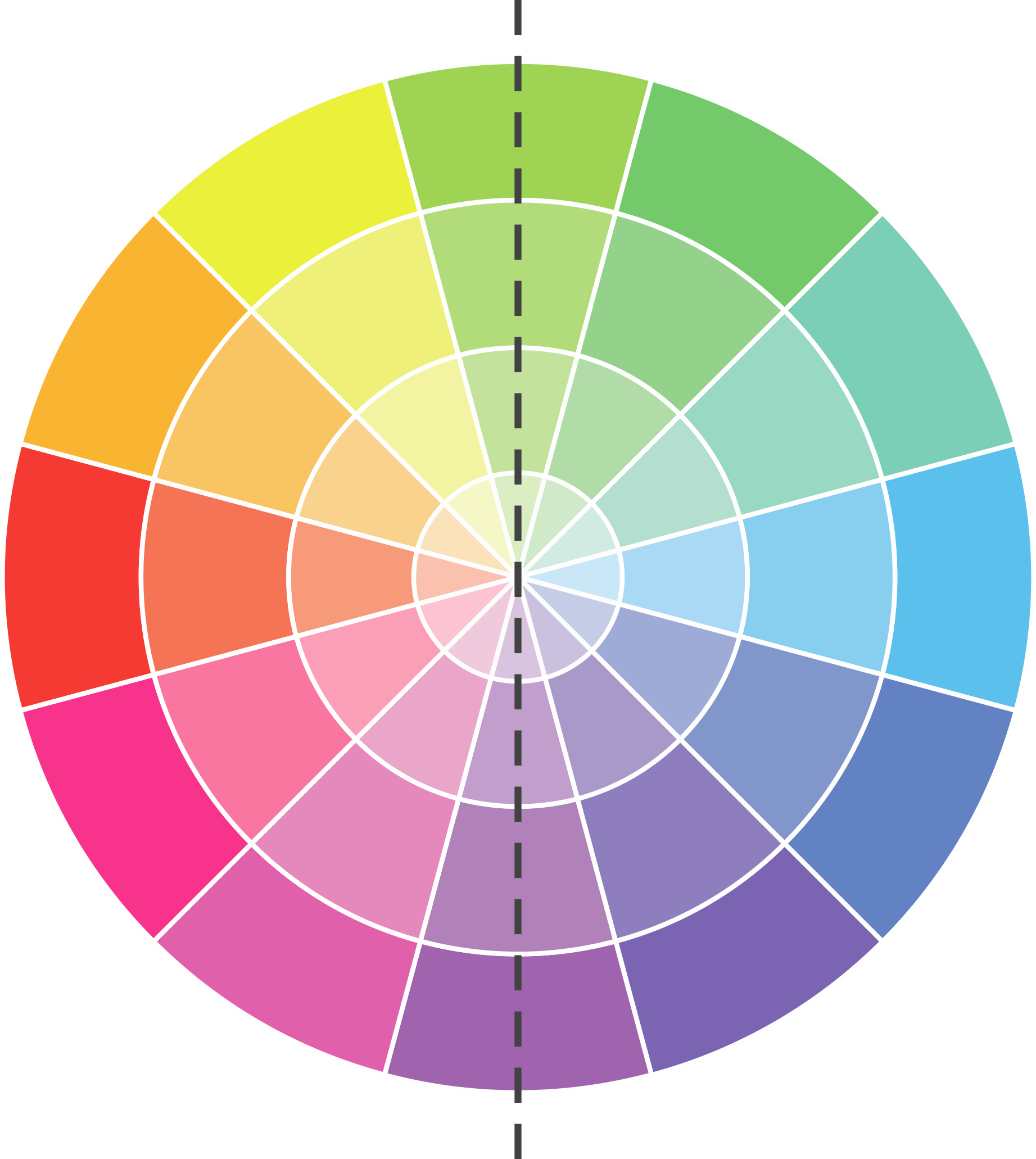
At 2° on the HSL hue wheel, this dark red sits firmly on the warm side.
190 Atomic Red HSL code: 2, 71%, 43%
Hue - degree on a color wheel from 0 to 360. 0 is red, 120 is green, and 240 is blue.
Saturation is expressed as a percentage. At 0%, it appears as a shade of grey, and at 100%, it is in full color.
Lightness is also a percentage value. 0% is black, and 100% is white.
How light temperature affects Atomic Red
Natural Lighting. During the day, natural light shifts from about 2000 K at sunrise/sunset to 5500–6500 K at noon.
In addition, natural-light temperature depends on its direction:
| Direction of sunlight | Visible temp. | Hue | Duration |
|---|---|---|---|
| North | Cool | Bluish | All day |
| East | Warm | Yellow | Before noon |
| West | Warm | Orange-red | After noon |
| South | Warm | Orange-yellow | All day |
Artificial Lighting. When choosing bulbs, pay attention to their color temperature in Kelvins.
Use the slider to see how this dark red shade looks under different lighting:
Coordinating colors.
Colors that go with Little Greene Atomic Red:
Monochromatic color scheme
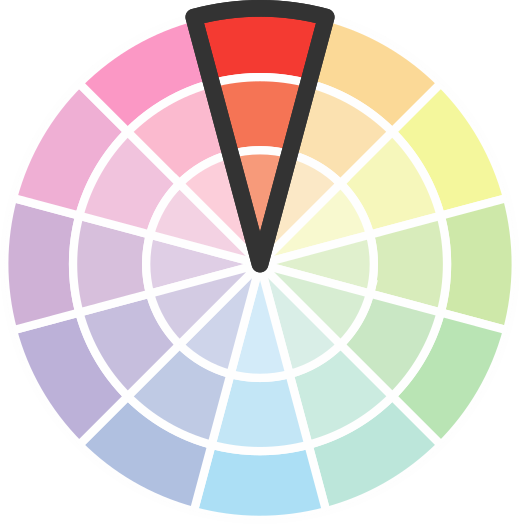
This scheme consists of various shades, tints, and tones of a single color. While it offers a perfect combination of hues, without accent décor it may become monotonous.
Lighter shades
190
Atomic Red

Complementary color scheme
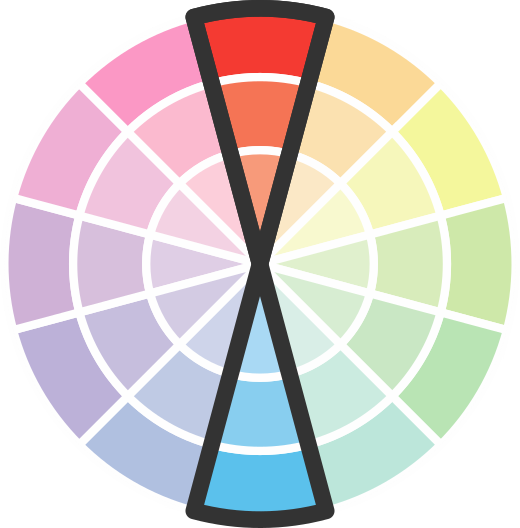
This color scheme is a combination of two shades that are opposite each other on the color wheel. The high contrast between these colors creates a vibrant and dynamic visual effect. For the color Atomic Red with a red hue, complementary colors are those with a green hue close to 182, such as Little Greene Blue Verditer and Delicate Blue.




Color codes
We have collected almost every possible color code you could ever need.
Not sure what the difference between HEX and RGB is? We break down color models in plain language. Understanding color models
| Format | Code |
|---|---|
| HEX | #bd2520 |
| RGB Decimal | 189, 37, 32 |
| RGB Percent | 74.12%, 14.51%, 12.55% |
| HSV | Hue: 2° Saturation: 83.07% Value: 74.12% |
| HSL | hsl(2, 71, 43) |
| CMYK | Cyan: 0.0 Magenta: 80.42 Yellow: 83.07 Key: 25.88 |
| YIQ | Y: 81.878 I: 92.184 Q: 30.598 |
| XYZ | X: 21.911 Y: 12.25 Z: 2.577 |
| CIE Lab | L:41.61 a:58.261 b:41.907 |
| CIE Luv | L:41.61 u:115.159 v:26.137 |
| Decimal | 12395808 |
| Hunter Lab | 35.0, 50.498, 20.134 |
Color equivalents
26YR 14/548
Hot Paprika 3
Dulux

RAL 3020
Traffic red
RAL Classic

Volcanic Red
Dulux
RAL 3028
Pure red
RAL Classic
19YR 13/558
Volcanic Splash 3
Dulux
RAL 2002
Vermilion
RAL Classic
Red Beacon
Dulux
RAL 3000
Flame red
RAL Classic

30YR 15/550
Volcanic Splash 4
Dulux
30YR 18/596
Earths Core
Dulux
RAL 3033
Pearl pink
RAL Classic

RAL 3016
Coral red
RAL Classic

Spicy Paprika
Dulux
39YR 14/482
Auburn Falls 2
Dulux
04YR 11/537
Red Stallion 2
Dulux
10YR 15/500
Pepper Red
Dulux
RAL 3002
Carmine red
RAL Classic

RAL 3031
Orient red
RAL Classic