

Little Greene Roman Plaster 31
Contentsshow +hide -
- Roman Plaster for living room (10 photos)
- Little Greene Roman Plaster for bathroom (2 photos)
- Little Greene 31 on kitchen cabinets (4 photos)
- Little Greene Roman Plaster reviews (3 photos)
- What are Little Greene Roman Plaster undertones?
- Is Roman Plaster 31 cool or warm?
- How light temperature affects on Roman Plaster
- Monochromatic color scheme
- Complementary color scheme
- Color comparison and matching
- Color codes
- Color equivalents
| Official page: | Roman Plaster 31 |
| Code: | 31 |
| Name: | Roman Plaster |
| Brand: | Little Greene |
| Collections: | Colours of England |
What color is Little Greene Roman Plaster?
Little Greene Roman Plaster 31 is a muted, mid-light beige with a dry wheat tone and a gentle olive cast. Its softened, low-saturation character keeps it from reading overly yellow, giving walls a grounded, plaster-like warmth. In bright daylight, the color can appear lighter and more sandy, while lower or north-facing light draws out its khaki-grey undertones. It is particularly effective in living rooms, hallways, and studies where a calm neutral is wanted without the coolness of pale grey. Pair Roman Plaster with chalky off-whites, aged oak, linen, brushed brass, or deeper olive and brown accents for a layered, natural-looking scheme.
Roman Plaster for living room (10 photos)
Check out this stunning mid-tone color used in real living rooms. Explore how this beige shade can create a unique space
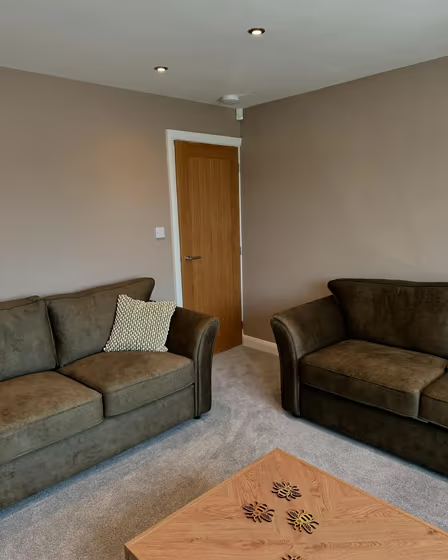
@mykitchenresprays
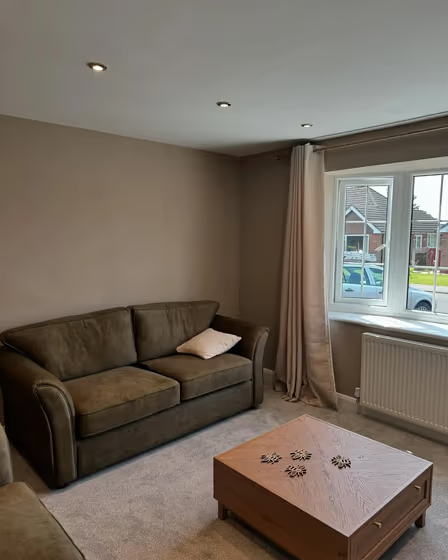
@mykitchenresprays
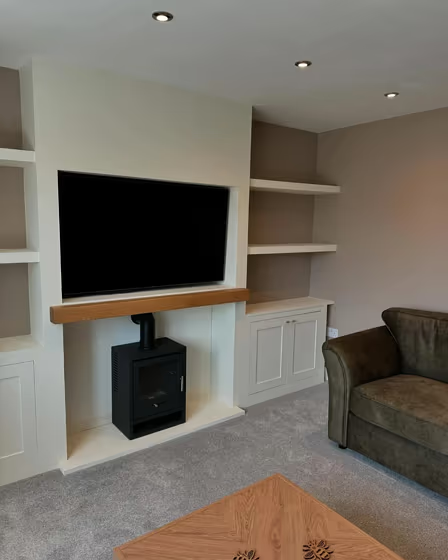
@mykitchenresprays
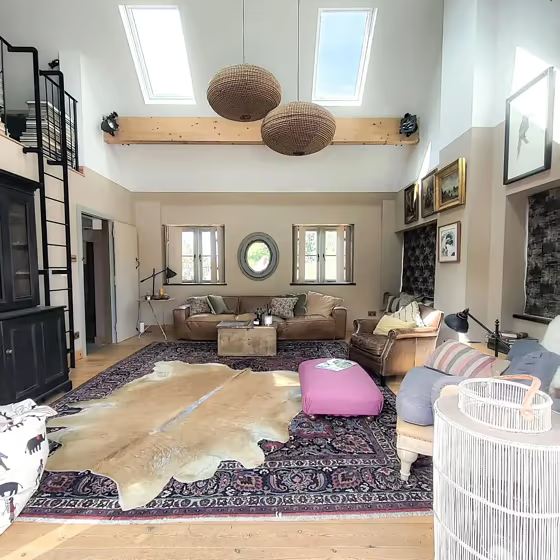
@madcottagelife
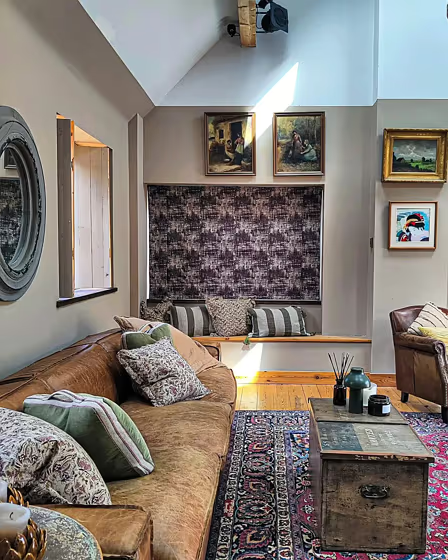
@madcottagelife
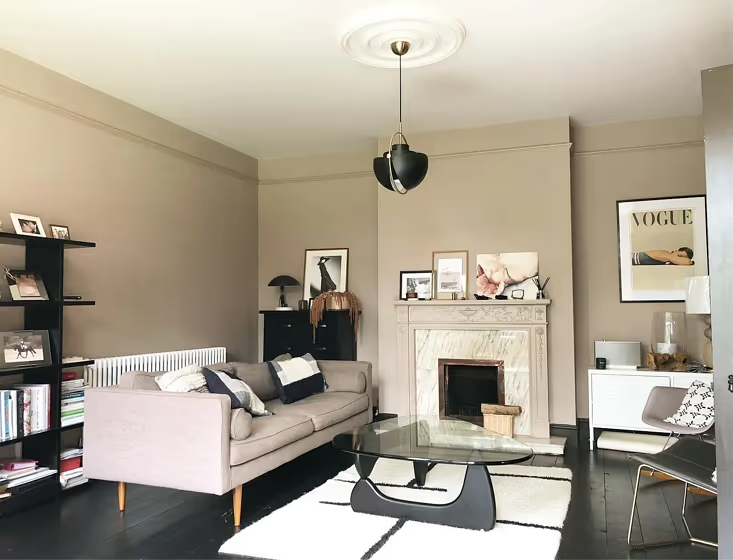
@mecklenburghouse

@madcottagelife

@madcottagelife
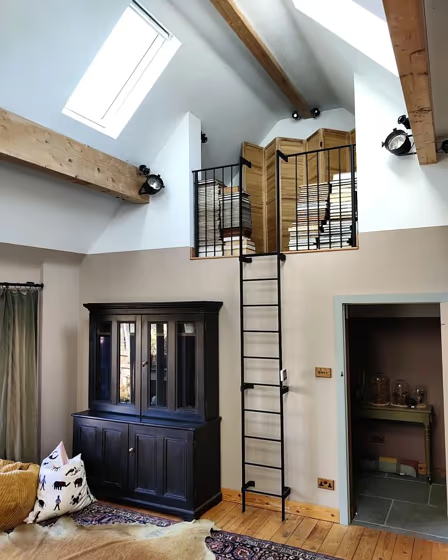
@madcottagelife
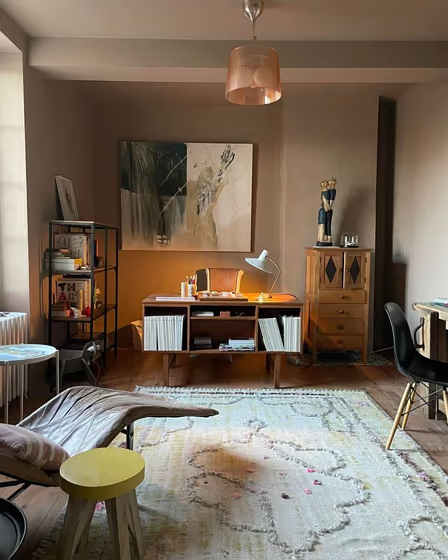
@aziburak
Little Greene 31 for bathroom (2 photos)
Looking for inspiration for your dream bathroom renovation project? These beautiful handpicked photos will show you this delightfully warm mid-tone beige real bathrooms.
@house_bythebrook
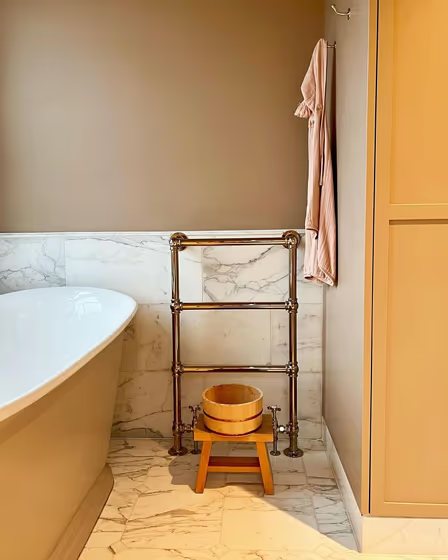
@regencyremodel
Little Greene 31 on kitchen cabinets (4 photos)
Want a stylish kitchen? View real-life photo examples of this fascinating warm beige hue is paired with backsplashes, countertops, and hardware.
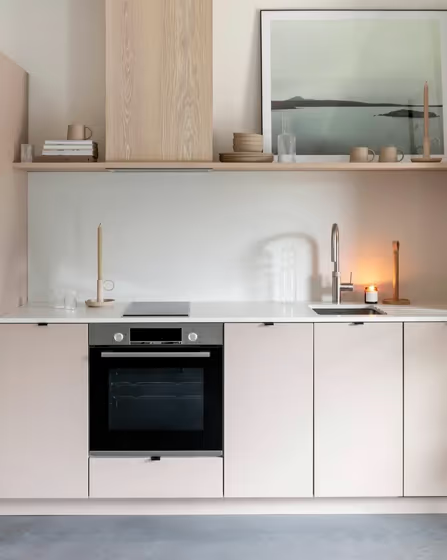
@lastinteriordesign
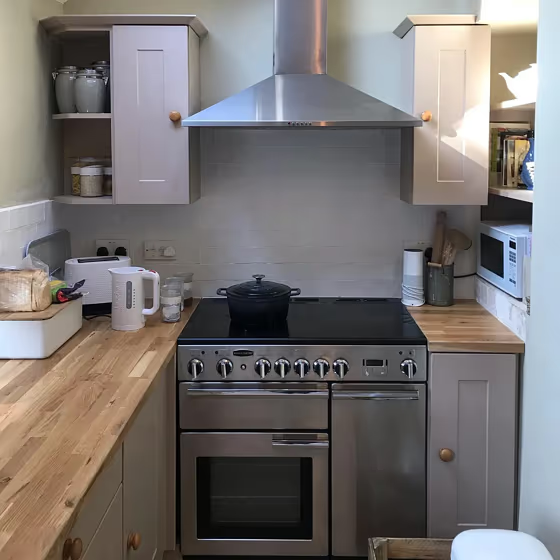
@vintage_boo
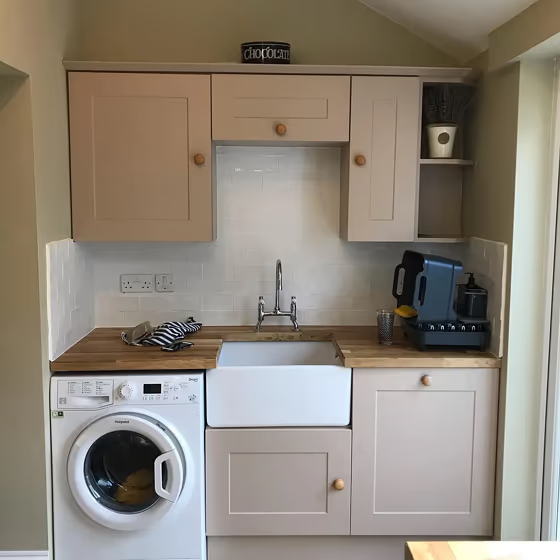
@vintage_boo
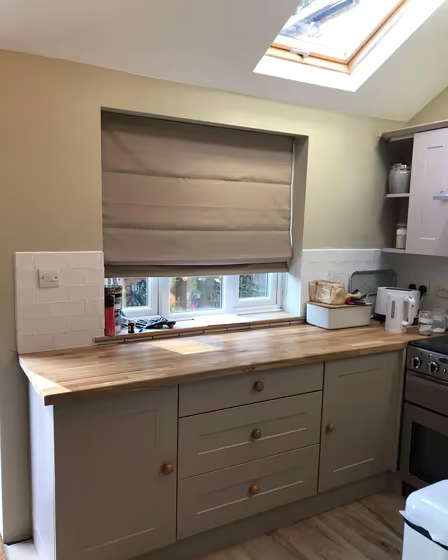
@vintage_boo
Little Greene Roman Plaster reviews (3 photos)
View the photos of real spaces painted with this beige that were not included in specific categories. Close-ups, painted furniture, storages and dressers, hallways, stairs and ceilings.
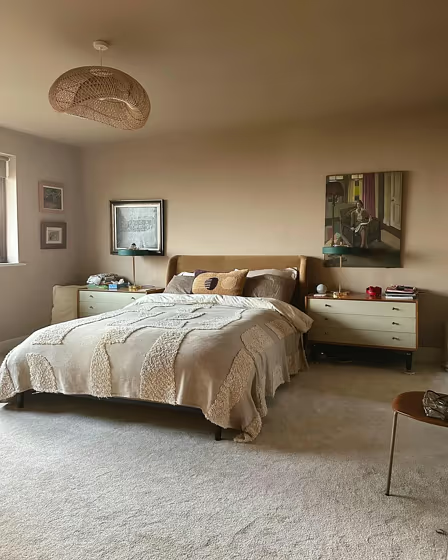
@arthurleeinteriors
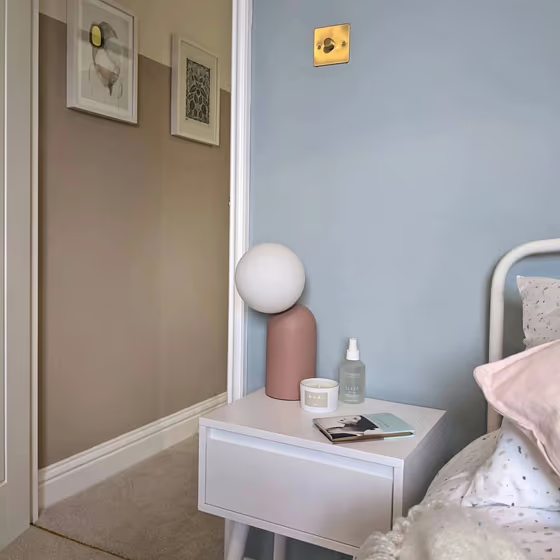
@redheadhomesed
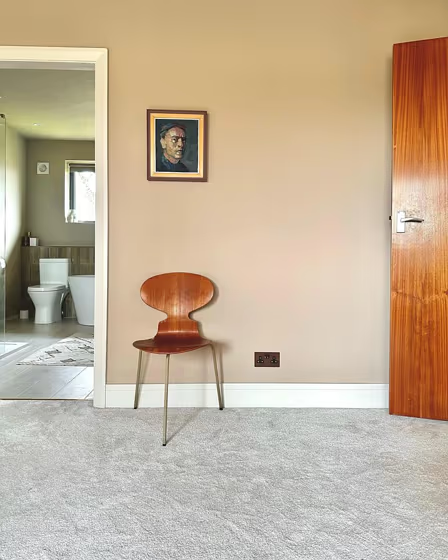
@mymidcenturymission
Try before you buy

100% accurate
reusable paint samples

Peel, stick,
and repeat
Twice painted
with real paint

Next day
delivery
What are Little Greene Roman Plaster undertones?
Roman Plaster is a mid-light, muted yellow-beige with a soft, low-saturation overall character. In the supplied digital sample, it reads as close to neutral but with a clear yellow bias, which can make it feel warmer than a gray-based beige. Under warm artificial light, that yellow-beige cast may appear more noticeable, while cool daylight may make the color look more restrained and slightly less warm.
Manufacturer information used in this description: official color page.
HEX value:
RGB code:
191, 176, 143
Is Little Greene Roman Plaster cool or warm?
warm
cool
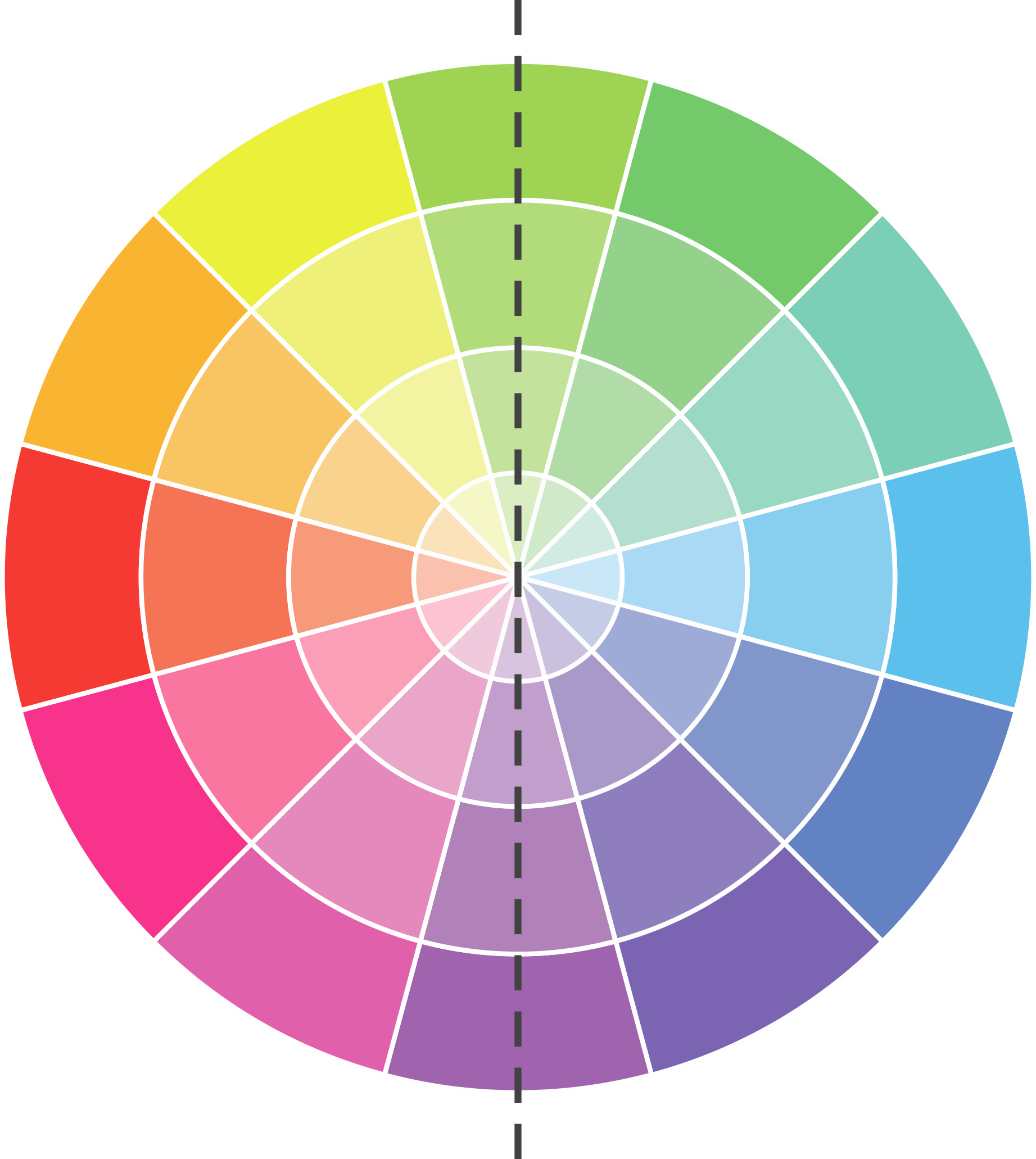
With a hue of 41°, this Beige reads warm on the HSL color wheel.
31 Roman Plaster HSL code: 41, 27%, 65%
Hue - degree on a color wheel from 0 to 360. 0 is red, 120 is green, and 240 is blue.
Saturation is expressed as a percentage. At 0%, it appears as a shade of grey, and at 100%, it is in full color.
Lightness is also a percentage value. 0% is black, and 100% is white.
How light temperature affects Roman Plaster
Natural Lighting. During the day, natural light shifts from about 2000 K at sunrise/sunset to 5500–6500 K at noon.
In addition, natural-light temperature depends on its direction:
| Direction of sunlight | Visible temp. | Hue | Duration |
|---|---|---|---|
| North | Cool | Bluish | All day |
| East | Warm | Yellow | Before noon |
| West | Warm | Orange-red | After noon |
| South | Warm | Orange-yellow | All day |
Artificial Lighting. When choosing bulbs, pay attention to their color temperature in Kelvins.
Use the slider to see how this Beige shade looks under different lighting:
Coordinating colors.
Colors that go with Little Greene Roman Plaster:
Monochromatic color scheme
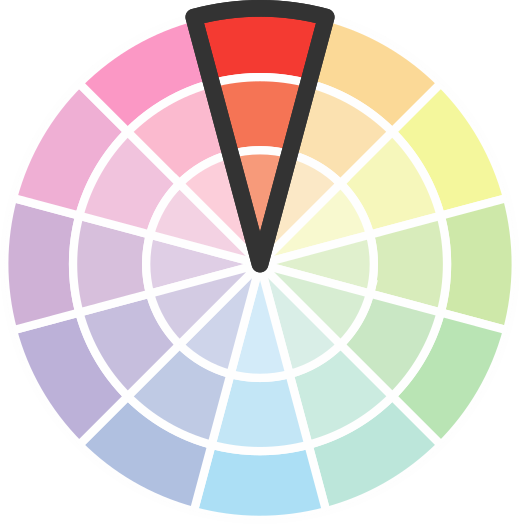
This scheme consists of various shades, tints, and tones of a single color. While it offers a perfect combination of hues, without accent décor it may become monotonous.
Lighter shades

Complementary color scheme
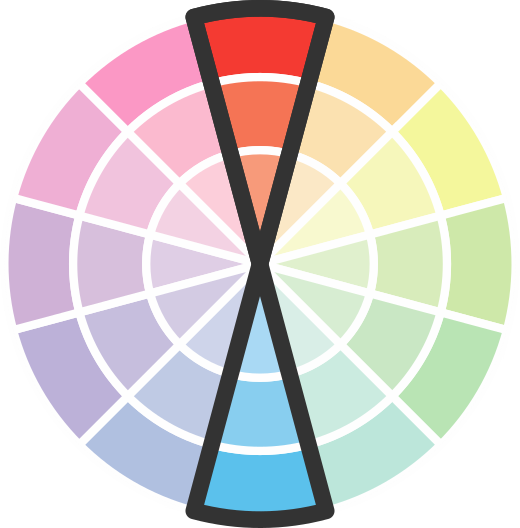
This color scheme is a combination of two shades that are opposite each other on the color wheel. The high contrast between these colors creates a vibrant and dynamic visual effect. For the color Roman Plaster with a orange hue, complementary colors are those with a blue hue close to 221, such as Little Greene Juniper Ash and James.





Color codes
We have collected almost every possible color code you could ever need.
Not sure what the difference between HEX and RGB is? We break down color models in plain language. Understanding color models
| Format | Code |
|---|---|
| HEX | #bfb08f |
| RGB Decimal | 191, 176, 143 |
| RGB Percent | 74.90%, 69.02%, 56.08% |
| HSV | Hue: 41° Saturation: 25.13% Value: 74.9% |
| HSL | hsl(41, 27, 65) |
| CMYK | Cyan: 0.0 Magenta: 7.85 Yellow: 25.13 Key: 25.1 |
| YIQ | Y: 176.723 I: 19.543 Q: -7.097 |
| XYZ | X: 41.969 Y: 44.111 Z: 32.283 |
| CIE Lab | L:72.303 a:0.128 b:18.884 |
| CIE Luv | L:72.303 u:11.164 v:25.956 |
| Decimal | 12562575 |
| Hunter Lab | 66.416, -3.433, 17.673 |

Color equivalents
12082
Refined Yellow
Jotun


50YY 49/191
Wild Wonder
Dulux

Walk in the Wild
Dulux
151
Slaked Lime - Dark
Little Greene

V459
Rope
Tikkurila
10961
Raw Canvas
Jotun

12126
Silhouette
Jotun
10430
Soft Savanna
Jotun

45YY 53/151
Dune Grass
Dulux
12081
Silky Yellow
Jotun
30YY 47/145
Khaki Mists 3
Dulux
8583
Earthy Yellow
Jotun

11174
Curious Mind
Jotun

160
Rolling Fog - Dark
Little Greene

40YY 53/218
Bracken Salts 3
Dulux
1288
Grand Shadow
Jotun

20YY 47/145
Caramel Sand 3
Dulux
X394
Expance
Tikkurila
