

Little Greene Pale Wedgwood 249
Contentsshow +hide -
- Pale Wedgwood for bedroom (4 photos)
- Little Greene 249 on kitchen cabinets (5 photos)
- Little Greene Pale Wedgwood reviews (9 photos)
- What are Little Greene Pale Wedgwood undertones?
- Is Pale Wedgwood 249 cool or warm?
- How light temperature affects on Pale Wedgwood
- Complementary color scheme
- Color comparison and matching
- Color codes
- Color equivalents
| Official page: | Pale Wedgwood 249 |
| Code: | 249 |
| Name: | Pale Wedgwood |
| Brand: | Little Greene |
| Collections: | Colours of England |
What color is Little Greene Pale Wedgwood?
Little Greene Pale Wedgwood 249 is a light, muted blue with a noticeable grey cast, giving it a soft, gently weathered appearance rather than a crisp sky-blue finish. Its cool base can look clearer in bright daylight, while lower or warmer lighting tends to draw out its silvery, subdued side. Pale Wedgwood suits bedrooms, bathrooms, and living rooms where a quiet wash of colour is wanted without making the walls feel heavy. Pair it with chalky whites, pale oak, brushed nickel, or darker blue-grey accents for a layered scheme. It also has enough softness for cabinetry or panelling, especially alongside natural linen and warm off-white walls.
Pale Wedgwood for bedroom (4 photos)
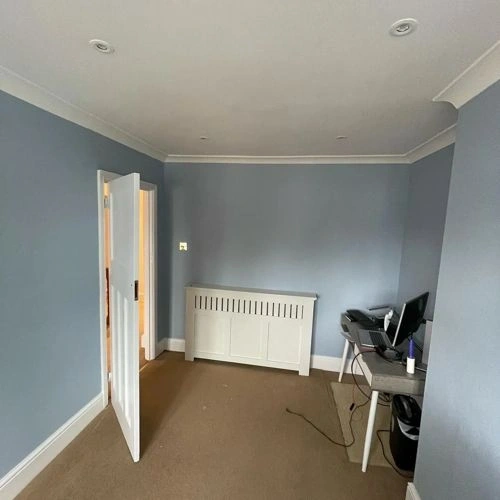
We’ve hand-picked a beautiful collection of photos of this amazing blue shade used in real bedrooms. Take a look and imagine how this wonderful cool light paint color could transform your own bedroom space.
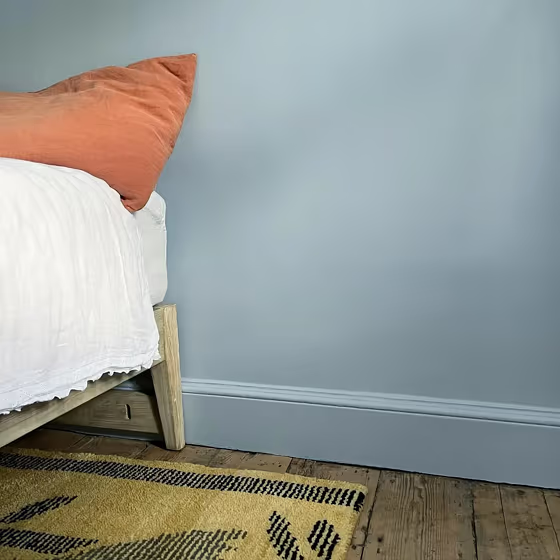
@flowdecorating
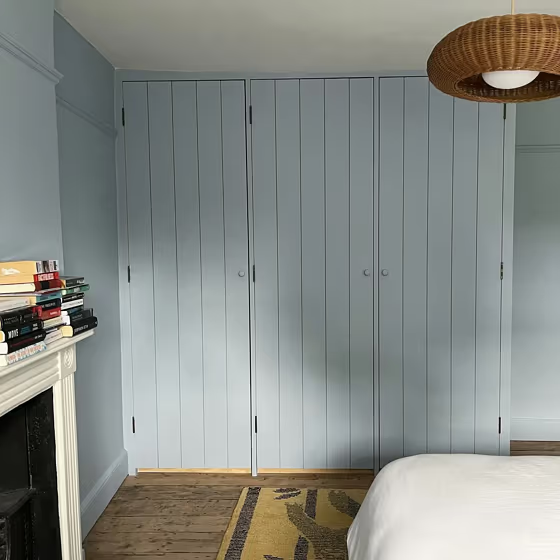
@flowdecorating
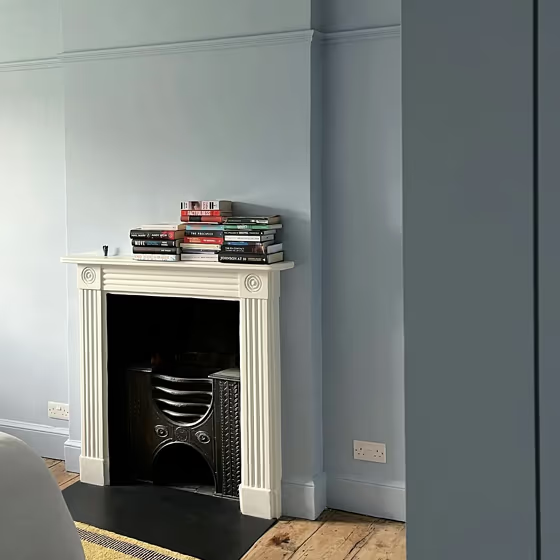
@flowdecorating
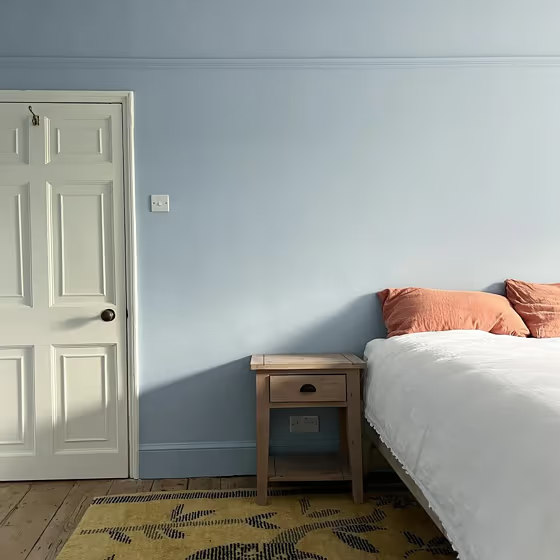
@flowdecorating
Little Greene 249 on kitchen cabinets (5 photos)
Want a stylish kitchen? View real-life photo examples of this fascinating cool blue hue is paired with backsplashes, countertops, and hardware.
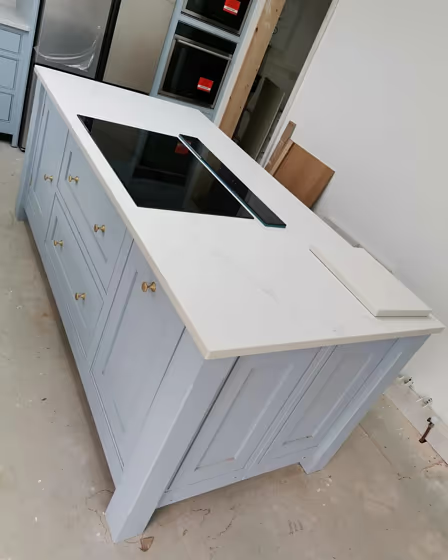
@all_about_that_space_
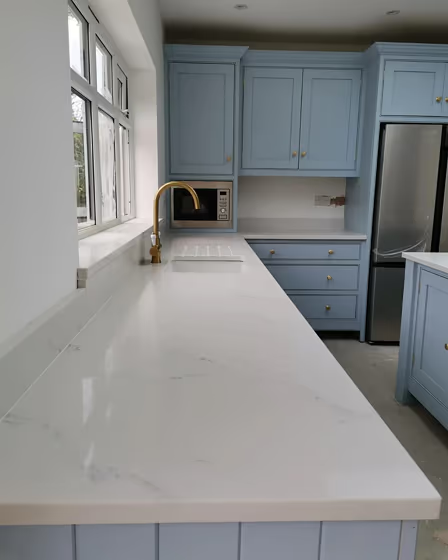
@all_about_that_space_
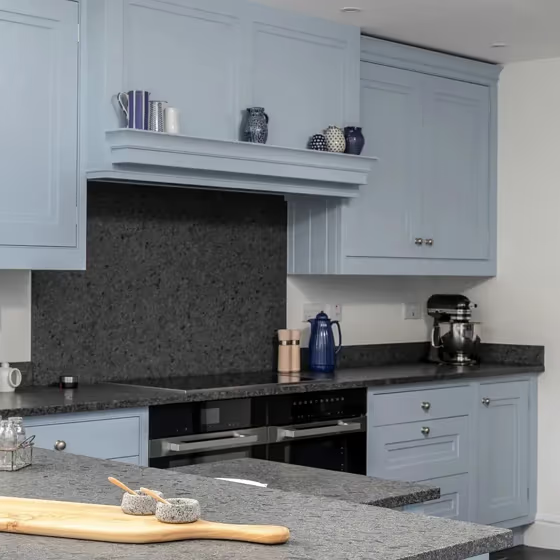
@woodwise_kitchens
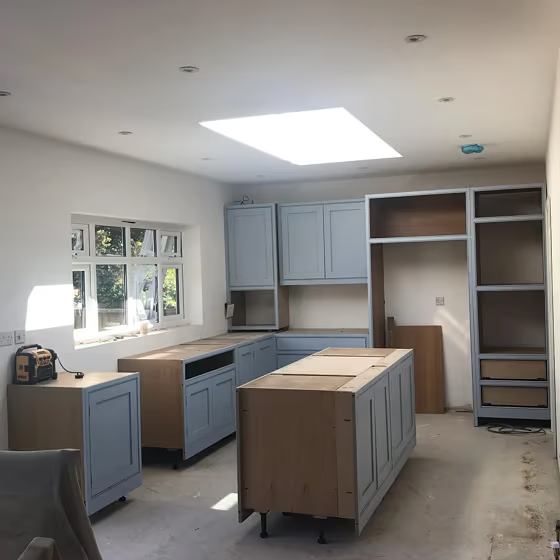
@all_about_that_space_
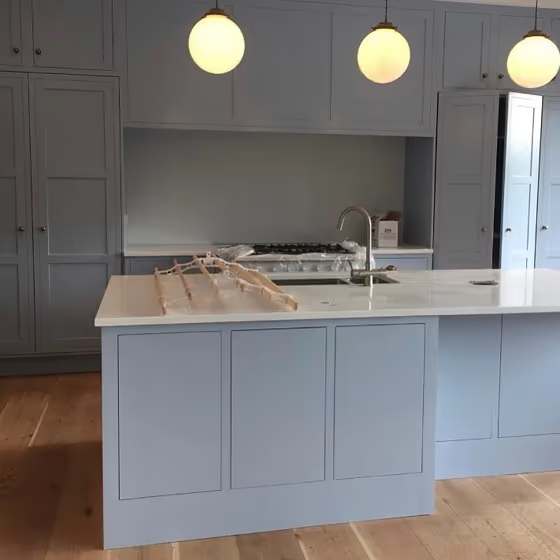
@theernestvalentine
Little Greene Pale Wedgwood reviews (9 photos)
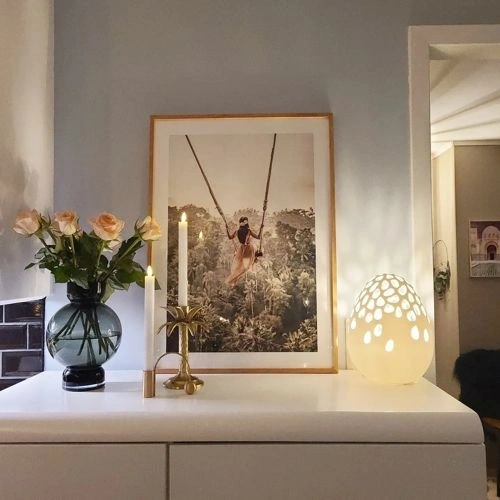
View the photos of real spaces painted with this blue that were not included in specific categories. Close-ups, painted furniture, storages and dressers, hallways, stairs and ceilings.
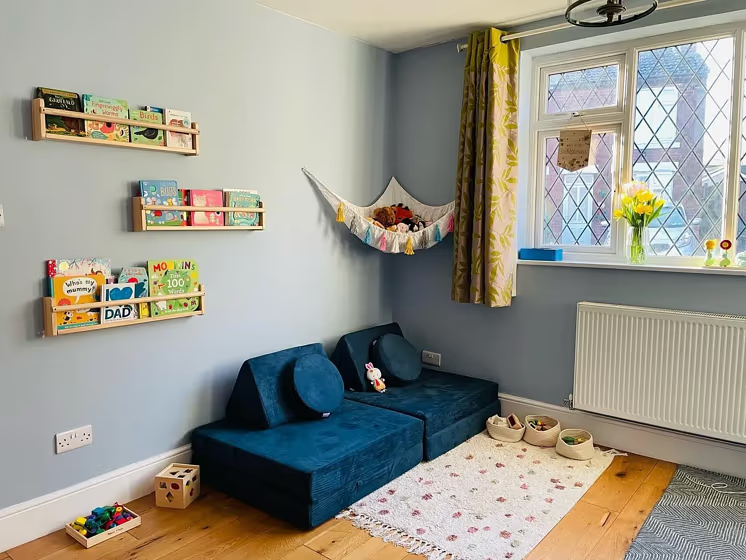
@hazelcrofthouse
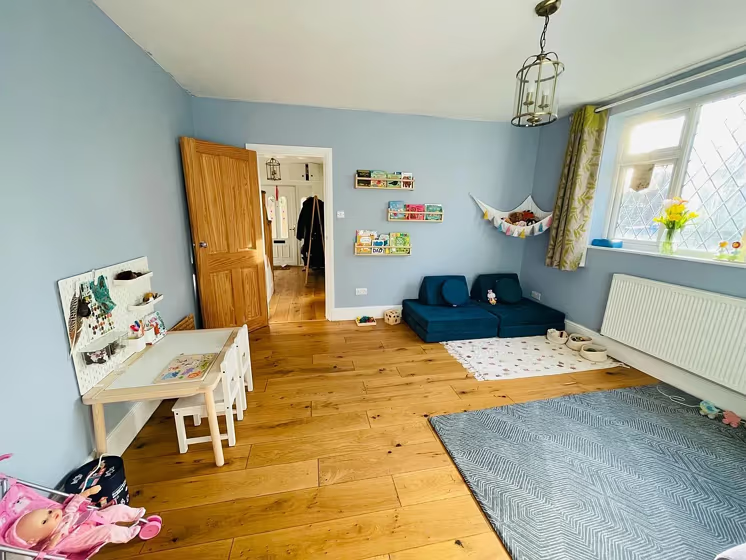
@hazelcrofthouse
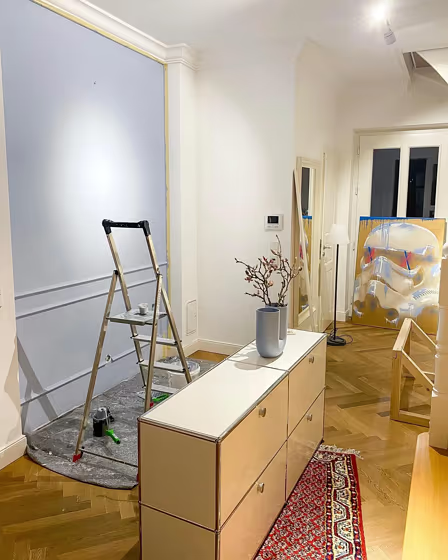
@evaundich
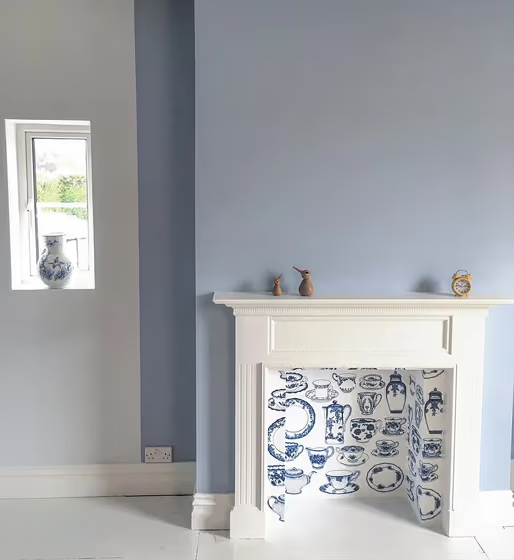
@heleneprovstgaard
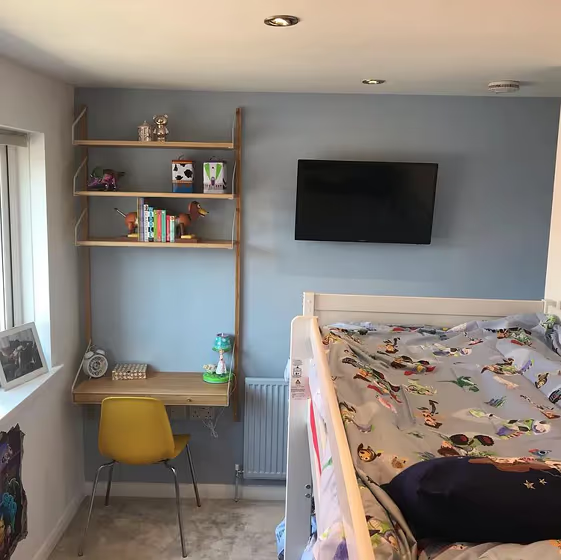
@jessdevoy
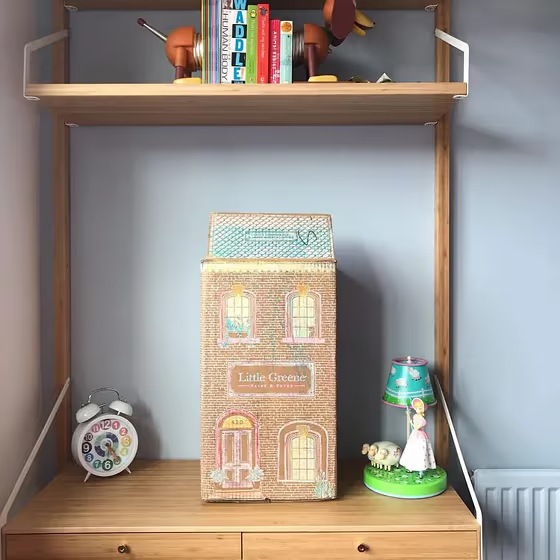
@jessdevoy
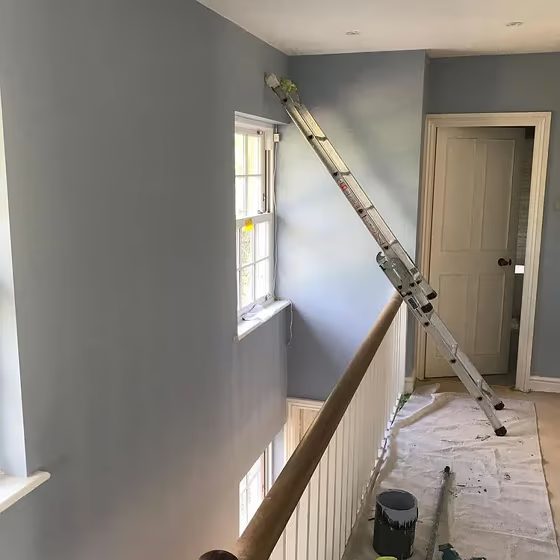
@ladypainterdecorator
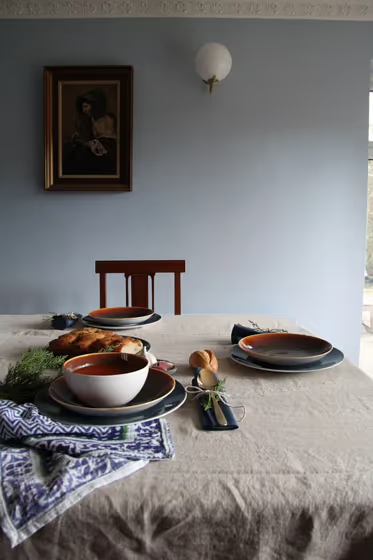
Twitter @SeasonsInColour
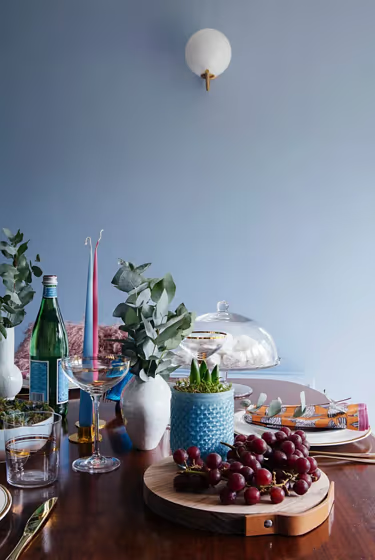
Made.com
Try before you buy
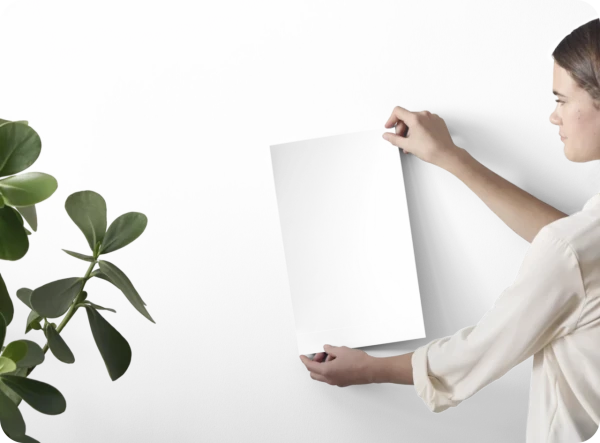

100% accurate
reusable paint samples
Peel, stick,
and repeat
Twice painted
with real paint

Next day
delivery
What are Little Greene Pale Wedgwood undertones?
Pale Wedgwood is a light, muted blue with a soft greyed quality rather than a bright or highly saturated look. In the supplied digital sample, it leans slightly toward green within its overall blue family, which can make it read as a gentle blue-green in some settings. Because no official manufacturer undertone description is available here, that bias is an observation of the displayed colour rather than a claim about the paint formula. Warm artificial light may draw out its softer, slightly greener cast, while cool daylight is more likely to keep the blue character clearer.
Manufacturer information used in this description: official color page.
HEX value:
RGB code:
183, 204, 218
Is Little Greene Pale Wedgwood cool or warm?
warm
cool
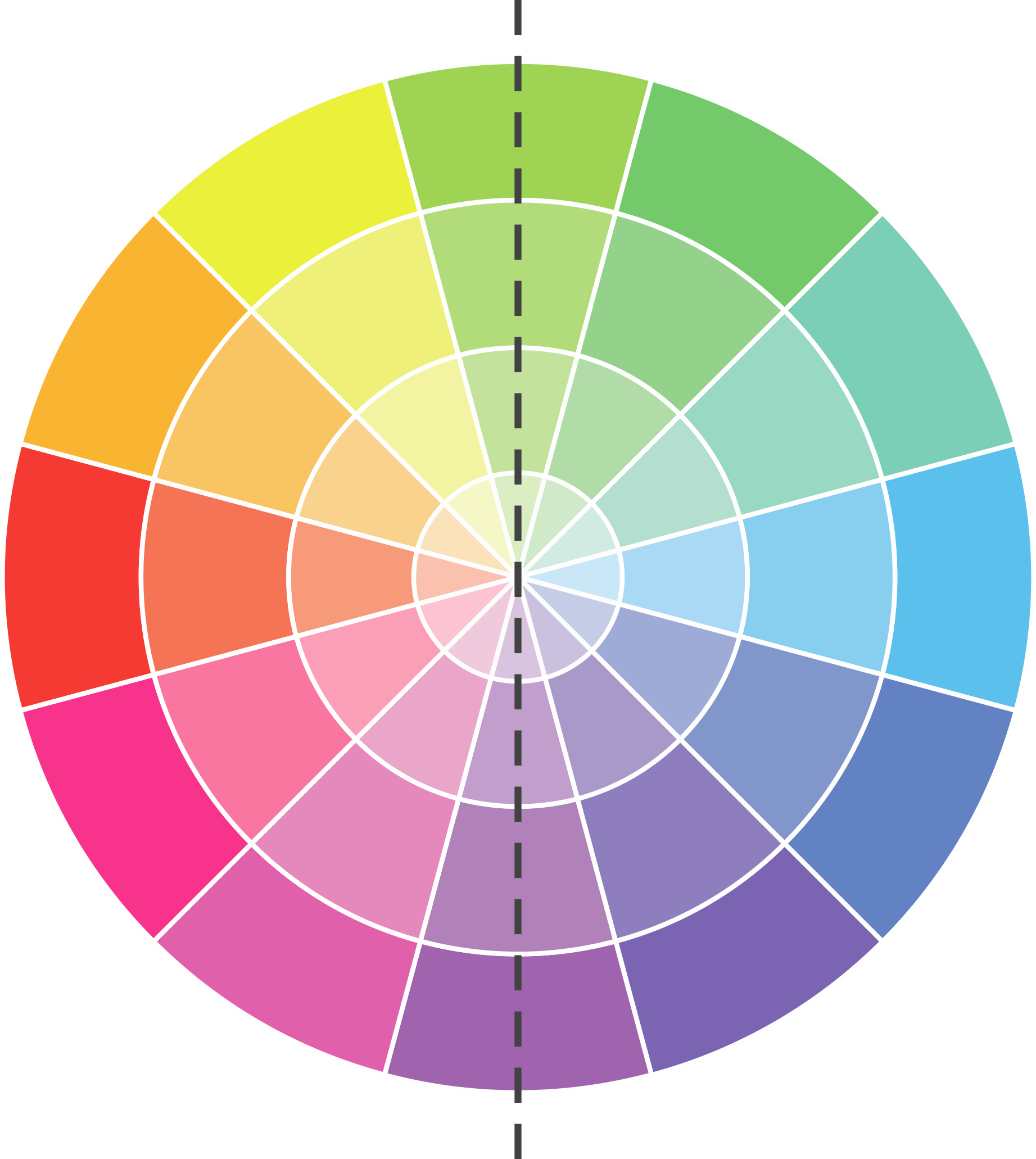
With a hue of 204°, this Blue reads cool based on its HSL hue position.
249 Pale Wedgwood HSL code: 204, 32%, 79%
Hue - degree on a color wheel from 0 to 360. 0 is red, 120 is green, and 240 is blue.
Saturation is expressed as a percentage. At 0%, it appears as a shade of grey, and at 100%, it is in full color.
Lightness is also a percentage value. 0% is black, and 100% is white.
How light temperature affects Pale Wedgwood
Natural Lighting. During the day, natural light shifts from about 2000 K at sunrise/sunset to 5500–6500 K at noon.
In addition, natural-light temperature depends on its direction:
| Direction of sunlight | Visible temp. | Hue | Duration |
|---|---|---|---|
| North | Cool | Bluish | All day |
| East | Warm | Yellow | Before noon |
| West | Warm | Orange-red | After noon |
| South | Warm | Orange-yellow | All day |
Artificial Lighting. When choosing bulbs, pay attention to their color temperature in Kelvins.
Use the slider to see how this Blue shade looks under different lighting:
Coordinating colors.
Colors that go with Little Greene Pale Wedgwood:
Complementary color scheme
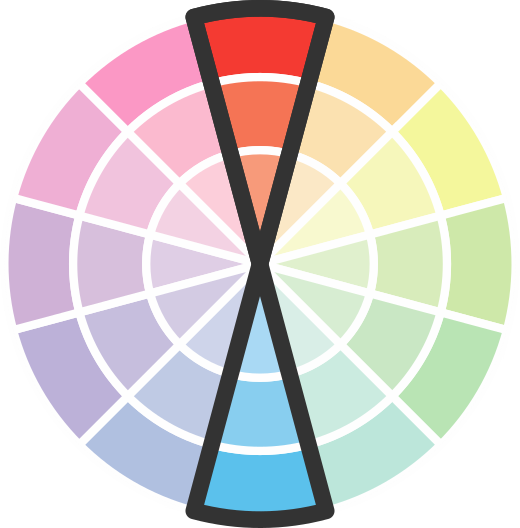
This color scheme is a combination of two shades that are opposite each other on the color wheel. The high contrast between these colors creates a vibrant and dynamic visual effect. For the color Pale Wedgwood with a green hue, complementary colors are those with a red hue close to 24, such as Little Greene Perennial Grey and Dash of Soot.




Color codes
We have collected almost every possible color code you could ever need.
Not sure what the difference between HEX and RGB is? We break down color models in plain language. Understanding color models
| Format | Code |
|---|---|
| HEX | #b7ccda |
| RGB Decimal | 183, 204, 218 |
| RGB Percent | 71.76%, 80.00%, 85.49% |
| HSV | Hue: 204° Saturation: 16.06% Value: 85.49% |
| HSL | hsl(204, 32, 79) |
| CMYK | Cyan: 16.06 Magenta: 6.42 Yellow: 0.0 Key: 14.51 |
| YIQ | Y: 199.317 I: -17.013 Q: -0.085 |
| XYZ | X: 53.772 Y: 58.314 Z: 74.733 |
| CIE Lab | L:80.913 a:-4.196 b:-9.329 |
| CIE Luv | L:80.913 u:-11.824 v:-13.704 |
| Decimal | 12045530 |
| Hunter Lab | 76.363, -7.943, -4.57 |

Color equivalents
Frosted Lake
Dulux

11BB 64/135
Distant Shores
Dulux
90BG 56/088
Pebble Drift 4
Dulux

14BB 55/113
Faded Sky
Dulux

90BG 56/125
Luna Landscape 5
Dulux
Amazon Beat 5
Dulux
01BB 69/098
Mineral Mist
Dulux

30BB 63/097
Atlantic Surf 5
Dulux
30BB 63/124
Blissful Blue
Dulux
Wild Water 5
Dulux
70BG 57/082
Misty Sky
Dulux
90BG 63/072
Pebble Drift 5
Dulux
44BB 62/134
Mystic Mauve 5
Dulux
Blue Seduction 6
Dulux
4468
Alladin
Jotun
89BG 70/116
Holiday Blues 5
Dulux
10BB 55/065
Niagara Blues 4
Dulux