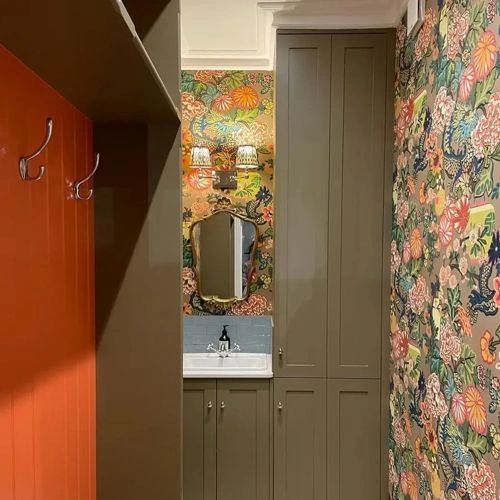
Jotun Local Green 8546
Contentsshow +hide -
- Local Green for bedroom (6 photos)
- Local Green for living room (6 photos)
- Jotun Local Green reviews (4 photos)
- What are Jotun Local Green undertones?
- Is Local Green 8546 cool or warm?
- How light temperature affects on Local Green
- Monochromatic color scheme
- Complementary color scheme
- Color comparison and matching
- LRV of Local Green 8546
- Color codes
- Color equivalents
| Code: | 8546 |
| Name: | Local Green |
| Brand: | Jotun |
What color is Jotun Local Green?
NCS Code: 4713-G89Y
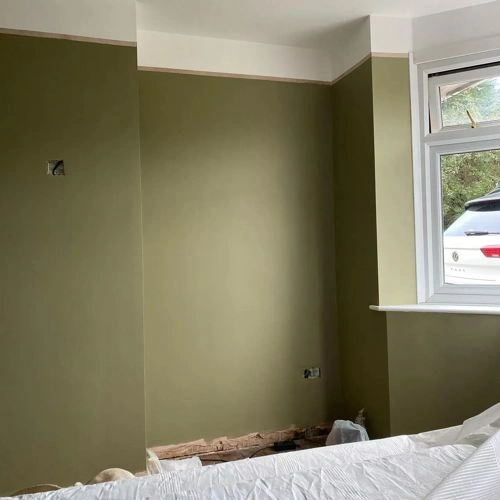
Local Green for bedroom (6 photos)
We’ve hand-picked a beautiful collection of photos of this amazing green shade used in real bedrooms. Take a look and imagine how this wonderful warm mid-tone paint color could transform your own bedroom space.
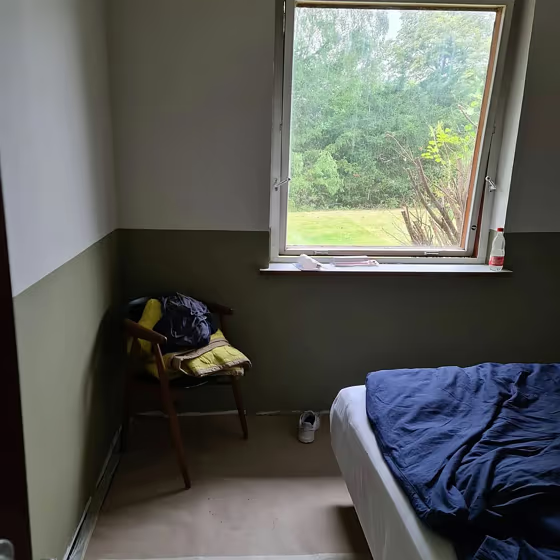
@husetvednakskovfjord
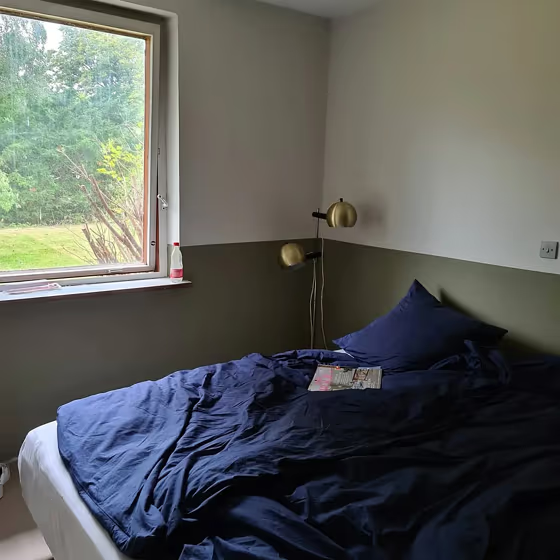
@husetvednakskovfjord
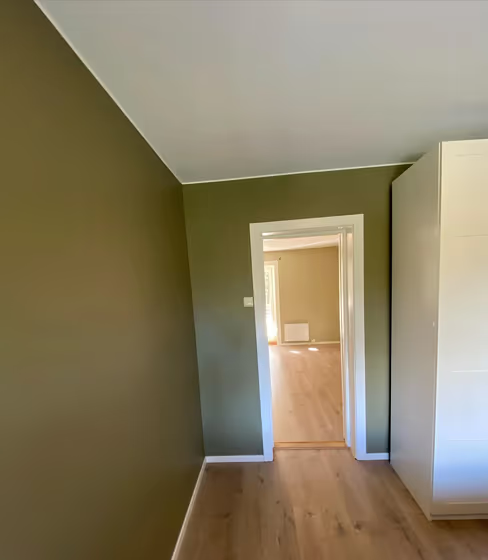
@proffpaint_as
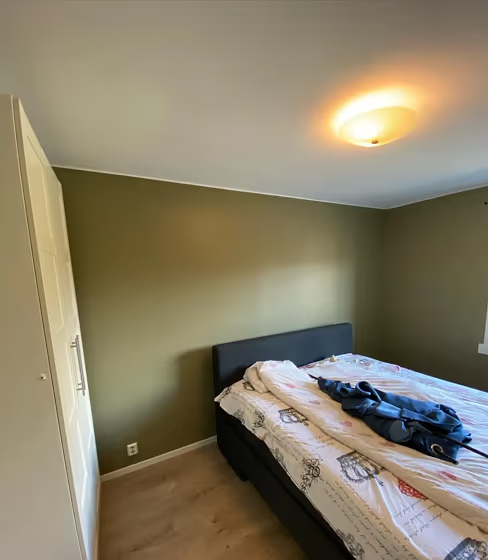
@proffpaint_as
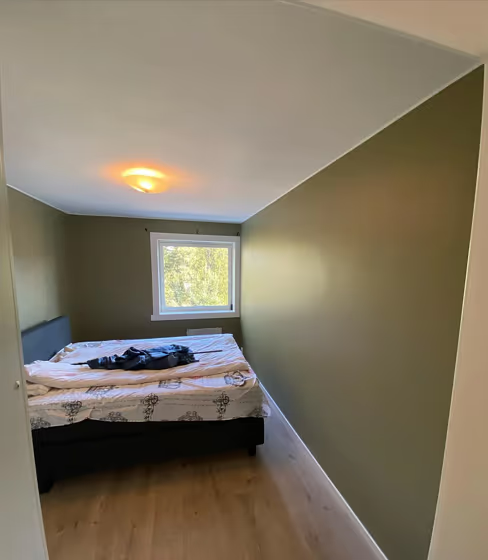
@proffpaint_as
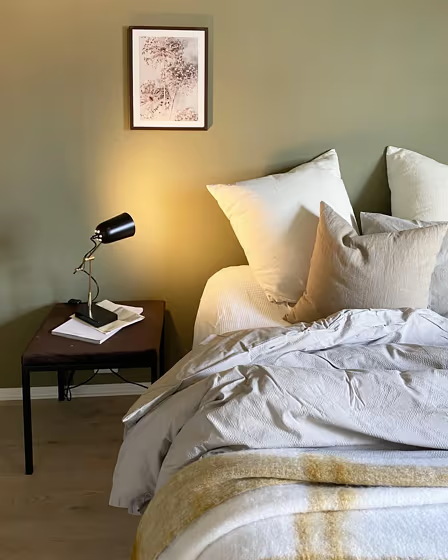
@habitatboligstyling
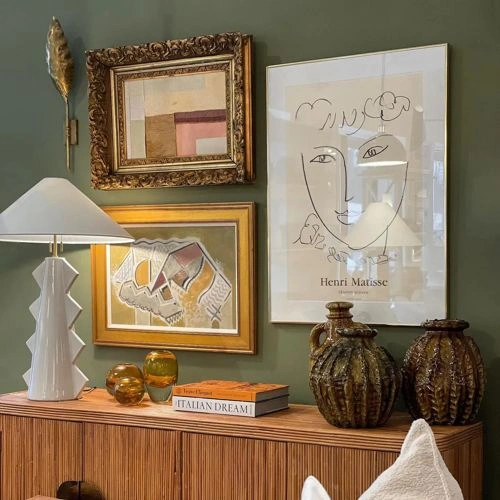
Local Green for living room (6 photos)
Check out this stunning mid-tone color used in real living rooms. Explore how this green shade can create a unique space
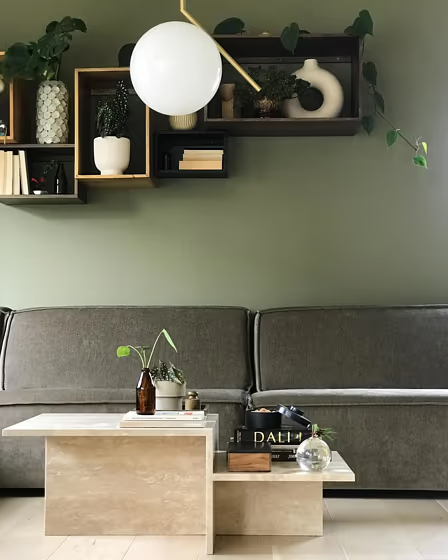
@milla.meliora
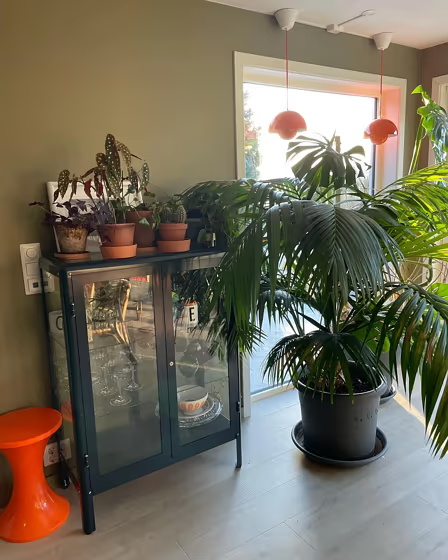
@kristin_besseberg
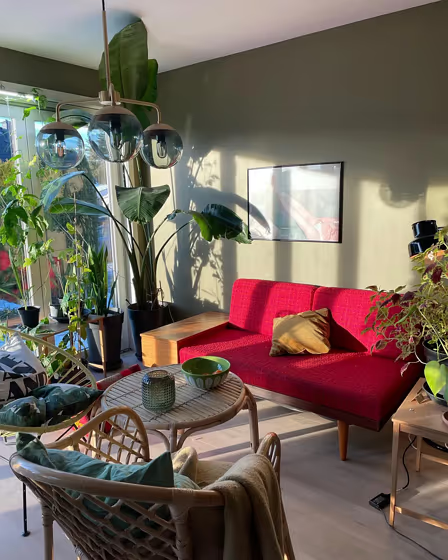
@kristin_besseberg
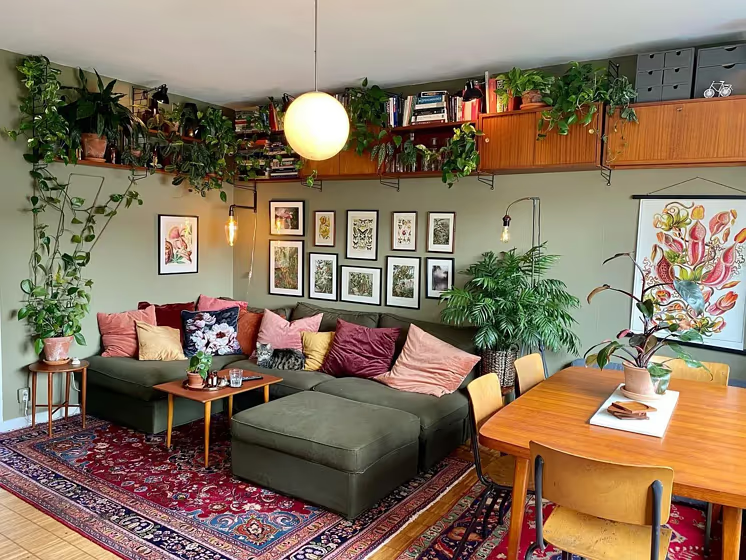
@home_fragments
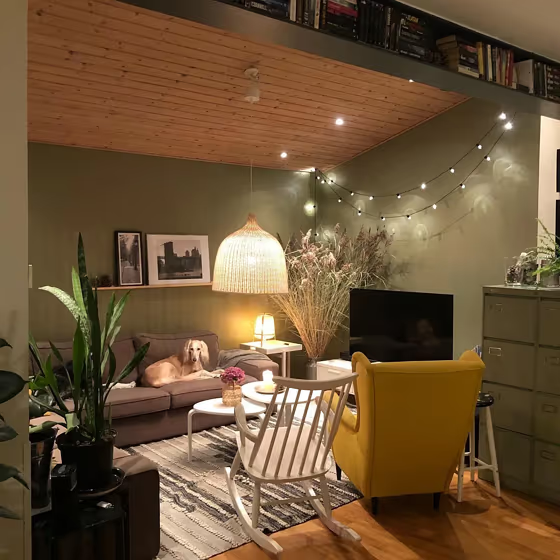
@mariarenoverar
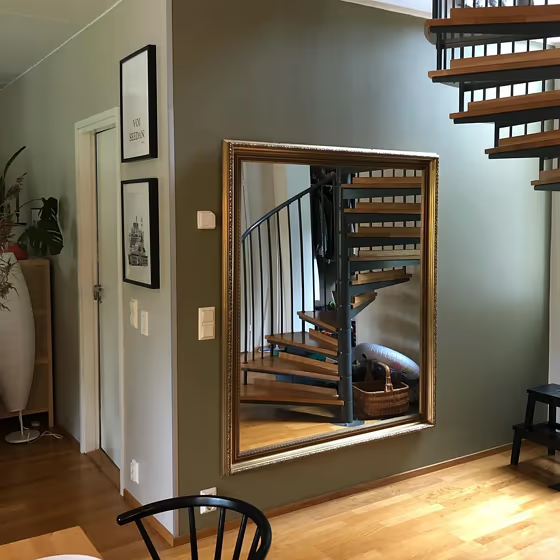
@mariarenoverar
Jotun Local Green reviews (4 photos)
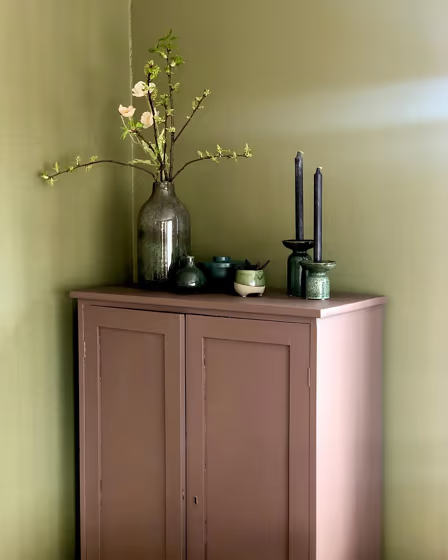
View the photos of real spaces painted with this green that were not included in specific categories. Close-ups, painted furniture, storages and dressers, hallways, stairs and ceilings.
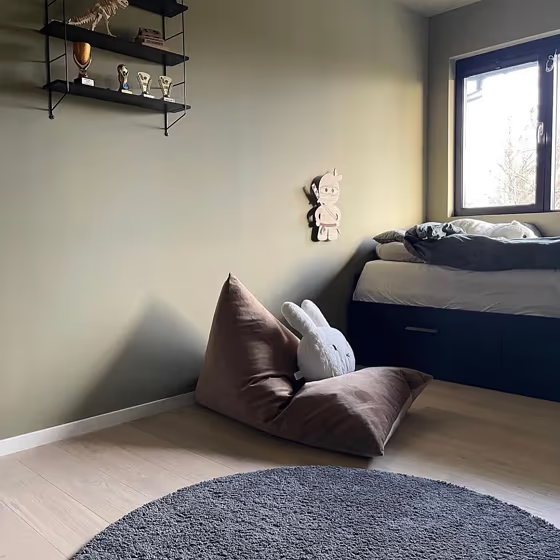
@liedesign.no
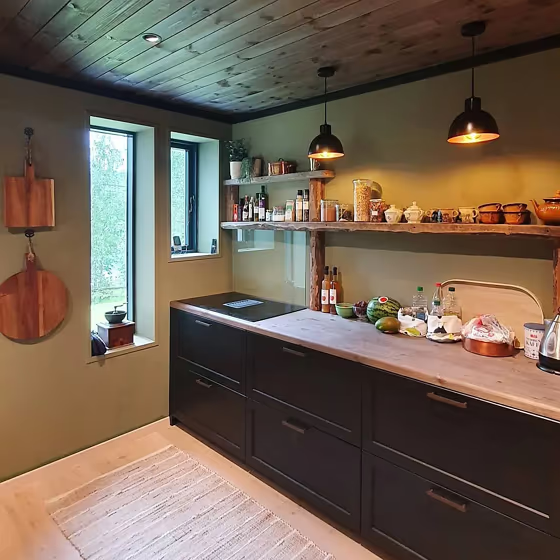
@familiebruket
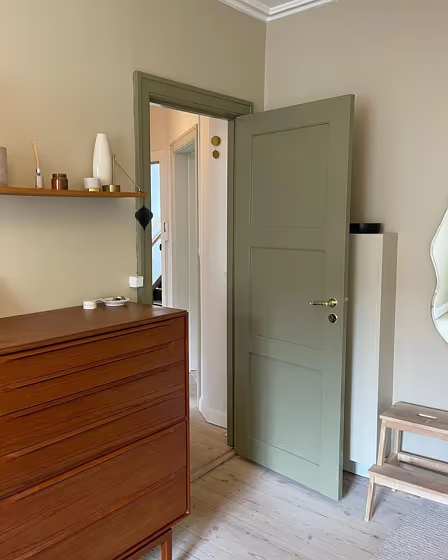
@monique_plahn
@nordrehaugen
Try before you buy

100% accurate
reusable paint samples

Peel, stick,
and repeat

Twice painted
with real paint

Next day
delivery
What are Jotun Local Green undertones?
Local Green is a midtone, muted mustard. The HEX sample leans yellow; this describes its measurable digital hue direction, not a hidden paint pigment. Warm bulbs can make it look creamier or more golden, while cool daylight may mute that warmth and pull it closer to beige or greige.
HEX value:
RGB code:
148, 138, 111
Is Jotun Local Green cool or warm?
warm
cool

With a hue of 44°, this Green reads warm on the HSL color wheel.
8546 Local Green HSL code: 44, 15%, 51%
Hue - degree on a color wheel from 0 to 360. 0 is red, 120 is green, and 240 is blue.
Saturation is expressed as a percentage. At 0%, it appears as a shade of grey, and at 100%, it is in full color.
Lightness is also a percentage value. 0% is black, and 100% is white.
How light temperature affects Local Green
Natural Lighting. During the day, natural light shifts from about 2000 K at sunrise/sunset to 5500–6500 K at noon.
In addition, natural-light temperature depends on its direction:
| Direction of sunlight | Visible temp. | Hue | Duration |
|---|---|---|---|
| North | Cool | Bluish | All day |
| East | Warm | Yellow | Before noon |
| West | Warm | Orange-red | After noon |
| South | Warm | Orange-yellow | All day |
Artificial Lighting. When choosing bulbs, pay attention to their color temperature in Kelvins.
Use the slider to see how this Green shade looks under different lighting:
Coordinating colors.
Colors that go with Jotun Local Green:
Monochromatic color scheme

This scheme consists of various shades, tints, and tones of a single color. While it offers a perfect combination of hues, without accent décor it may become monotonous.
Lighter shades

Darker shades

Complementary color scheme

This color scheme is a combination of two shades that are opposite each other on the color wheel. The high contrast between these colors creates a vibrant and dynamic visual effect. For the color Local Green with a orange hue, complementary colors are those with a blue hue close to 224, such as Jotun Støvblå and Dim Blue.

LRV of Local Green
Local Green has an LRV of 25.56% and refers to Medium colors that reflect a lot of light. Why LRV is important?

Light Reflectance Value measures the amount of visible and usable light that reflects from a painted surface.
Simply put, the higher the LRV of a paint color, the brighter the room you will get.
The scale goes from 0% (absolute black, absorbing all light) to 100% (pure white, reflecting all light).
Act like a pro: When choosing paint with an LRV of 25.56%, pay attention to your bulbs' brightness. Light brightness is measured in lumens. The lower the paint's LRV, the higher lumen level you need. Every square foot of room needs at least 40 lumens. That means for a 200 ft2 living room you'll need about 8000 lumens of light – e.g., eight 1000 lm bulbs.
Color codes
We have collected almost every possible color code you could ever need.
Not sure what the difference between HEX and RGB is? We break down color models in plain language. Understanding color models
| Format | Code |
|---|---|
| HEX | #948a6f |
| RGB Decimal | 148, 138, 111 |
| RGB Percent | 58.04%, 54.12%, 43.53% |
| HSV | Hue: 44° Saturation: 25.0% Value: 58.04% |
| HSL | hsl(44, 14.74, 50.78) |
| CMYK | Cyan: 0.0 Magenta: 6.76 Yellow: 25.0 Key: 41.96 |
| YIQ | Y: 137.912 I: 14.635 Q: -6.287 |
| XYZ | X: 24.17 Y: 25.621 Z: 18.707 |
| CIE Lab | L:57.676 a:-0.792 b:15.843 |
| CIE Luv | L:57.676 u:7.687 v:20.976 |
| Decimal | 9734767 |
| Hunter Lab | 50.617, -3.345, 13.52 |

Color equivalents
70YY 26/137
Gooseberry Fool 2
Dulux

50YY 27/105
Common Dormouse
Dulux
8610
Juicy Green
Jotun
8597
Seaweed Green
Jotun

49YY 26/180
Desert Dusk
Dulux
41
Drab
Farrow and Ball
10248
Olivenlund
Jotun
8264
Kaki
Jotun
60YY 33/130
Old Time Olive
Dulux
8469
Green Leaf
Jotun

233
Serpentine
Little Greene

10051
Claywood
Jotun
13
Olive
Farrow and Ball
8047
Grotto
Jotun
292
Treron
Farrow and Ball

10962
Sandy
Jotun

40
Mouse's Back
Farrow and Ball

54
Dauphin
Farrow and Ball