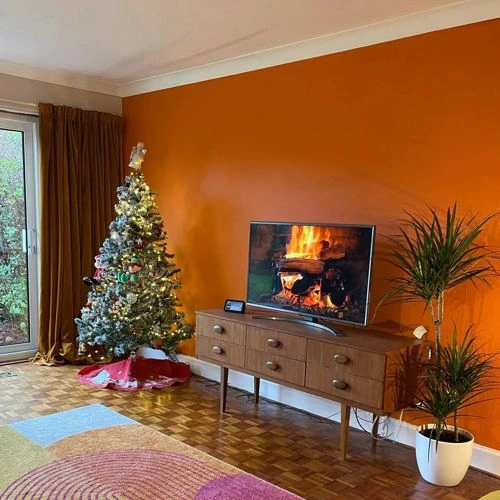
Dulux Nigerian Sands 3 80YR 27/530
Contentsshow +hide -
| Code: | 80YR 27/530 |
| Name: | Nigerian Sands 3 |
| Brand: | Dulux |
What color is Dulux Nigerian Sands 3?
Dulux Nigerian Sands 3 80YR 27/530 is a strong, sun-baked orange with a clear earthy brown base. Its rich saturation gives it real presence, reading like fired clay or weathered terracotta rather than a soft neutral. In bright daylight, this color can show its livelier orange side, while lower or warmer evening light draws out its deeper rust-brown character. It makes a confident feature wall in a dining room, entryway, or kitchen, and can also bring character to painted cabinetry or a sheltered exterior detail. Pair Nigerian Sands 3 with chalky off-whites, deep olive greens, warm charcoal, natural oak, woven fibres, and matte black metal for contrast.
Try before you buy

100% accurate
reusable paint samples

Peel, stick,
and repeat
Twice painted
with real paint

Next day
delivery
What are Dulux Nigerian Sands 3 undertones?
Nigerian Sands 3 is a midtone, clear caramel orange. The HEX sample leans orange; this describes its measurable digital hue direction, not a hidden paint pigment. Warm bulbs can make it look creamier or more golden, while cool daylight may mute that warmth and pull it closer to beige or greige.
HEX value:
RGB code:
204, 116, 54
Is Dulux Nigerian Sands 3 cool or warm?
warm
cool
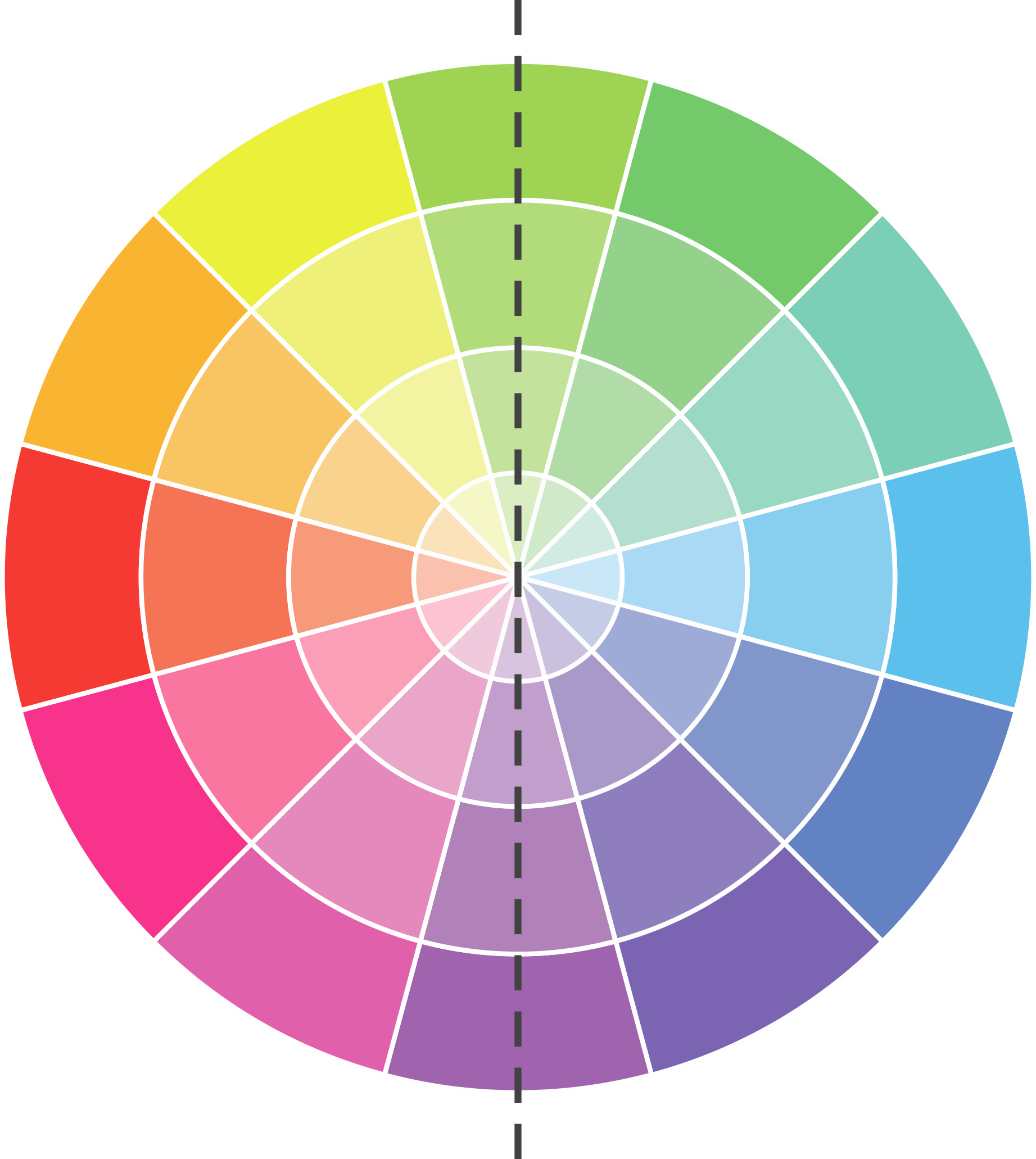
At 25° on the HSL hue wheel, this Red sits firmly on the warm side.
80YR 27/530 Nigerian Sands 3 HSL code: 25, 60%, 51%
Hue - degree on a color wheel from 0 to 360. 0 is red, 120 is green, and 240 is blue.
Saturation is expressed as a percentage. At 0%, it appears as a shade of grey, and at 100%, it is in full color.
Lightness is also a percentage value. 0% is black, and 100% is white.
How light temperature affects Nigerian Sands 3
Natural Lighting. During the day, natural light shifts from about 2000 K at sunrise/sunset to 5500–6500 K at noon.
In addition, natural-light temperature depends on its direction:
| Direction of sunlight | Visible temp. | Hue | Duration |
|---|---|---|---|
| North | Cool | Bluish | All day |
| East | Warm | Yellow | Before noon |
| West | Warm | Orange-red | After noon |
| South | Warm | Orange-yellow | All day |
Artificial Lighting. When choosing bulbs, pay attention to their color temperature in Kelvins.
Use the slider to see how this Red shade looks under different lighting:
Coordinating colors.
Colors that go with Dulux Nigerian Sands 3:
Monochromatic color scheme
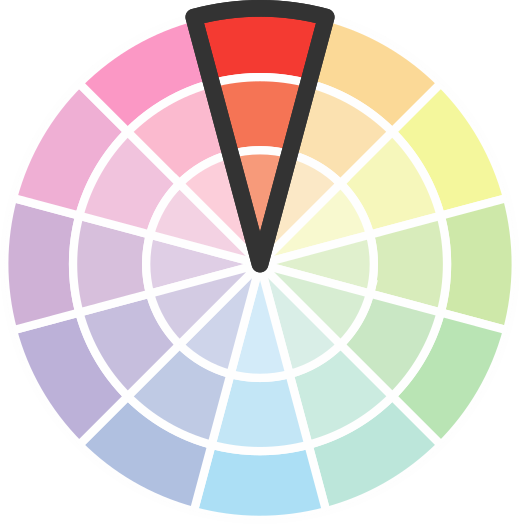
This scheme consists of various shades, tints, and tones of a single color. While it offers a perfect combination of hues, without accent décor it may become monotonous.
Lighter shades
80YR 27/530
Nigerian Sands 3

Darker shades

Complementary color scheme
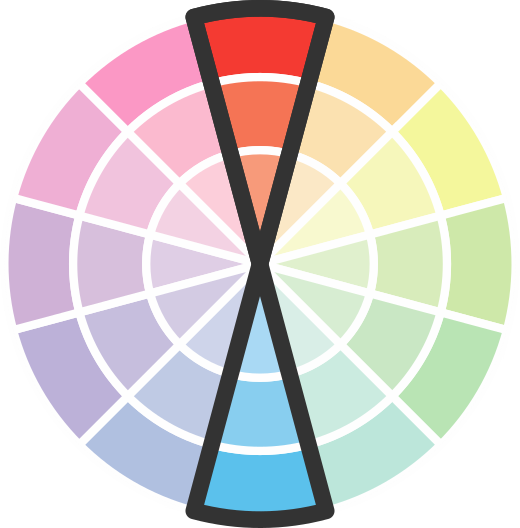
This color scheme is a combination of two shades that are opposite each other on the color wheel. The high contrast between these colors creates a vibrant and dynamic visual effect. For the color Nigerian Sands 3 with a red hue, complementary colors are those with a green hue close to 205, such as Dulux Ocean Stone and Breton Blue.
Color codes
We have collected almost every possible color code you could ever need.
Not sure what the difference between HEX and RGB is? We break down color models in plain language. Understanding color models
| Format | Code |
|---|---|
| HEX | #CC7436 |
| RGB Decimal | 204, 116, 54 |
| RGB Percent | 80.00%, 45.49%, 21.18% |
| HSV | Hue: 25° Saturation: 73.53% Value: 80.0% |
| HSL | hsl(25, 60, 51) |
| CMYK | Cyan: 0.0 Magenta: 43.14 Yellow: 73.53 Key: 20.0 |
| YIQ | Y: 135.244 I: 72.363 Q: -0.679 |
| XYZ | X: 31.816 Y: 25.598 Z: 6.754 |
| CIE Lab | L:57.653 a:29.694 b:47.816 |
| CIE Luv | L:57.653 u:70.463 v:44.972 |
| Decimal | 13399094 |
| Hunter Lab | 50.594, 23.707, 27.501 |

Color equivalents
80YR 24/569
Roasted Pumpkin 3
Dulux

70YR 29/559
Ginger Glow 4
Dulux

70YR 26/605
Ginger Glow 3
Dulux
80YR 31/508
Roasted Pumpkin 4
Dulux
80YR 28/650
Spicy Sandalwood 3
Dulux
Spiced Terracotta
Dulux
Eastern Spice 1
Dulux
Orange Fizz
Dulux
70YR 27/404
Manuka Honeybee
Dulux
RAL 2000
Yellow orange
RAL Classic

70YR 33/514
Auburn Falls 5
Dulux
RAL 2011
Deep orange
RAL Classic
68YR 28/701
Auburn Falls 4
Dulux
90YR 31/605
Nigerian Sands 4
Dulux
60YR 29/559
Mexican Mosaic 4
Dulux
80YR 31/419
Nectar Jewels 2
Dulux
80YR 34/561
Spicy Sandalwood 4
Dulux
Moroccan Flame
Dulux