

Sherwin Williams Sand Dollar SW 6099
Contentsshow +hide -
- Sand Dollar for exterior (1 photo)
- Sherwin Williams Sand Dollar reviews (4 photos)
- What are Sherwin Williams Sand Dollar undertones?
- Is Sand Dollar SW 6099 cool or warm?
- How light temperature affects on Sand Dollar
- Monochromatic color scheme
- Complementary color scheme
- Color comparison and matching
- LRV of Sand Dollar SW 6099
- Color codes
- Color equivalents
| Official page: | Sand Dollar SW 6099 |
| Code: | SW 6099 |
| Name: | Sand Dollar |
| Brand: | Sherwin Williams |
| Collections: | Living Well |
What color is Sherwin Williams Sand Dollar?
Sherwin Williams Sand Dollar SW 6099 is a light, muted beige with a warm tan base and a soft peachy cast. Its low saturation keeps it gentle rather than yellow, making it read as a quiet neutral on broad wall surfaces. In warm afternoon light, Sand Dollar can appear slightly richer and more buff-colored, while cooler daylight brings out its pale beige side. It suits bedrooms, living rooms, and hallways paired with creamy whites, weathered oak, linen upholstery, and brushed brass. For contrast, use this shade alongside charcoal, deep olive, or earthy brown accents.
Sand Dollar for exterior
Looking for a fresh new look for your house exterior or starting from skretch? We’ve collected pictures of real-life homes that have been painted with this warm beige hue. Find inspiration for your house’s exterior, front doors, gates, shutters, frames or windows.
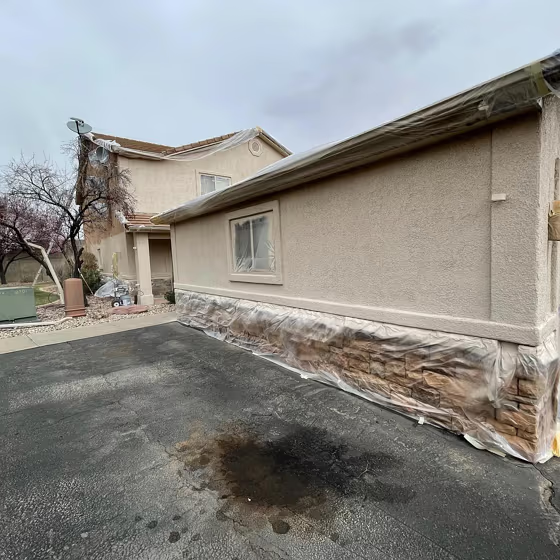
@bbppainting
Sherwin Williams Sand Dollar reviews (4 photos)
View the photos of real spaces painted with this beige that were not included in specific categories. Close-ups, painted furniture, storages and dressers, hallways, stairs and ceilings.
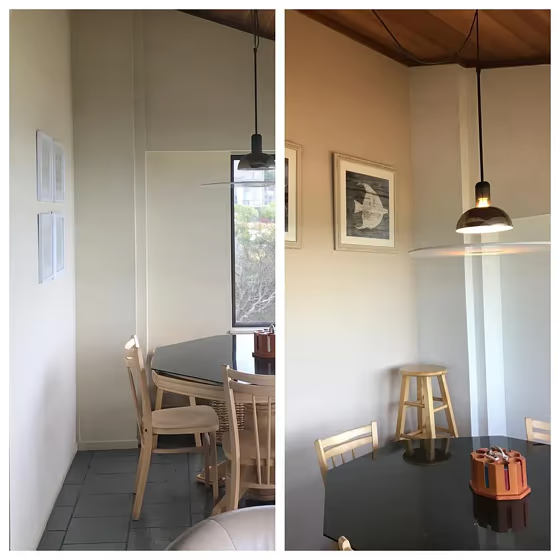
@affordablepainting
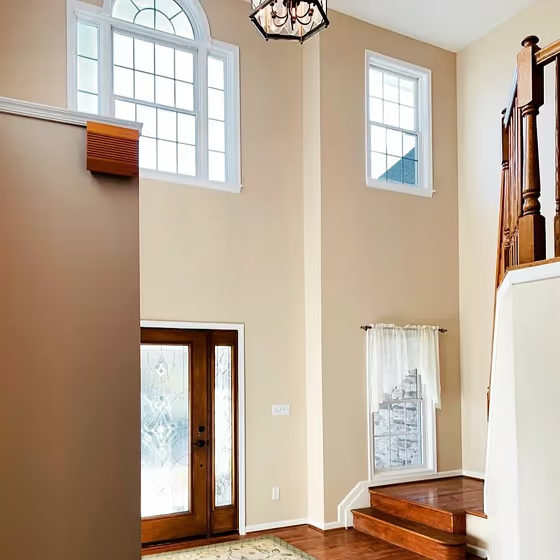
@squaredawaypainting
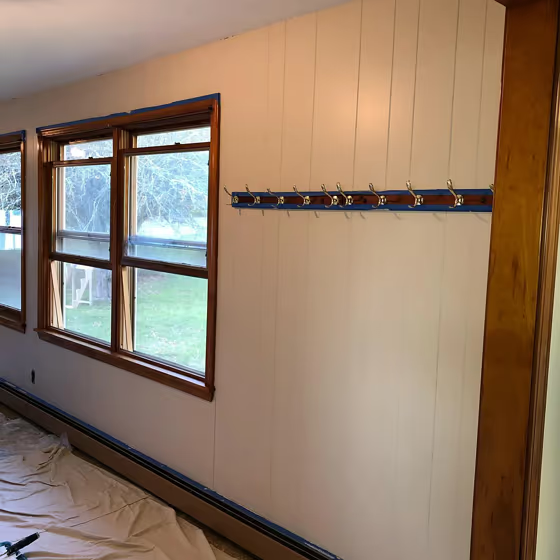
@maggie_may0408
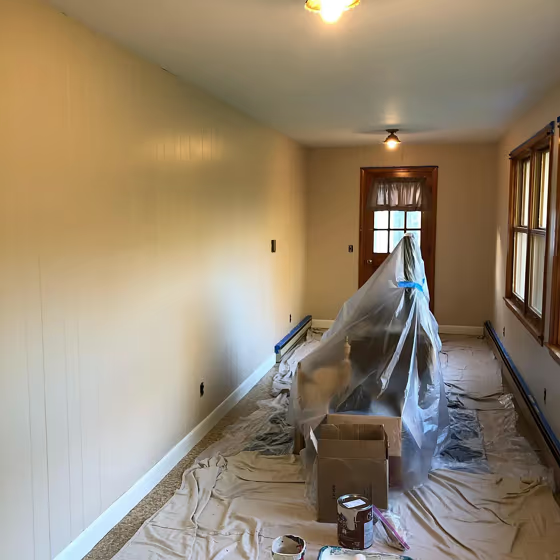
@maggie_may0408
Try before you buy

100% accurate
reusable paint samples
Peel, stick,
and repeat
Twice painted
with real paint

Next day
delivery
What are Sherwin Williams Sand Dollar undertones?
Sand Dollar is a light, muted sandy beige. The HEX sample leans yellow-orange; this describes its measurable digital hue direction, not a hidden paint pigment. Warm bulbs can make it look creamier or more golden, while cool daylight may mute that warmth and pull it closer to beige or greige.
HEX value:
RGB code:
215, 197, 179
Is Sherwin Williams Sand Dollar cool or warm?
warm
cool
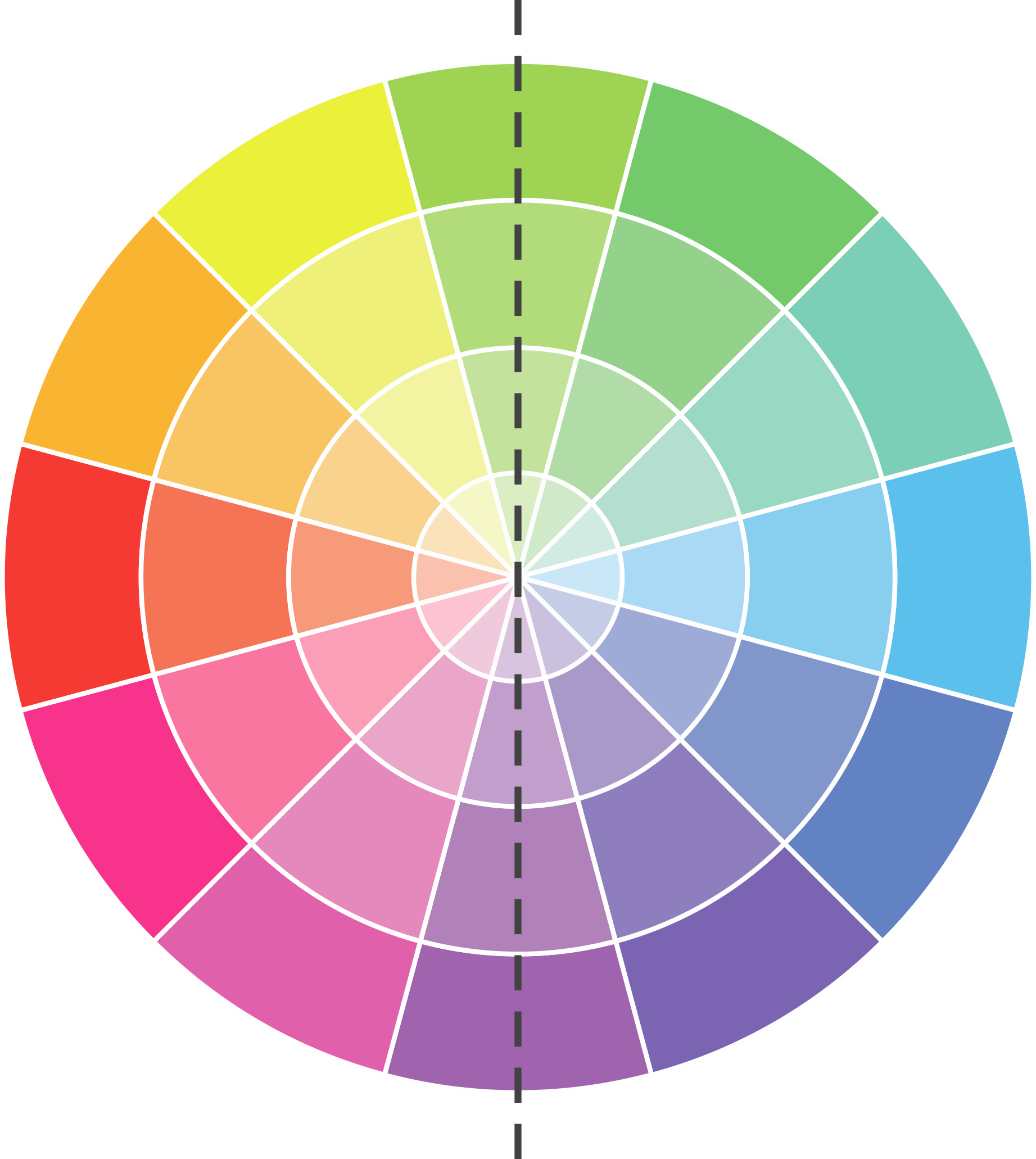
With a hue of 30°, this Beige reads warm on the HSL color wheel.
SW 6099 Sand Dollar HSL code: 30, 31%, 77%
Hue - degree on a color wheel from 0 to 360. 0 is red, 120 is green, and 240 is blue.
Saturation is expressed as a percentage. At 0%, it appears as a shade of grey, and at 100%, it is in full color.
Lightness is also a percentage value. 0% is black, and 100% is white.
How light temperature affects Sand Dollar
Natural Lighting. During the day, natural light shifts from about 2000 K at sunrise/sunset to 5500–6500 K at noon.
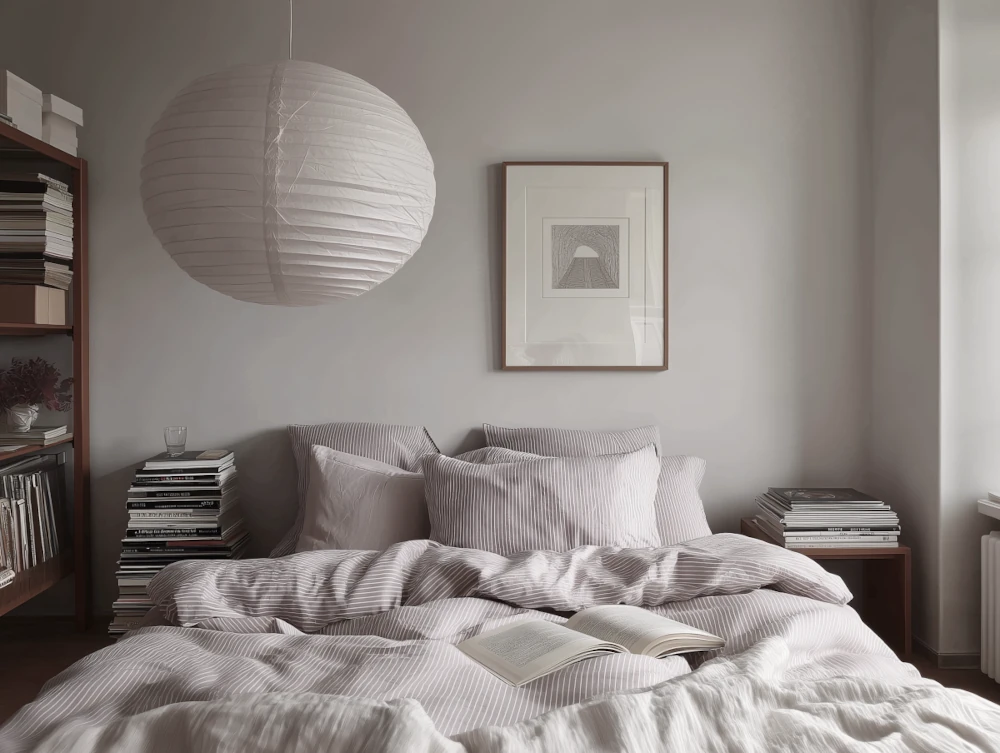
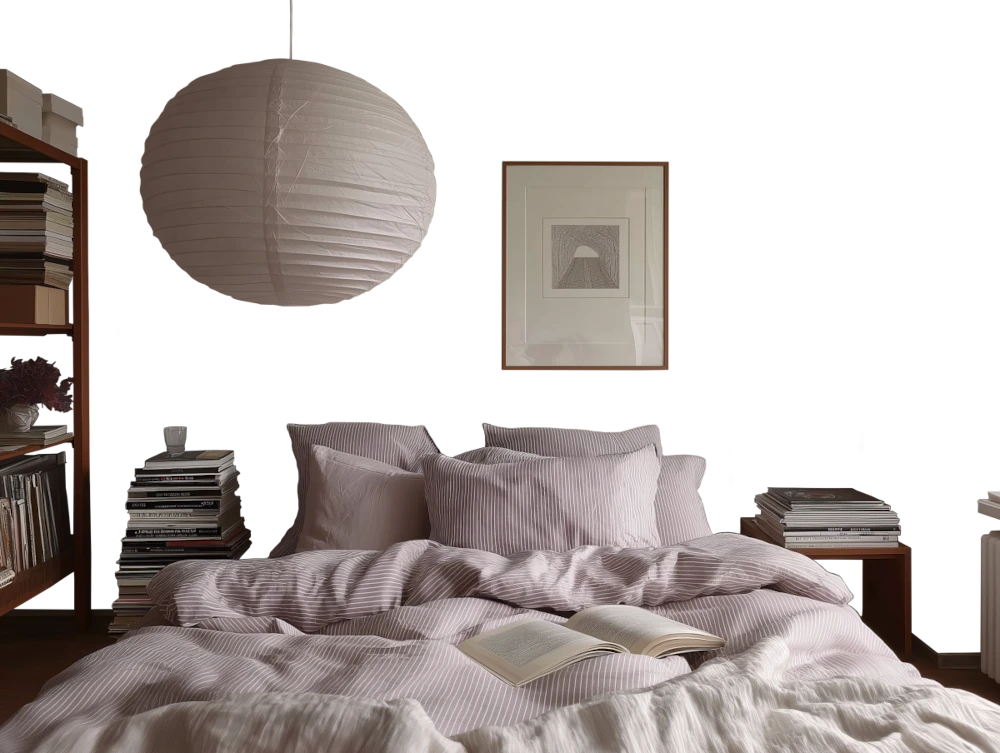
In addition, natural-light temperature depends on its direction:
| Direction of sunlight | Visible temp. | Hue | Duration |
|---|---|---|---|
| North | Cool | Bluish | All day |
| East | Warm | Yellow | Before noon |
| West | Warm | Orange-red | After noon |
| South | Warm | Orange-yellow | All day |
Artificial Lighting. When choosing bulbs, pay attention to their color temperature in Kelvins.
Use the slider to see how this Beige shade looks under different lighting:
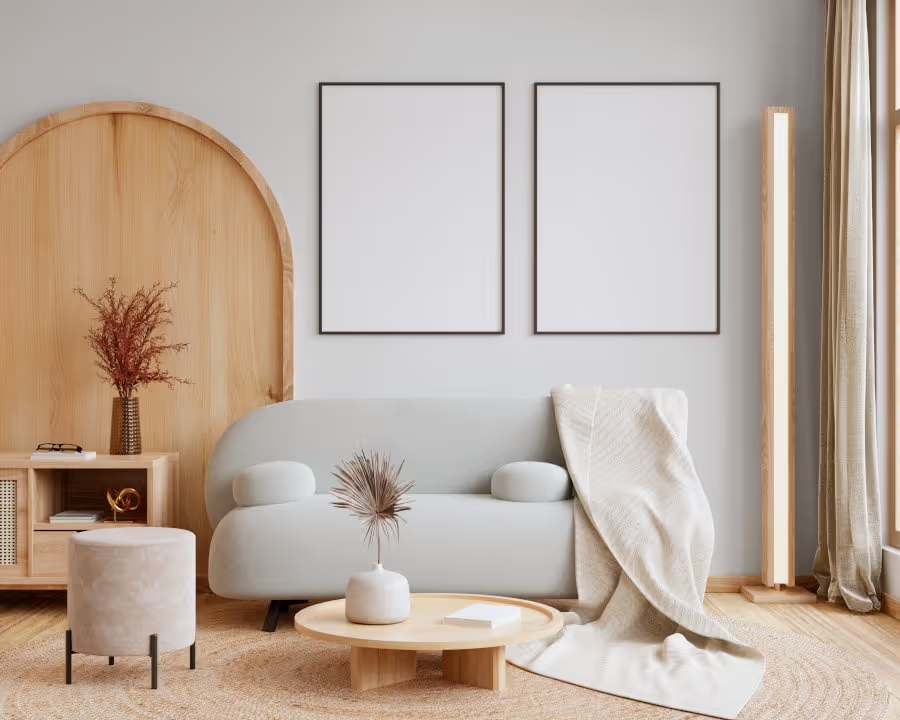
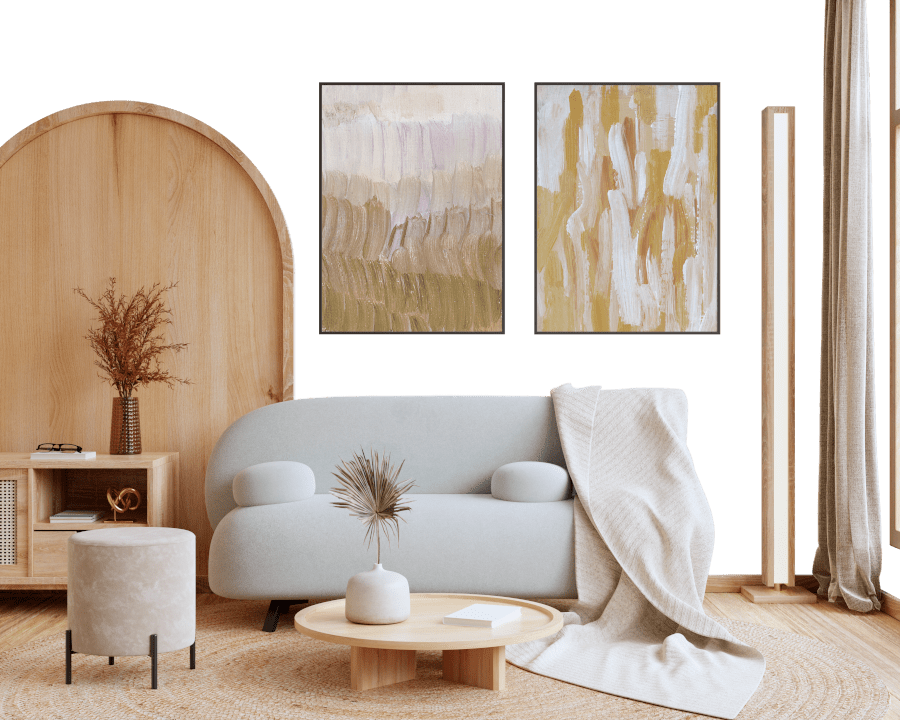
4000K
Coordinating colors.
Colors that go with Sherwin Williams Sand Dollar:
Monochromatic color scheme
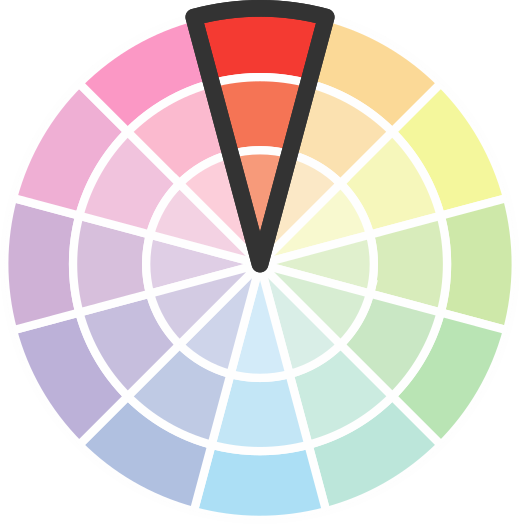
This scheme consists of various shades, tints, and tones of a single color. While it offers a perfect combination of hues, without accent décor it may become monotonous.
Lighter shades
SW 6099
Sand Dollar

Darker shades
SW 6099
Sand Dollar
Complementary color scheme
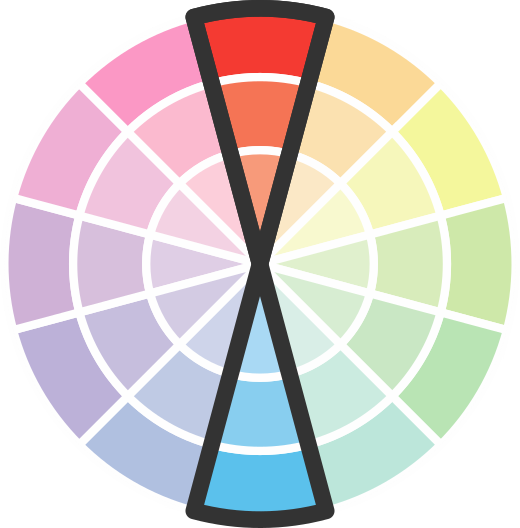
This color scheme is a combination of two shades that are opposite each other on the color wheel. The high contrast between these colors creates a vibrant and dynamic visual effect. For the color Sand Dollar with a orange hue, complementary colors are those with a blue hue close to 210, such as Sherwin Williams Mount Etna and Debonair.




LRV of Sand Dollar
Sand Dollar has an LRV of 57.61% and refers to Light colors that reflect most of the incident light. Why LRV is important?
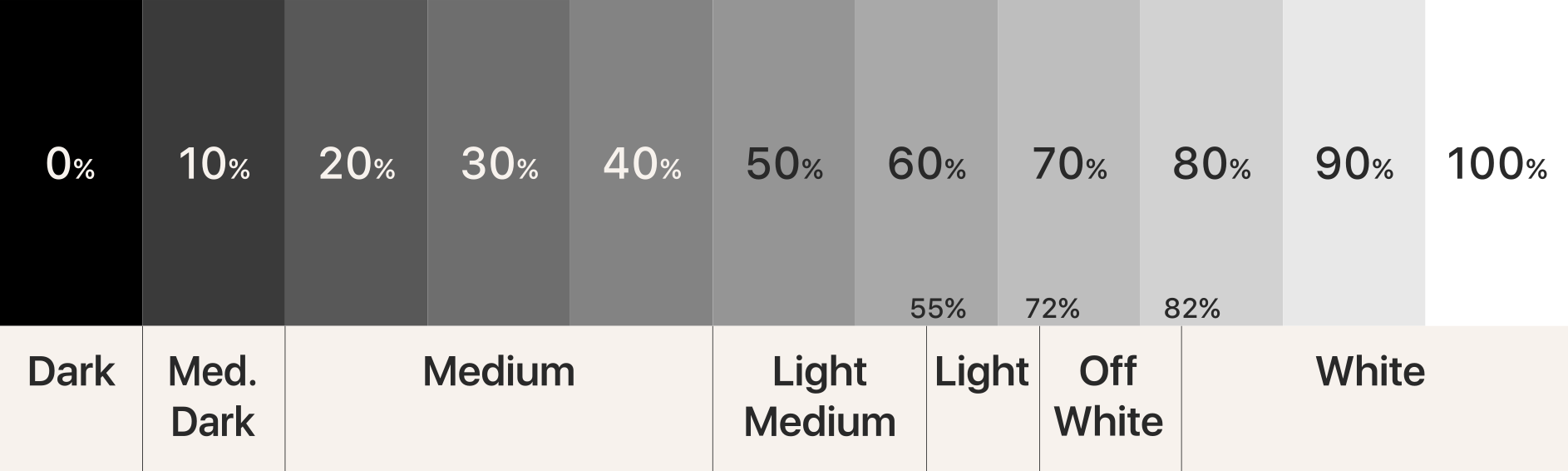
Light Reflectance Value measures the amount of visible and usable light that reflects from a painted surface.
Simply put, the higher the LRV of a paint color, the brighter the room you will get.
The scale goes from 0% (absolute black, absorbing all light) to 100% (pure white, reflecting all light).
Act like a pro: When choosing paint with an LRV of 57.61%, pay attention to your bulbs' brightness. Light brightness is measured in lumens. The lower the paint's LRV, the higher lumen level you need. Every square foot of room needs at least 40 lumens. That means for a 200 ft2 living room you'll need about 8000 lumens of light – e.g., eight 1000 lm bulbs.
Color codes
We have collected almost every possible color code you could ever need.
Not sure what the difference between HEX and RGB is? We break down color models in plain language. Understanding color models
| Format | Code |
|---|---|
| HEX | #d7c5b3 |
| RGB Decimal | 215, 197, 179 |
| RGB Percent | 84.31%, 77.25%, 70.20% |
| HSV | Hue: 30° Saturation: 16.74% Value: 84.31% |
| HSL | hsl(30, 31, 77) |
| CMYK | Cyan: 0.0 Magenta: 8.37 Yellow: 16.74 Key: 15.69 |
| YIQ | Y: 200.33 I: 16.51 Q: -1.794 |
| XYZ | X: 56.126 Y: 57.635 Z: 50.804 |
| CIE Lab | L:80.536 a:3.379 b:11.318 |
| CIE Luv | L:80.536 u:11.912 v:15.769 |
| Decimal | 14140851 |
| Hunter Lab | 75.918, -0.891, 13.466 |

Color equivalents
SW 6092
Lightweight Beige
Sherwin Williams

HDC-AC-04
Avenue Tan
Behr
MQ3-09
Loft Light
Behr
SW 9094
Playa Arenosa
Sherwin Williams
1025
Chocolate Mousse
Benjamin Moore
1081
King Arthur's Court
Benjamin Moore
SW 7719
Fresco Cream
Sherwin Williams
SW 6085
Simplify Beige
Sherwin Williams

MQ3-38
Suede Beige
Behr
ICC-22
Haze
Behr
1080
White Oaks
Benjamin Moore
SW 6106
Kilim Beige
Sherwin Williams

CSP-340
Pinky Swear
Benjamin Moore
MQ2-36
Elusive Dawn
Behr
SW 9085
Touch of Sand
Sherwin Williams

SW 2859
Beige
Sherwin Williams
SW 7712
Townhouse Tan
Sherwin Williams
SW 7527
Nantucket Dune
Sherwin Williams
