

Jotun Shade 11130
Contentsshow +hide -
- Shade for bedroom (3 photos)
- Shade for living room (5 photos)
- Jotun Shade for bathroom (4 photos)
- Jotun Shade reviews (8 photos)
- What are Jotun Shade undertones?
- Is Shade 11130 cool or warm?
- How light temperature affects on Shade
- Monochromatic color scheme
- Complementary color scheme
- Color comparison and matching
- LRV of Shade 11130
- Color codes
- Color equivalents
| Code: | 11130 |
| Name: | Shade |
| Brand: | Jotun |
What color is Jotun Shade?
NCS Code: 4505-Y20R
Shade for bedroom (3 photos)
We’ve hand-picked a beautiful collection of photos of this amazing beige shade used in real bedrooms. Take a look and imagine how this wonderful warm mid-tone paint color could transform your own bedroom space.

@marias_fristed

@minmillstyle

@minmillstyle
Shade for living room (5 photos)
Check out this stunning mid-tone color used in real living rooms. Explore how this beige shade can create a unique space

@enkontrast

@funkis_herstadaasen

@funkis_herstadaasen

@funkis_herstadaasen

@casa_berglivegen
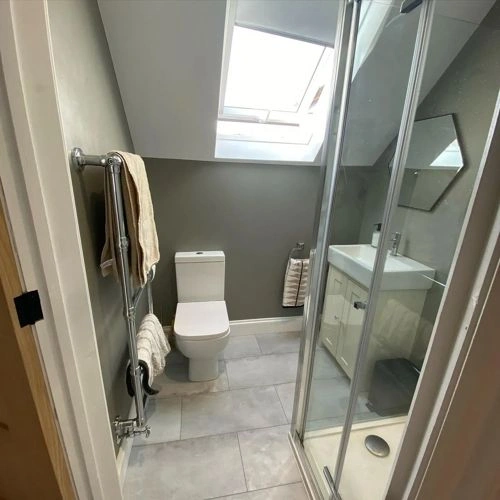
Jotun 11130 for bathroom (4 photos)
Looking for inspiration for your dream bathroom renovation project? These beautiful handpicked photos will show you this delightfully warm mid-tone beige real bathrooms.

@lindislus

@lindislus

@under_etasjen

@feng_shui9
Jotun Shade reviews (8 photos)
View the photos of real spaces painted with this beige that were not included in specific categories. Close-ups, painted furniture, storages and dressers, hallways, stairs and ceilings.

@hellehaugerud

@majlenesolli

@majlenesolli

@majlenesolli

@casa_berglivegen

@casa_berglivegen

@casa_berglivegen

@a4hjem
Try before you buy

100% accurate
reusable paint samples
Peel, stick,
and repeat
Twice painted
with real paint

Next day
delivery
What are Jotun Shade undertones?
Shade is a midtone, very muted muted beige. The HEX sample has a subtle yellow-orange bias, but its low chroma turns that hue into a neutral-looking color rather than a clear yellow-orange. Warm bulbs can make it look creamier or more golden, while cool daylight may mute that warmth and pull it closer to beige or greige.
HEX value:
RGB code:
157, 147, 133
Is Jotun Shade cool or warm?
warm
cool
With a hue of 35°, this Beige leans warm, but it is close to neutral and can read cooler in some light.
11130 Shade HSL code: 35, 11%, 57%
Hue - degree on a color wheel from 0 to 360. 0 is red, 120 is green, and 240 is blue.
Saturation is expressed as a percentage. At 0%, it appears as a shade of grey, and at 100%, it is in full color.
Lightness is also a percentage value. 0% is black, and 100% is white.
How light temperature affects Shade
Natural Lighting. During the day, natural light shifts from about 2000 K at sunrise/sunset to 5500–6500 K at noon.
In addition, natural-light temperature depends on its direction:
| Direction of sunlight | Visible temp. | Hue | Duration |
|---|---|---|---|
| North | Cool | Bluish | All day |
| East | Warm | Yellow | Before noon |
| West | Warm | Orange-red | After noon |
| South | Warm | Orange-yellow | All day |
Artificial Lighting. When choosing bulbs, pay attention to their color temperature in Kelvins.
Use the slider to see how this Beige shade looks under different lighting:
Coordinating colors.
Colors that go with Jotun Shade:
Monochromatic color scheme
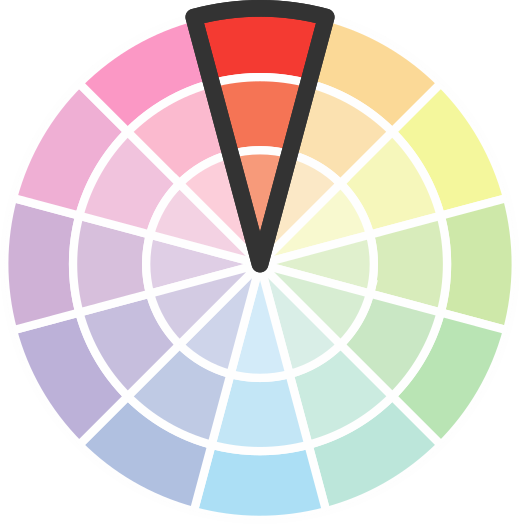
This scheme consists of various shades, tints, and tones of a single color. While it offers a perfect combination of hues, without accent décor it may become monotonous.
Lighter shades

Darker shades

Complementary color scheme
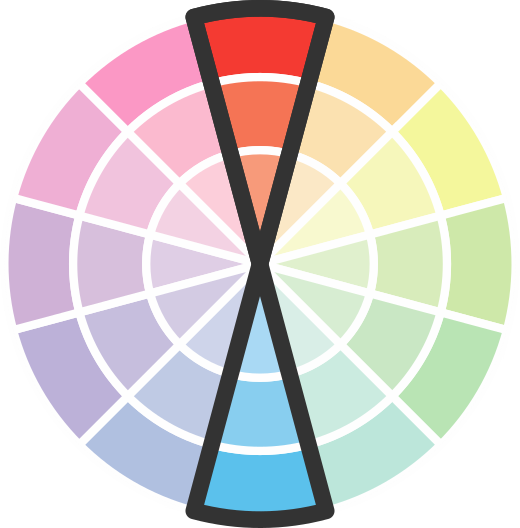
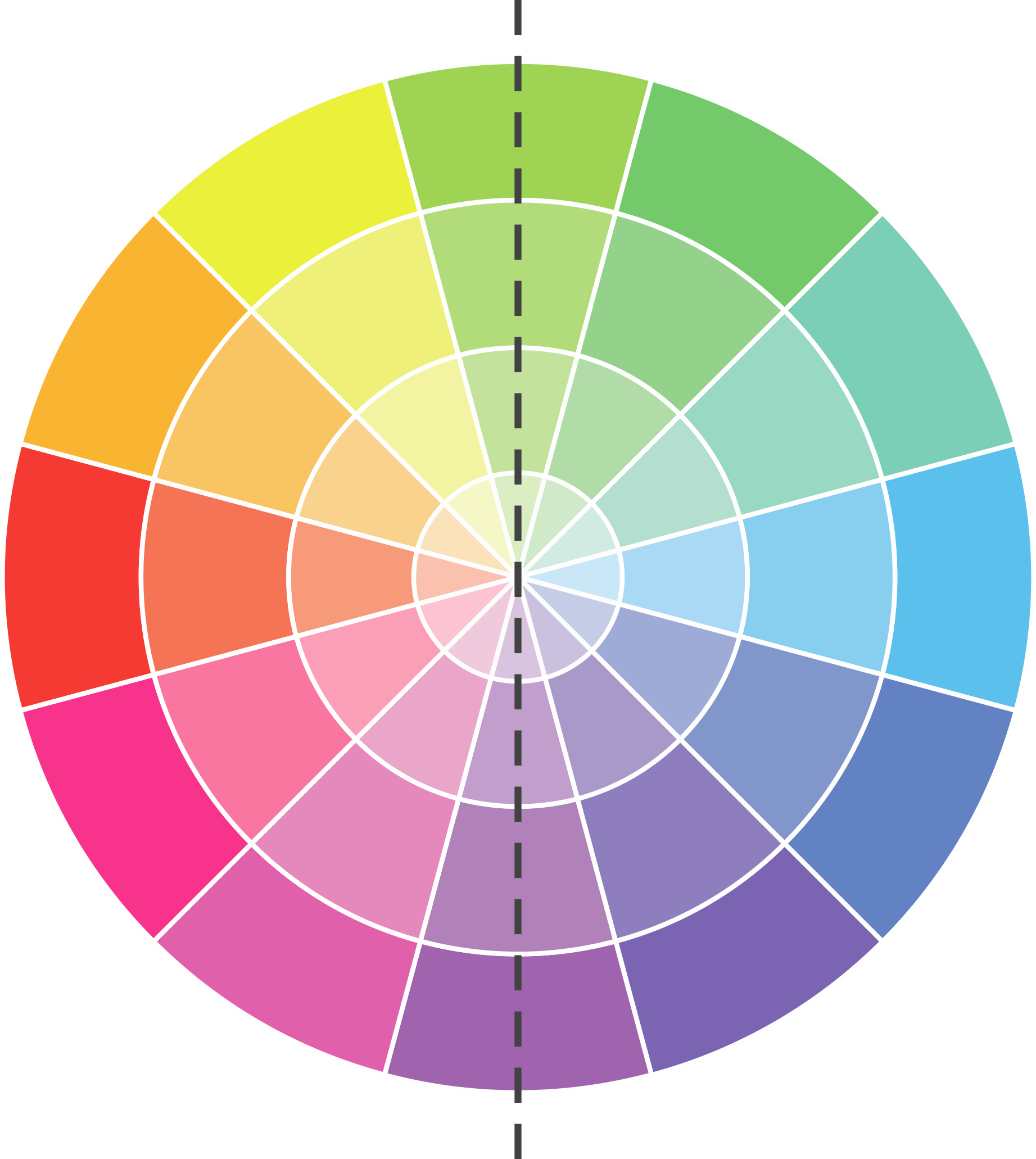
This color scheme is a combination of two shades that are opposite each other on the color wheel. The high contrast between these colors creates a vibrant and dynamic visual effect. For the color Shade with a orange hue, complementary colors are those with a blue hue close to 215, such as Jotun Gustavian Blue and Classic Blue.

LRV of Shade
Shade has an LRV of 29.97% and refers to Medium colors that reflect a lot of light. Why LRV is important?
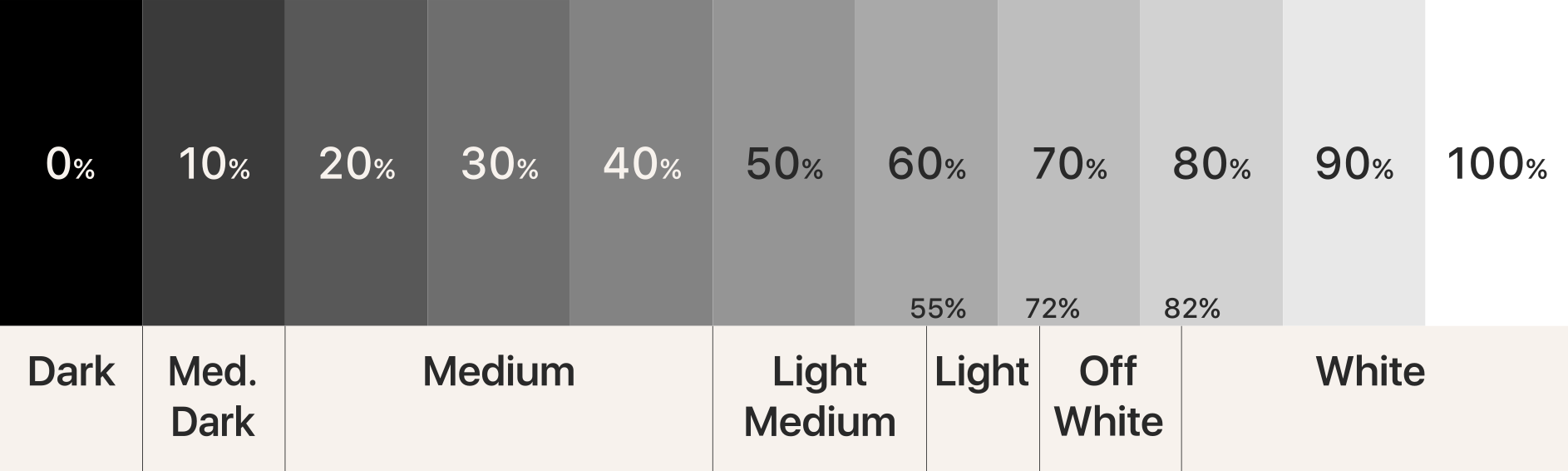
Light Reflectance Value measures the amount of visible and usable light that reflects from a painted surface.
Simply put, the higher the LRV of a paint color, the brighter the room you will get.
The scale goes from 0% (absolute black, absorbing all light) to 100% (pure white, reflecting all light).
Act like a pro: When choosing paint with an LRV of 29.97%, pay attention to your bulbs' brightness. Light brightness is measured in lumens. The lower the paint's LRV, the higher lumen level you need. Every square foot of room needs at least 40 lumens. That means for a 200 ft2 living room you'll need about 8000 lumens of light – e.g., eight 1000 lm bulbs.
Color codes
We have collected almost every possible color code you could ever need.
Not sure what the difference between HEX and RGB is? We break down color models in plain language. Understanding color models
| Format | Code |
|---|---|
| HEX | #9d9385 |
| RGB Decimal | 157, 147, 133 |
| RGB Percent | 61.57%, 57.65%, 52.16% |
| HSV | Hue: 35° Saturation: 15.29% Value: 61.57% |
| HSL | hsl(35, 11, 57) |
| CMYK | Cyan: 0.0 Magenta: 6.37 Yellow: 15.29 Key: 38.43 |
| YIQ | Y: 148.394 I: 10.458 Q: -2.241 |
| XYZ | X: 28.571 Y: 29.729 Z: 26.417 |
| CIE Lab | L:61.42 a:1.233 b:8.743 |
| CIE Luv | L:61.42 u:6.818 v:11.848 |
| Decimal | 10326917 |
| Hunter Lab | 54.525, -1.883, 9.441 |

Color equivalents
11130
Shade
Jotun


S486
Vulcanite
Tikkurila

1352
Form
Jotun

46YY 33/057
Grey Taupe
Dulux
1233
Mohair
Jotun

02YY 32/054
Woodland Trail
Dulux
243
Charleston Gray
Farrow and Ball
233
Serpentine
Little Greene

10YY 30/106
Brave Ground
Dulux

10966
Almond Beige
Jotun
117
Lead Colour
Little Greene

50YY 33/065
Dusted Moss 1
Dulux
15YY 33/043
Woven Nest
Dulux
30YY 36/094
Bleached Lichen 1
Dulux
10YY 35/094
Iced Frappe
Dulux
90YR 34/084
Natural Taupe 1
Dulux
10962
Sandy
Jotun

40
Mouse's Back
Farrow and Ball

30YY 33/145
Chalky Downs 2
Dulux
CC7
Stoke
Farrow and Ball
