

Valspar UK Dancing Peacock L20dW40c
Contentsshow +hide -
| Official page: | Dancing Peacock L20dW40c |
| Code: | L20dW40c |
| Name: | Dancing Peacock |
| Brand: | Valspar UK |
What color is Valspar UK Dancing Peacock?
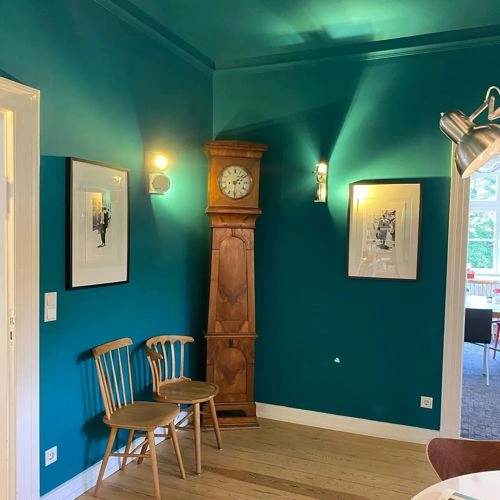
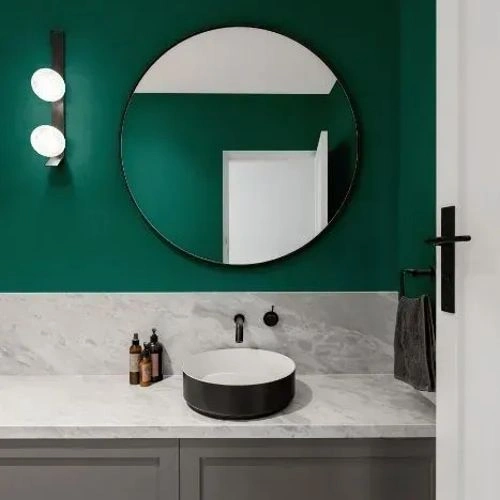
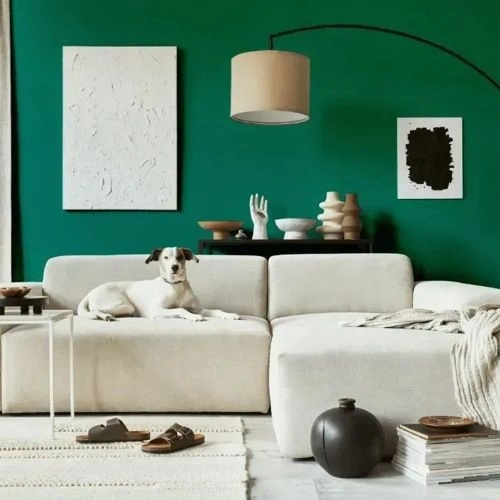
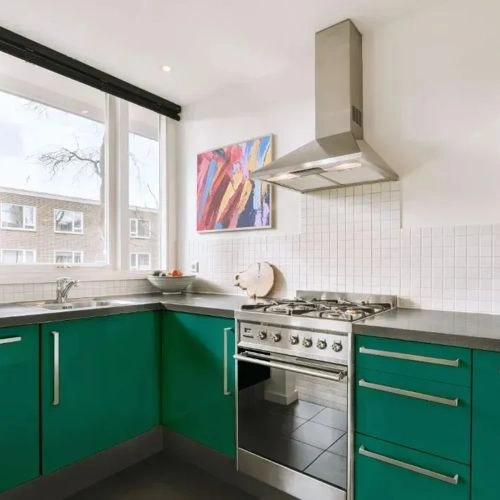
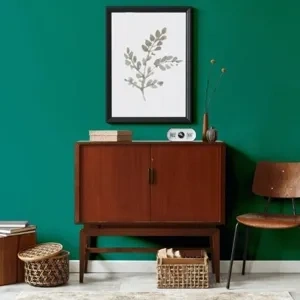
Valspar UK Dancing Peacock L20dW40c is a deep blue-green with a clear teal cast and strong, inky saturation. It reads cooler in daylight, where its green-blue character is most visible, while lower evening light can make it appear darker and more shaded. Use it on a dining room wall, built-in shelving, or painted cabinetry when the room can handle a confident block of color. Pale oak, warm brass, off-white plaster tones, and muted clay accents give this shade useful contrast without dulling its depth. In a small room, reserve Dancing Peacock for one wall, a door, or woodwork to keep the effect defined rather than heavy.
Try before you buy

100% accurate
reusable paint samples

Peel, stick,
and repeat

Twice painted
with real paint

Next day
delivery
What are Valspar UK Dancing Peacock undertones?
Dancing Peacock is a midtone, soft deep teal. The HEX sample leans teal; this describes its measurable digital hue direction, not a hidden paint pigment. Warm bulbs may gray the color down, while cool daylight usually makes its blue or teal direction clearer.
HEX value:
RGB code:
0, 112, 101
Is Valspar UK Dancing Peacock cool or warm?
warm
cool
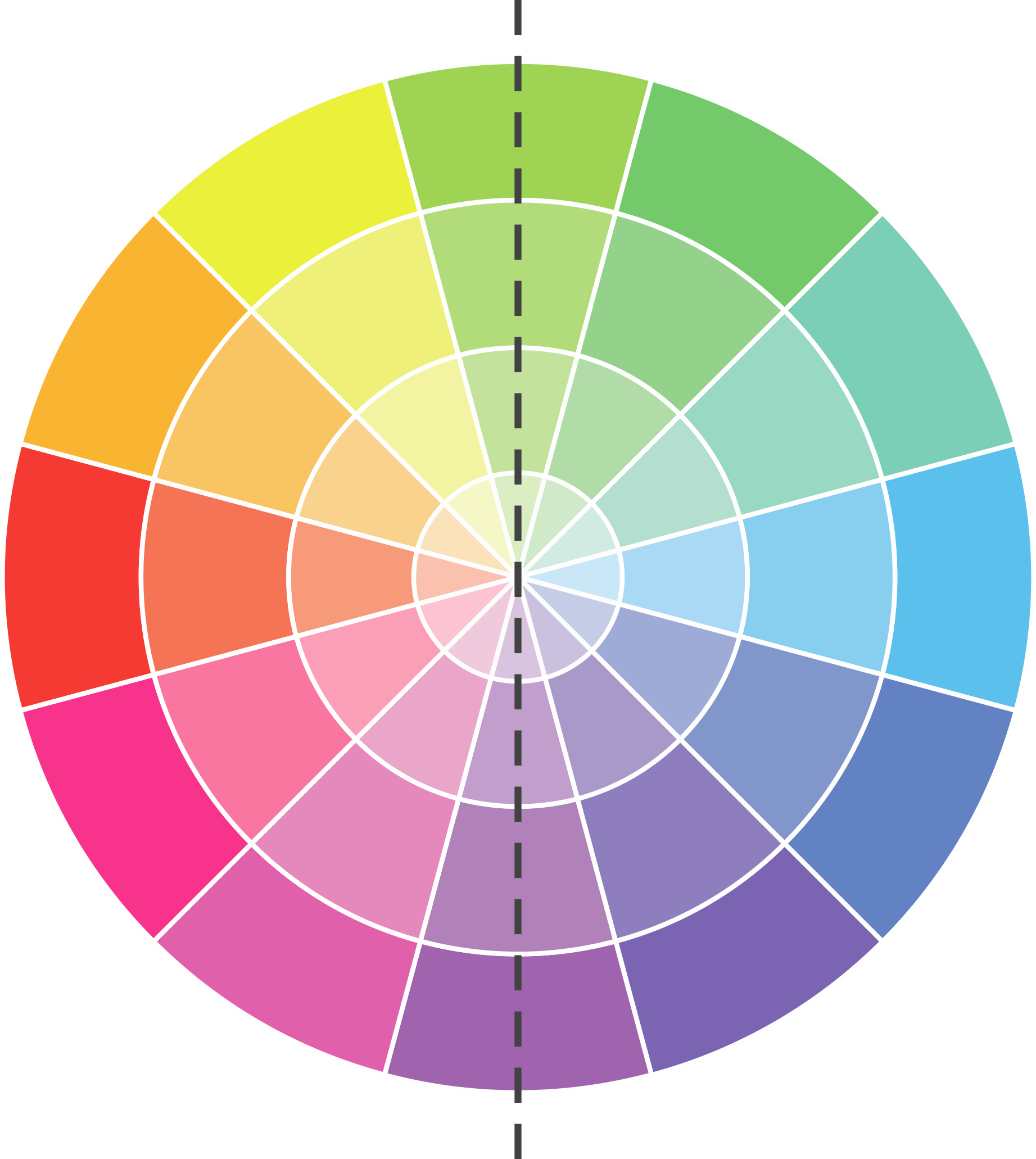
At 174° on the HSL hue wheel, this dark blue falls clearly in the cool range.
L20dW40c Dancing Peacock HSL code: 174, 100%, 22%
Hue - degree on a color wheel from 0 to 360. 0 is red, 120 is green, and 240 is blue.
Saturation is expressed as a percentage. At 0%, it appears as a shade of grey, and at 100%, it is in full color.
Lightness is also a percentage value. 0% is black, and 100% is white.
How light temperature affects Dancing Peacock
Natural Lighting. During the day, natural light shifts from about 2000 K at sunrise/sunset to 5500–6500 K at noon.
In addition, natural-light temperature depends on its direction:
| Direction of sunlight | Visible temp. | Hue | Duration |
|---|---|---|---|
| North | Cool | Bluish | All day |
| East | Warm | Yellow | Before noon |
| West | Warm | Orange-red | After noon |
| South | Warm | Orange-yellow | All day |
Artificial Lighting. When choosing bulbs, pay attention to their color temperature in Kelvins.
Use the slider to see how this dark blue shade looks under different lighting:
Coordinating colors.
Colors that go with Valspar UK Dancing Peacock:
Monochromatic color scheme
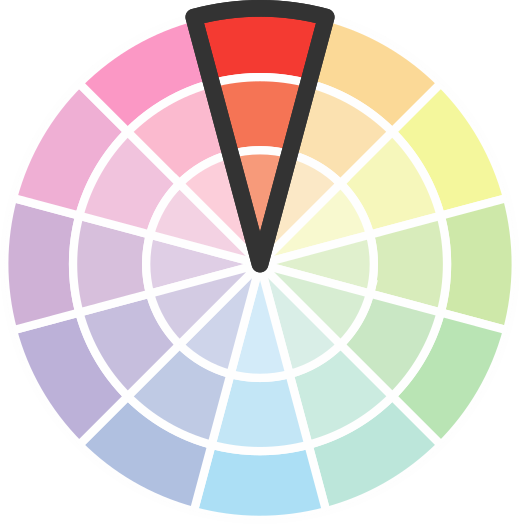
This scheme consists of various shades, tints, and tones of a single color. While it offers a perfect combination of hues, without accent décor it may become monotonous.
Lighter shades
L20dW40c
Dancing Peacock


Darker shades
L20dW40c
Dancing Peacock
Complementary color scheme
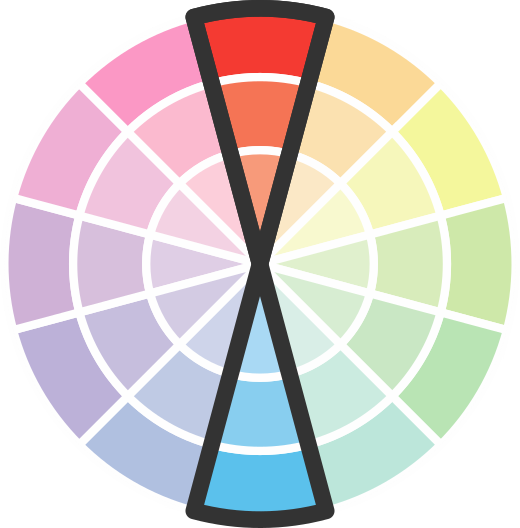
This color scheme is a combination of two shades that are opposite each other on the color wheel. The high contrast between these colors creates a vibrant and dynamic visual effect. For the color Dancing Peacock with a green hue, complementary colors are those with a red hue close to 354, such as Valspar UK Pomegranate Seeds and Party Pattie.




Color codes
We have collected almost every possible color code you could ever need.
Not sure what the difference between HEX and RGB is? We break down color models in plain language. Understanding color models
| Format | Code |
|---|---|
| HEX | #007065 |
| RGB Decimal | 0, 112, 101 |
| RGB Percent | 0.00%, 43.92%, 39.61% |
| HSV | Hue: 174° Saturation: 100.0% Value: 43.92% |
| HSL | hsl(174, 100.0, 21.96) |
| CMYK | Cyan: 100.0 Magenta: 0.0 Yellow: 9.82 Key: 56.08 |
| YIQ | Y: 77.258 I: -63.206 Q: -27.115 |
| XYZ | X: 8.142 Y: 12.527 Z: 14.297 |
| CIE Lab | L:42.042 a:-29.769 b:-1.583 |
| CIE Luv | L:42.042 u:-33.634 v:1.92 |
| Decimal | 28773 |
| Hunter Lab | 35.393, -20.877, 0.825 |
Color equivalents
70GG 13/323
Fortune Green
Dulux

5011-7
Stained Glass
Valspar US
SW 6762
Poseidon
Sherwin Williams
2048-20
Juniper
Benjamin Moore
S 4050-B70G
NCS

S 3060-B70G
NCS

S 5030-B70G
NCS
2047-20
Manor Green
Benjamin Moore
2052-30
Tropical Turquoise
Benjamin Moore
S 3555-B60G
NCS

S 4050-B60G
NCS

S 3555-B80G
NCS
S 4050-B80G
NCS
S 4040-B70G
NCS

RAL 740-5
RAL Effect
5009-7
Artisan Green
Valspar US
X111R219A
Amalfi Coast
Valspar UK
R230A
Planet Earth
Valspar UK