
Valspar US Aged Ivory vs. Little Greene Pearl Colour
The colors, each unique in their hue and saturation, embody their own individual beauty and value. It's important to note that the colors have different hues. Valspar US T537 leans towards orange hues, while Little Greene 100 is yellow.
Valspar US T537 and Little Greene 100 differ significantly in saturation. Valspar US T537 is more saturated.
Despite their differences, both colors share a similar value, Valspar US T537 radiating a lighter essence compared to 100.
Supported paint brands for comparison: Behr, Benjamin Moore, Farrow and Ball, Dulux, Jotun, Little Greene, NCS, Ral Classic, Ral Design, Ral Effect, Sherwin Williams, Valspar, Tikkurila
First color
Second color

| Valspar US Aged Ivory | Little Greene Pearl Colour |
|---|---|
| Shared hue scale | |
12 | |
| Hue | |
| 35°orange | 86°yellow |
| Saturation | |
| 85% | 16%less saturated |
| Lightness?Simple 0–100% measure derived from the minimum and maximum sRGB channels. Use CIE L* for perceptual lightness. | |
| 84% | 83%darker |
| LRV?Light Reflectance Value measures the percentage of light reflected by a color, from 0 for absolute black to 100 for pure white. | |
| 74.65 | 67.55looks darker |
| CIE L?Perceptual lightness. CIE Lab lightness ranges from 0 for black to 100 for diffuse white. | |
| 89.216 | 86.256looks darker |
| Color difference ΔE*₀₀?CIE color difference. Smaller is closer: about 0–1 is imperceptible, 1–2 just noticeable, 2–5 a small difference, 5–10 clear, and more than 10 very different. | |
| 15.08 | |
| Temperature | |
| Warm | Warm |

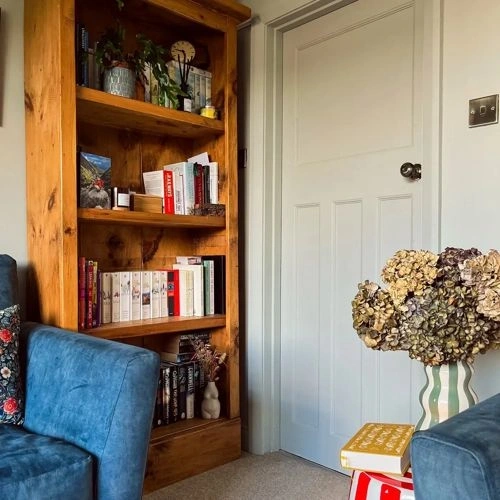
Please note that the color shown on this page is a representation and might not exactly match the real shade of the cards, fan decks, or color collections. Your monitor, browser, and screen angle can all affect how the paint looks, so it may not be the same as what you see here. All information on this page is based on RGB and HEX values provided by manufacturers.
It's important to keep in mind that the same color may appear differently on various surfaces due to the nature of those surfaces. For example, the same shade will look different on a rough wall compared to the smooth surface of cabinets.