

Little Greene Middle Buff 122
Contentsshow +hide -
| Official page: | Middle Buff 122 |
| Code: | 122 |
| Name: | Middle Buff |
| Brand: | Little Greene |
| Collections: | Colours of England |
What color is Little Greene Middle Buff?
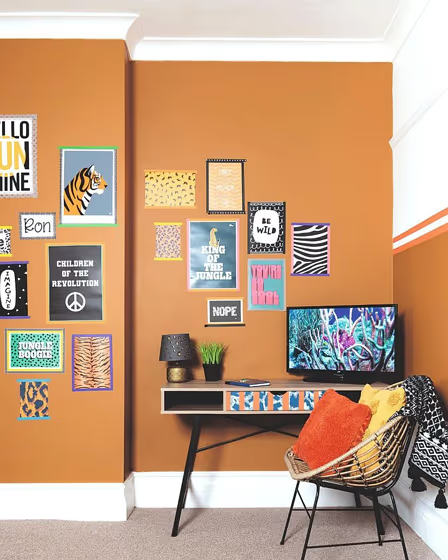
Little Greene Middle Buff 122 is a rich, earthy ochre with a clear golden-orange cast and a gently browned base. Its mid-depth tone gives walls noticeable color without reading as overly dark, especially in rooms with good daylight. In brighter light, the warm amber notes come forward; under softer evening lighting, it settles into a deeper, more burnished brown. Middle Buff suits dining rooms, hallways, kitchens, or a small study, and it can bring welcome weight to cabinetry or a painted front door. Pair it with chalky off-whites, warm clay neutrals, dark wood, aged brass, and natural linen for a grounded, material-led scheme.
Little Greene Middle Buff reviews (13 photos)
View the photos of real spaces painted with this yellow that were not included in specific categories. Close-ups, painted furniture, storages and dressers, hallways, stairs and ceilings.
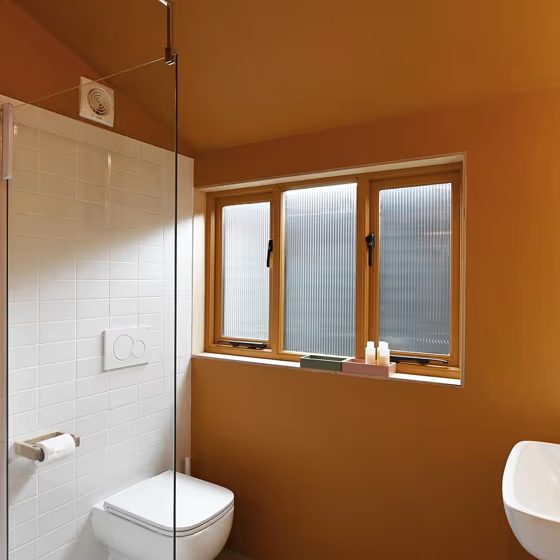
@gazebo_lodge
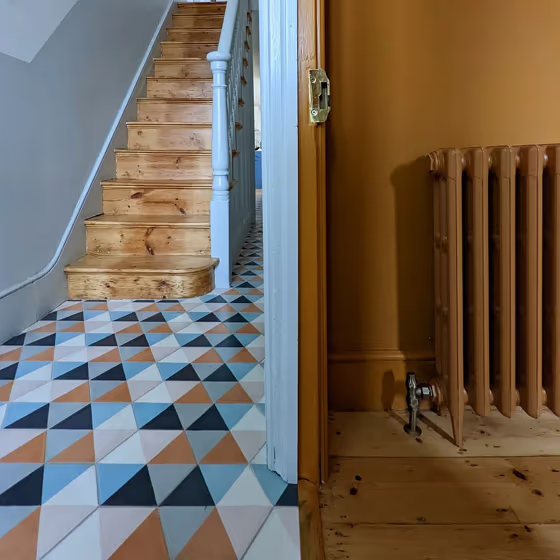
@joetanchongseng
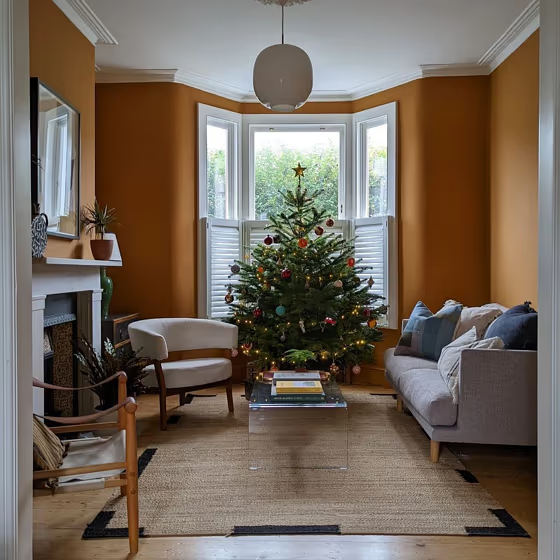
@mohilinternationaljaipur
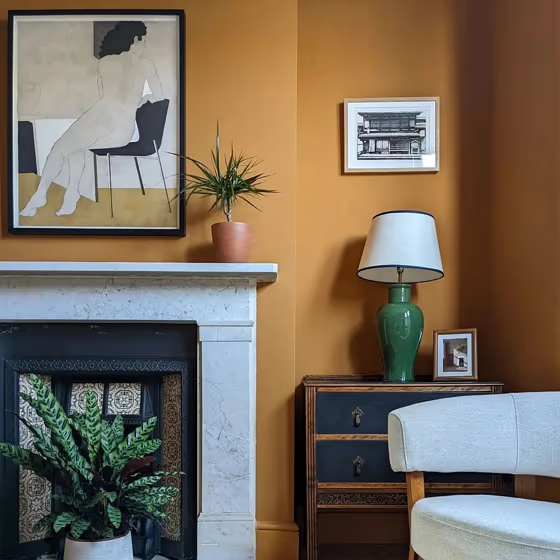
@joetanchongseng
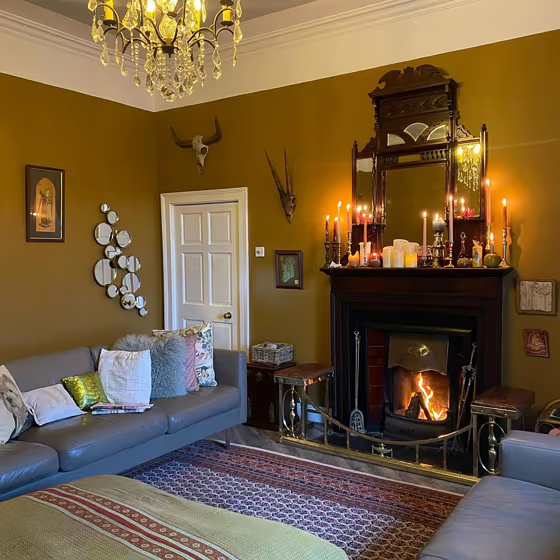
@now_and_then_home
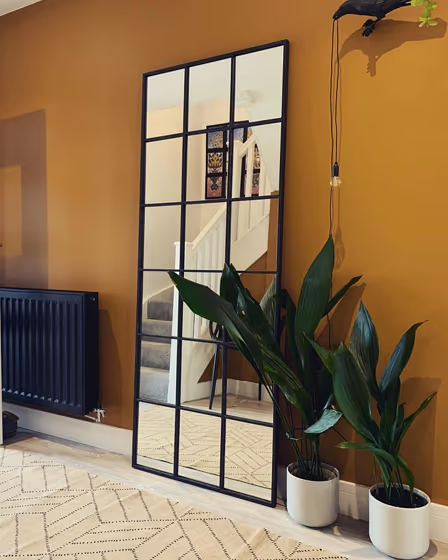
@eclectic_scandi
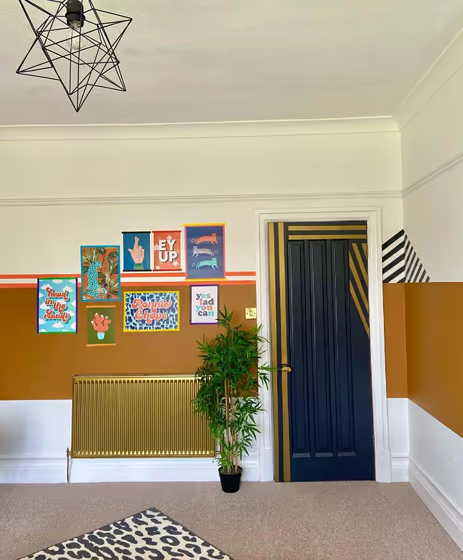
@lemonleopard_interiordesign
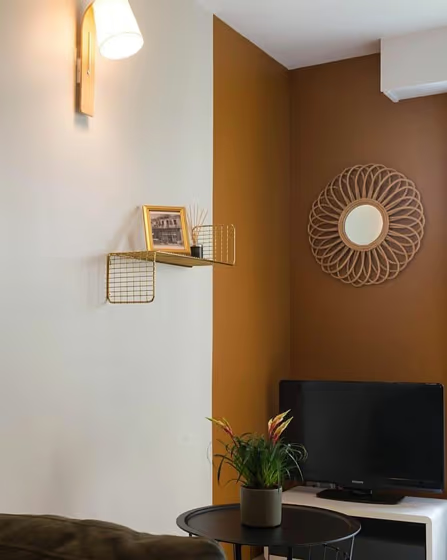
@lifestyledecoration38
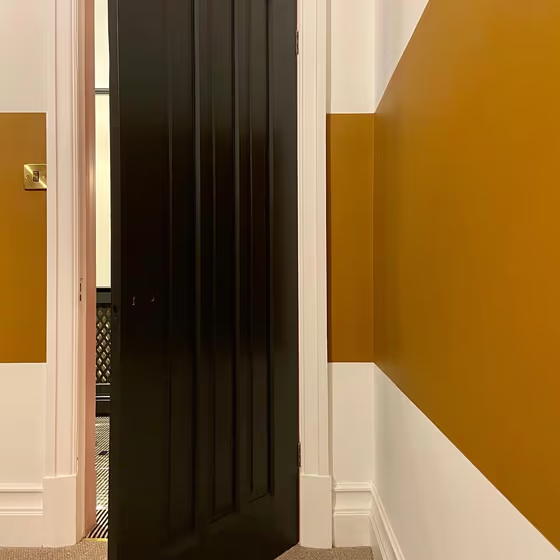
@lemonleopard_interiordesign
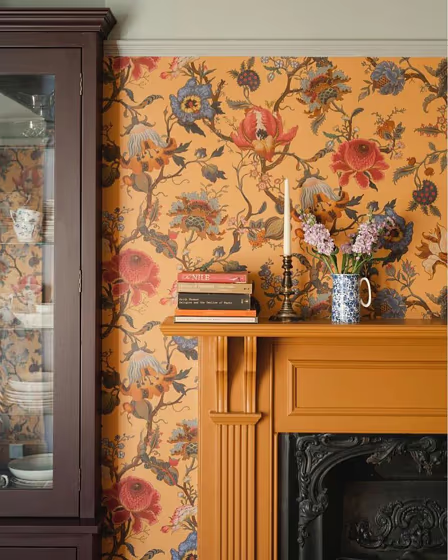
@josephjohnandco
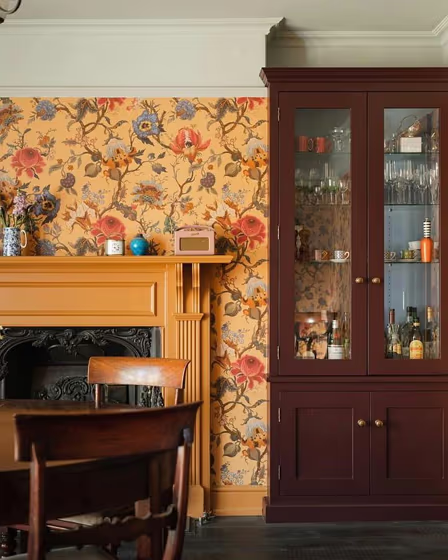
@josephjohnandco
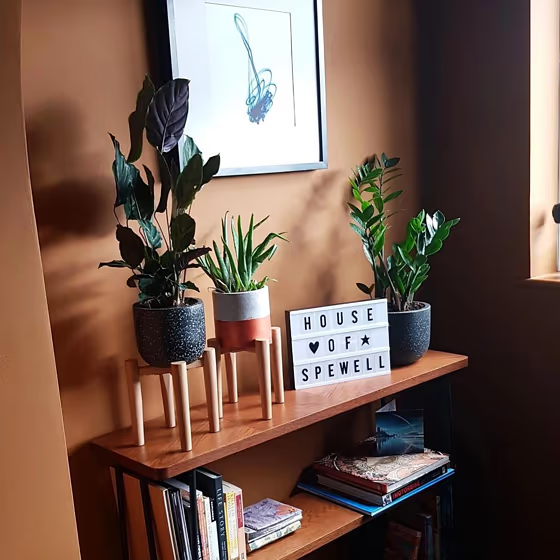
@this.girl.paints
@homestylemaguk
Try before you buy

100% accurate
reusable paint samples
Peel, stick,
and repeat
Twice painted
with real paint
Next day
delivery
What are Little Greene Middle Buff undertones?
Middle Buff appears as a mid-depth, clearly colored orange-brown with a warm, earthy character. Relative to a neutral brown, it shows a yellow-orange bias with a slight red influence, which keeps it from reading flat or greyed down. Warm artificial light is likely to bring out its orange and golden side, while cooler daylight may make the brown base and red-orange notes seem more noticeable.
Manufacturer information used in this description: official color page.
HEX value:
RGB code:
175, 115, 43
Is Little Greene Middle Buff cool or warm?
warm
cool
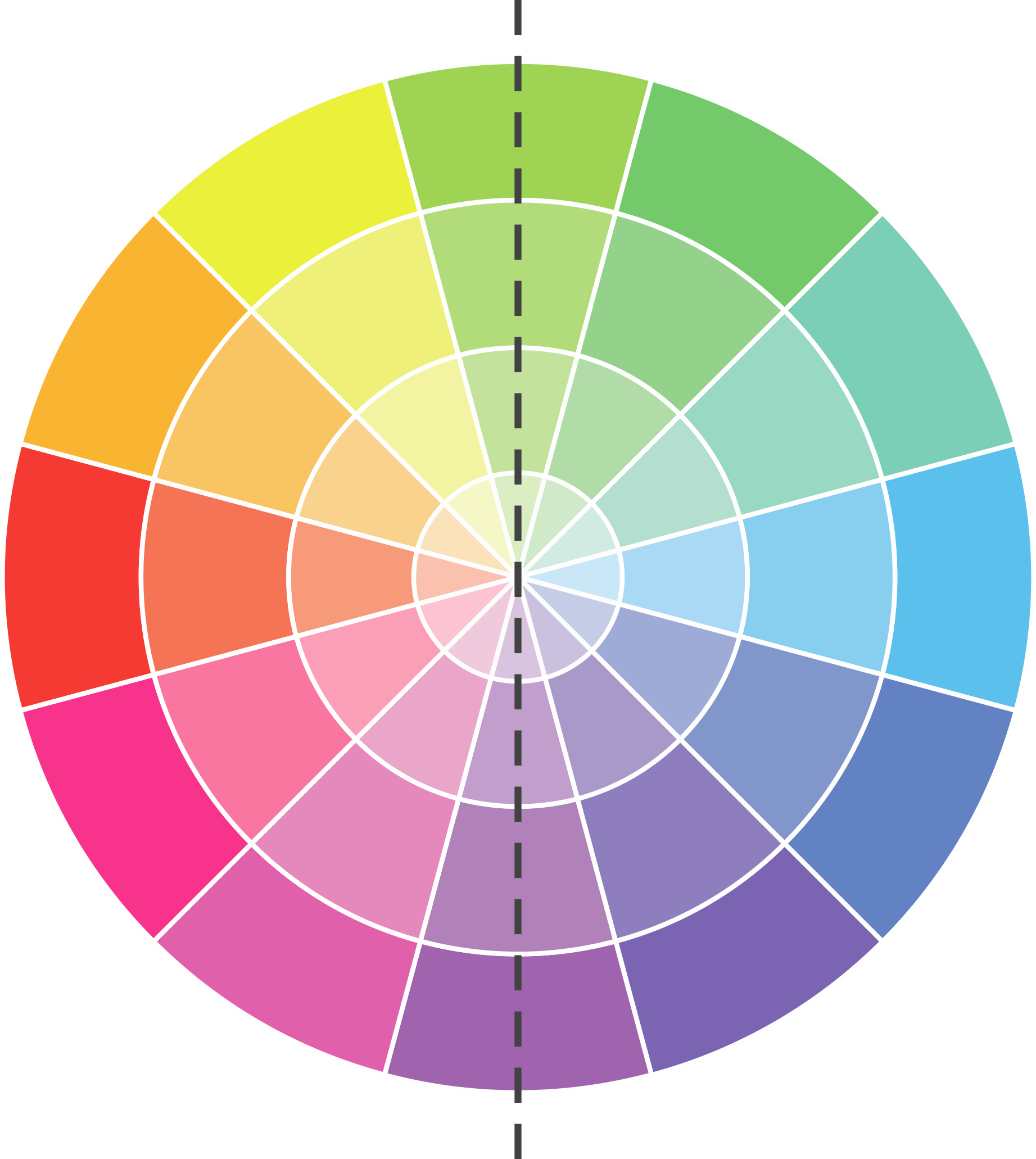
At 33° on the HSL hue wheel, this Yellow sits firmly on the warm side.
122 Middle Buff HSL code: 33, 61%, 43%
Hue - degree on a color wheel from 0 to 360. 0 is red, 120 is green, and 240 is blue.
Saturation is expressed as a percentage. At 0%, it appears as a shade of grey, and at 100%, it is in full color.
Lightness is also a percentage value. 0% is black, and 100% is white.
How light temperature affects Middle Buff
Natural Lighting. During the day, natural light shifts from about 2000 K at sunrise/sunset to 5500–6500 K at noon.
In addition, natural-light temperature depends on its direction:
| Direction of sunlight | Visible temp. | Hue | Duration |
|---|---|---|---|
| North | Cool | Bluish | All day |
| East | Warm | Yellow | Before noon |
| West | Warm | Orange-red | After noon |
| South | Warm | Orange-yellow | All day |
Artificial Lighting. When choosing bulbs, pay attention to their color temperature in Kelvins.
Use the slider to see how this Yellow shade looks under different lighting:
Coordinating colors.
Colors that go with Little Greene Middle Buff:
Complementary color scheme
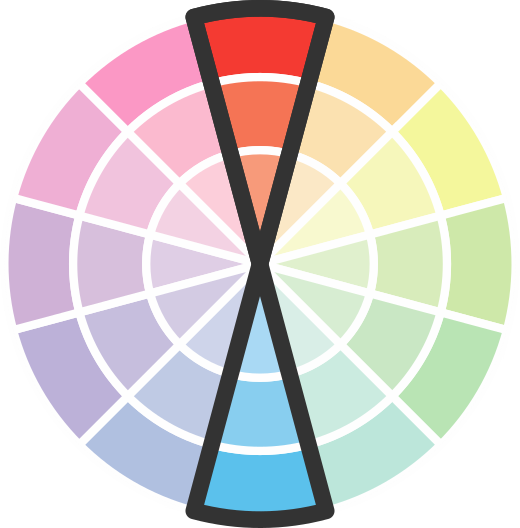
This color scheme is a combination of two shades that are opposite each other on the color wheel. The high contrast between these colors creates a vibrant and dynamic visual effect. For the color Middle Buff with a orange hue, complementary colors are those with a blue hue close to 213, such as Little Greene Hicks' Blue and Air Force Blue.



LRV of Middle Buff
Middle Buff has an LRV of 20.58% and refers to Medium colors that reflect a lot of light. Why LRV is important?
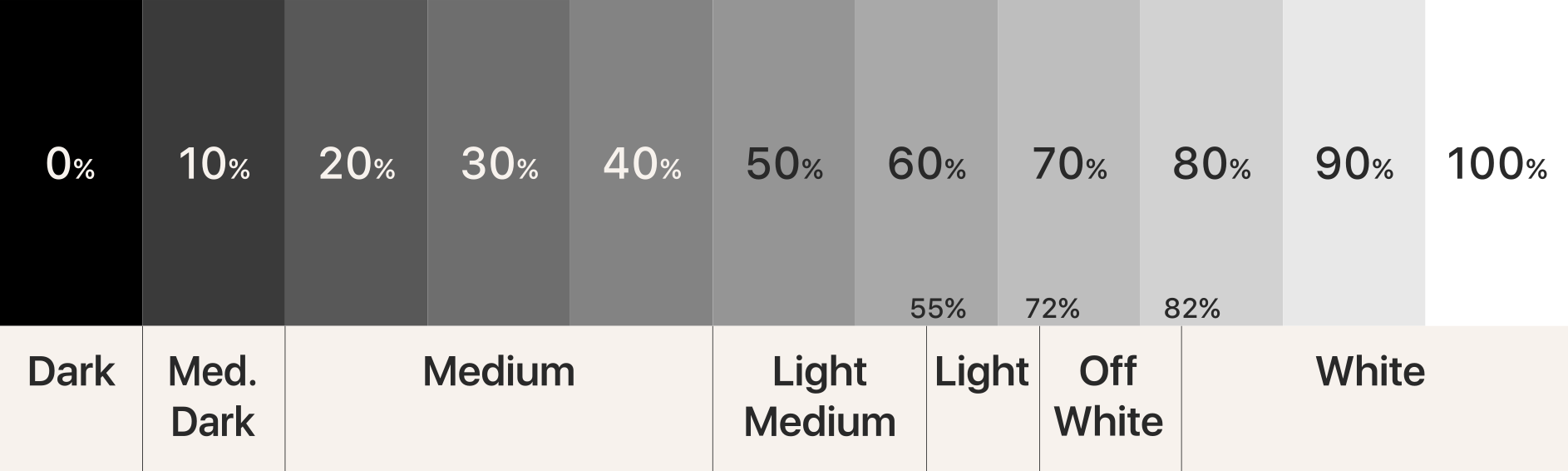
Light Reflectance Value measures the amount of visible and usable light that reflects from a painted surface.
Simply put, the higher the LRV of a paint color, the brighter the room you will get.
The scale goes from 0% (absolute black, absorbing all light) to 100% (pure white, reflecting all light).
Act like a pro: When choosing paint with an LRV of 20.58%, pay attention to your bulbs' brightness. Light brightness is measured in lumens. The lower the paint's LRV, the higher lumen level you need. Every square foot of room needs at least 40 lumens. That means for a 200 ft2 living room you'll need about 8000 lumens of light – e.g., eight 1000 lm bulbs.
Color codes
We have collected almost every possible color code you could ever need.
Not sure what the difference between HEX and RGB is? We break down color models in plain language. Understanding color models
| Format | Code |
|---|---|
| HEX | #af732b |
| RGB Decimal | 175, 115, 43 |
| RGB Percent | 68.63%, 45.10%, 16.86% |
| HSV | Hue: 33° Saturation: 75.43% Value: 68.63% |
| HSL | hsl(33, 61, 43) |
| CMYK | Cyan: 0.0 Magenta: 34.29 Yellow: 75.43 Key: 31.37 |
| YIQ | Y: 124.732 I: 58.891 Q: -9.714 |
| XYZ | X: 24.248 Y: 21.552 Z: 5.168 |
| CIE Lab | L:53.549 a:17.335 b:47.499 |
| CIE Luv | L:53.549 u:48.262 v:45.92 |
| Decimal | 11498283 |
| Hunter Lab | 46.424, 11.989, 25.897 |

Color equivalents
10YY 21/500
Sunflower Symphony 2
Dulux

10YY 24/467
Tuscan Treasure 1
Dulux

00YY 19/464
Golden Bark 2
Dulux
Prized Gold
Dulux
Jamaican Bronze 1
Dulux
Eastern Spice 1
Dulux
20YY 19/438
Delhi Bazaar 2
Dulux
20YY 23/525
Sulphur Springs 2
Dulux
Ochre Weave
Dulux
90YR 19/487
Wholemeal Honey 1
Dulux
00YY 21/321
Toasted Truffle
Dulux
RAL 1011
Brown beige
RAL Classic

10YY 26/321
Caramel Blush 1
Dulux
30YY 21/438
Sunny Savannah 1
Dulux
Tuscan Gold
Dulux
90YR 25/323
Treacle Tart 1
Dulux
10YY 27/600
Dutch Gold 1
Dulux
00YY 18/346
Earth Glaze 2
Dulux