

Dulux Purple Sage 3 50RB 34/153
Contentsshow +hide -
| Code: | 50RB 34/153 |
| Name: | Purple Sage 3 |
| Brand: | Dulux |
What color is Dulux Purple Sage 3?
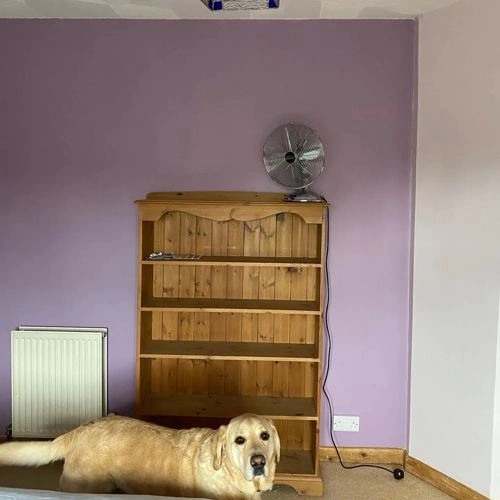
Dulux Purple Sage 3 50RB 34/153 is a muted lavender-grey with a soft, dusty cast rather than a bright violet presence. Its mid-tone depth gives walls visible color while keeping the overall effect restrained, especially alongside crisp white trim. In cooler daylight, Purple Sage 3 can read more silvery and subdued; warmer lamps tend to bring forward its gentle mauve notes. It suits bedrooms, reading rooms, and powder rooms, and also makes an understated choice for painted cabinetry. Pair this shade with chalky whites, weathered oak, brushed nickel, charcoal accents, or pale grey-green textiles for a layered, low-contrast interior.
Try before you buy

100% accurate
reusable paint samples

Peel, stick,
and repeat

Twice painted
with real paint

Next day
delivery
What are Dulux Purple Sage 3 undertones?
Purple Sage 3 is a mid-light, muted mauve. The HEX sample leans purple; this describes its measurable digital hue direction, not a hidden paint pigment. Warm light may bring out its red or mauve side, while cool daylight can make the violet direction clearer.
HEX value:
RGB code:
164, 147, 172
Is Dulux Purple Sage 3 cool or warm?
warm
cool
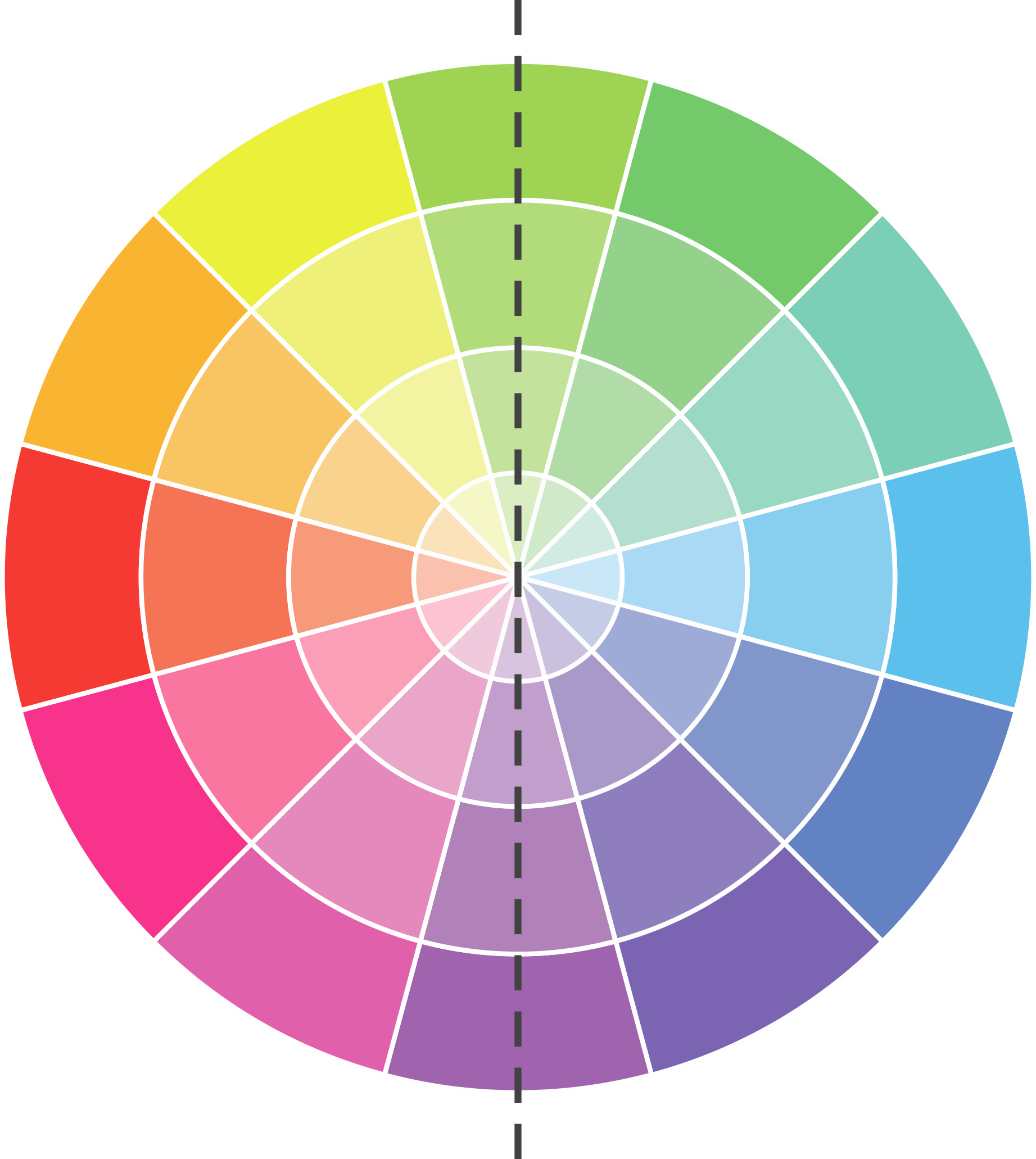
With a hue of 281°, this Purple leans warm, but it is close to neutral and can read cooler in some light.
50RB 34/153 Purple Sage 3 HSL code: 281, 13%, 63%
Hue - degree on a color wheel from 0 to 360. 0 is red, 120 is green, and 240 is blue.
Saturation is expressed as a percentage. At 0%, it appears as a shade of grey, and at 100%, it is in full color.
Lightness is also a percentage value. 0% is black, and 100% is white.
How light temperature affects Purple Sage 3
Natural Lighting. During the day, natural light shifts from about 2000 K at sunrise/sunset to 5500–6500 K at noon.
In addition, natural-light temperature depends on its direction:
| Direction of sunlight | Visible temp. | Hue | Duration |
|---|---|---|---|
| North | Cool | Bluish | All day |
| East | Warm | Yellow | Before noon |
| West | Warm | Orange-red | After noon |
| South | Warm | Orange-yellow | All day |
Artificial Lighting. When choosing bulbs, pay attention to their color temperature in Kelvins.
Use the slider to see how this Purple shade looks under different lighting:
Coordinating colors.
Colors that go with Dulux Purple Sage 3:
Monochromatic color scheme
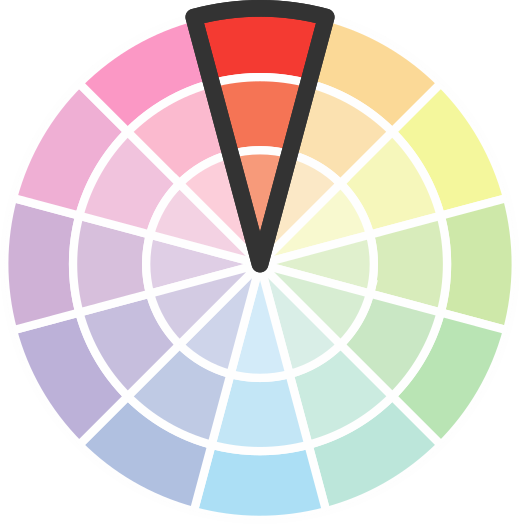
This scheme consists of various shades, tints, and tones of a single color. While it offers a perfect combination of hues, without accent décor it may become monotonous.
Lighter shades
50RB 34/153
Purple Sage 3

Darker shades
50RB 34/153
Purple Sage 3

Complementary color scheme
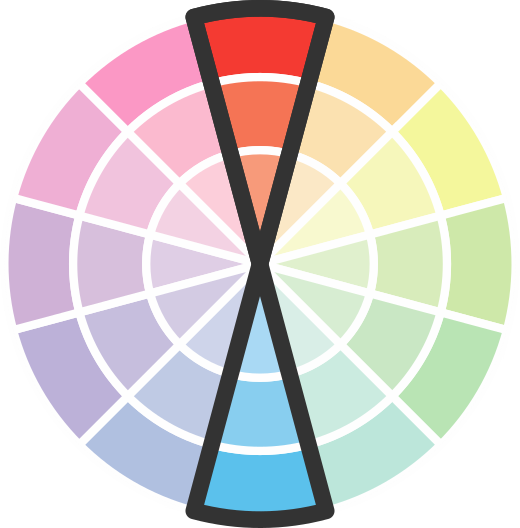
This color scheme is a combination of two shades that are opposite each other on the color wheel. The high contrast between these colors creates a vibrant and dynamic visual effect. For the color Purple Sage 3 with a purple hue, complementary colors are those with a yellow hue close to 101, such as Dulux Forest Shade and Woodland Pearl 3.






Color codes
We have collected almost every possible color code you could ever need.
Not sure what the difference between HEX and RGB is? We break down color models in plain language. Understanding color models
| Format | Code |
|---|---|
| HEX | #A493AC |
| RGB Decimal | 164, 147, 172 |
| RGB Percent | 64.31%, 57.65%, 67.45% |
| HSV | Hue: 281° Saturation: 14.53% Value: 67.45% |
| HSL | hsl(281, 13, 63) |
| CMYK | Cyan: 4.65 Magenta: 14.53 Yellow: 0.0 Key: 32.55 |
| YIQ | Y: 154.933 I: 2.097 Q: 11.376 |
| XYZ | X: 33.188 Y: 31.739 Z: 43.396 |
| CIE Lab | L:63.126 a:11.027 b:-10.759 |
| CIE Luv | L:63.126 u:8.011 v:-17.752 |
| Decimal | 10785708 |
| Hunter Lab | 56.337, 6.564, -6.235 |

Color equivalents
70RB 36/156
Himalayan Musk 3
Dulux

Purple Infusion 6
Dulux
70RB 31/090
Mellow Heather 2
Dulux
X425
Blueberry milk
Tikkurila

10RB 35/167
Purple Polka 3
Dulux
30RB 41/169
Lavender Blossom 2
Dulux
90RB 37/175
Heather Bloom 3
Dulux
30RB 33/103
Violet Surprise 2
Dulux
70RB 40/200
Pamplona Purple 6
Dulux
40RB 36/264
Velvet Ribbon 6
Dulux
10RB 31/204
Amethyst Falls 6
Dulux
RAL 4009
Pastel violet
RAL Classic


Purple Infusion 5
Dulux
30RR 30/103
Soft Montelimar 2
Dulux
16RB 38/235
Lilac Orchid
Dulux
50RB 35/067
Twilight Cinders 3
Dulux
M502
Tikkurila

40RB 43/233
Lilac Spring 2
Dulux