

Dulux Pressed Thistle / Amethyst Starling
Contentsshow +hide -
| Code: | |
| Name: | Pressed Thistle |
| Brand: | Dulux |
What color is Dulux Pressed Thistle?
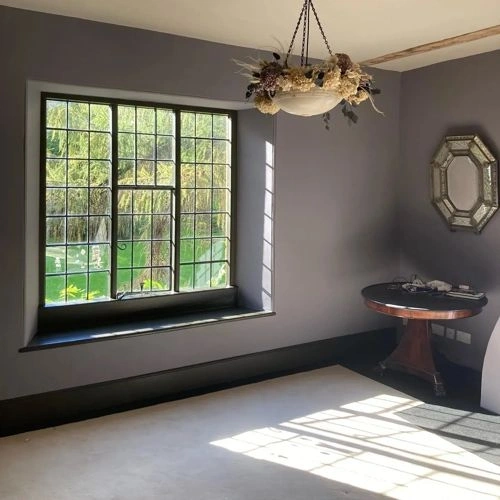
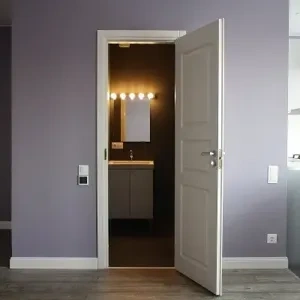
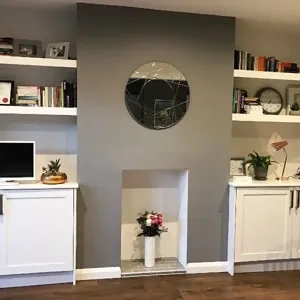
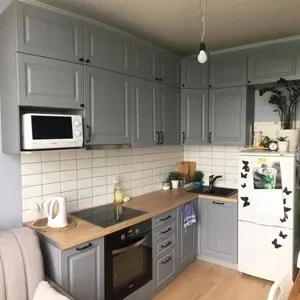
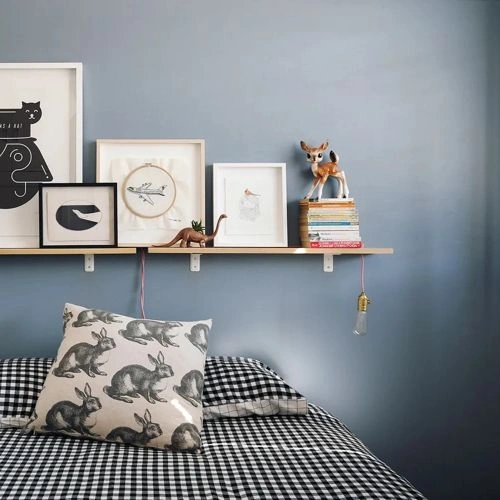
Dulux Pressed Thistle is a muted mid-tone grey with a noticeable blue cast and a faint violet softness. It reads cool and lightly smoky in bright daylight, while lower or warmer lighting can bring out its more subdued lavender-grey side. This shade suits bedrooms, studies, and north-facing living rooms where a quiet, grounded wall color is wanted without going too dark. Pair it with soft white trim, charcoal accents, pale oak, brushed nickel, or natural linen for a clean, layered look. Pressed Thistle also has enough depth for painted cabinetry or an exterior door when set against lighter stone or off-white render.
Try before you buy

100% accurate
reusable paint samples

Peel, stick,
and repeat

Twice painted
with real paint

Next day
delivery
What are Dulux Pressed Thistle undertones?
Pressed Thistle is a midtone, very muted blue-gray. The HEX sample has a subtle blue bias, but its low chroma turns that hue into a neutral-looking color rather than a clear blue. Warm bulbs may gray the color down, while cool daylight usually makes its blue or teal direction clearer.
HEX value:
RGB code:
137, 141, 155
Is Dulux Pressed Thistle cool or warm?
warm
cool
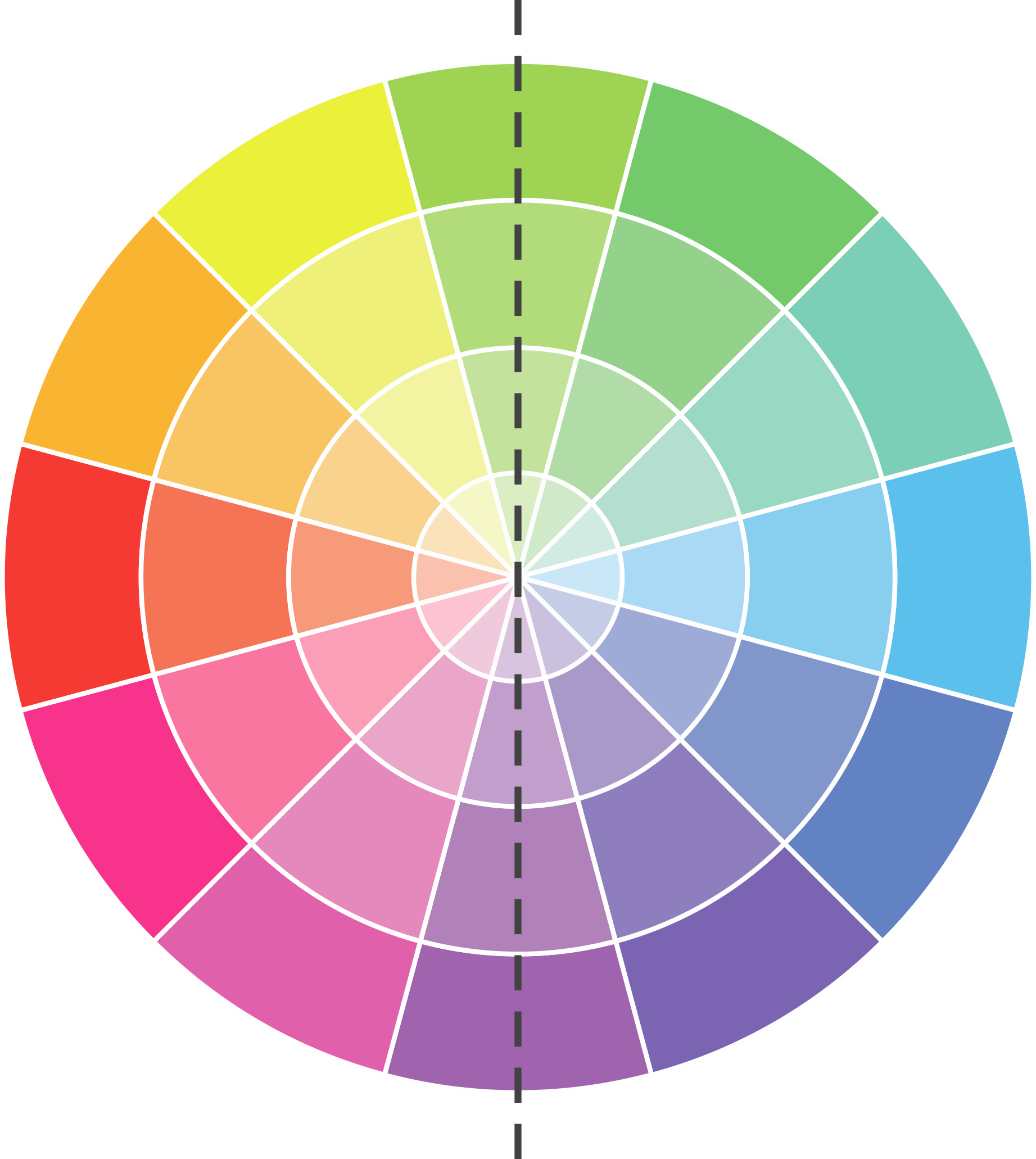
With a hue of 227°, this Purple leans cool, but it is near the neutral line and may feel warmer in certain lighting.
Pressed Thistle HSL code: 227, 8%, 57%
Hue - degree on a color wheel from 0 to 360. 0 is red, 120 is green, and 240 is blue.
Saturation is expressed as a percentage. At 0%, it appears as a shade of grey, and at 100%, it is in full color.
Lightness is also a percentage value. 0% is black, and 100% is white.
How light temperature affects Pressed Thistle
Natural Lighting. During the day, natural light shifts from about 2000 K at sunrise/sunset to 5500–6500 K at noon.
In addition, natural-light temperature depends on its direction:
| Direction of sunlight | Visible temp. | Hue | Duration |
|---|---|---|---|
| North | Cool | Bluish | All day |
| East | Warm | Yellow | Before noon |
| West | Warm | Orange-red | After noon |
| South | Warm | Orange-yellow | All day |
Artificial Lighting. When choosing bulbs, pay attention to their color temperature in Kelvins.
Use the slider to see how this Purple shade looks under different lighting:
Coordinating colors.
Colors that go with Dulux Pressed Thistle:
Monochromatic color scheme
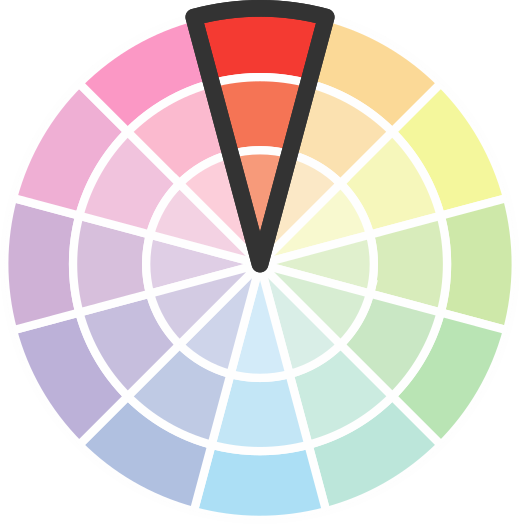
This scheme consists of various shades, tints, and tones of a single color. While it offers a perfect combination of hues, without accent décor it may become monotonous.
Lighter shades
Pressed Thistle

Darker shades

Complementary color scheme
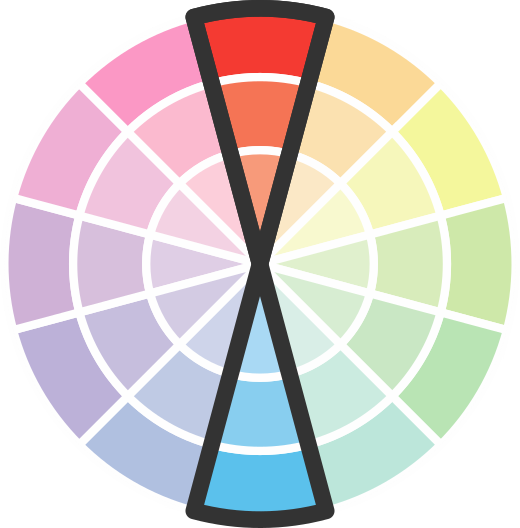
This color scheme is a combination of two shades that are opposite each other on the color wheel. The high contrast between these colors creates a vibrant and dynamic visual effect. For the color Pressed Thistle with a blue hue, complementary colors are those with a orange hue close to 47, such as Dulux Nordic Bliss and Thimble Case.





Color codes
We have collected almost every possible color code you could ever need.
Not sure what the difference between HEX and RGB is? We break down color models in plain language. Understanding color models
| Format | Code |
|---|---|
| HEX | #898D9B |
| RGB Decimal | 137, 141, 155 |
| RGB Percent | 53.73%, 55.29%, 60.78% |
| HSV | Hue: 227° Saturation: 11.61% Value: 60.78% |
| HSL | hsl(227, 8, 57) |
| CMYK | Cyan: 11.61 Magenta: 9.03 Yellow: 0.0 Key: 39.22 |
| YIQ | Y: 141.4 I: -6.882 Q: 3.511 |
| XYZ | X: 25.756 Y: 26.734 Z: 34.805 |
| CIE Lab | L:58.728 a:1.455 b:-7.908 |
| CIE Luv | L:58.728 u:-2.969 v:-11.734 |
| Decimal | 9014683 |
| Hunter Lab | 51.705, -1.568, -3.717 |

Color equivalents
50BB 26/105
Blue Incense
Dulux

250
Arquerite
Little Greene
90BB 32/126
Midnight Iris 2
Dulux
30BB 31/043
Mineral Haze 1
Dulux
N500
Agate
Tikkurila

10RB 36/082
Brooklyn Nights 3
Dulux
30BB 31/022
Natural Slate
Dulux

30RB 33/103
Violet Surprise 2
Dulux
RAL 7045
Telegrey 1
RAL Classic
70BB 35/108
Imperial Mauve 2
Dulux
L430
Fell
Tikkurila

90BG 30/073
Smoke Grey
Dulux
RAL 7046
Telegrey 2
RAL Classic

114
Mid Lead Colour
Little Greene

50BB 33/164
Morning Jewel 3
Dulux
10BB 28/116
Niagara Blues 2
Dulux
RAL 7001
Silver grey
RAL Classic

K488
Tikkurila
