

Farrow and Ball Red Earth 64
Contentsshow +hide -
- Red Earth for bedroom (6 photos)
- Red Earth for living room (7 photos)
- Farrow and Ball Red Earth for bathroom (8 photos)
- Farrow and Ball 64 on kitchen cabinets (1 photo)
- Farrow and Ball Red Earth reviews (13 photos)
- What are Farrow and Ball Red Earth undertones?
- Is Red Earth 64 cool or warm?
- How light temperature affects on Red Earth
- Monochromatic color scheme
- Complementary color scheme
- Color comparison and matching
- LRV of Red Earth 64
- Color codes
- Color equivalents
| Official page: | Red Earth 64 |
| Code: | 64 |
| Name: | Red Earth |
| Brand: | Farrow and Ball |
What color is Farrow and Ball Red Earth?
Farrow and Ball Red Earth 64 is a warm, earthy clay tone with a softened red base and noticeable terracotta-pink cast. Its medium depth keeps it present on a wall without reading as overly dark, while the muted saturation gives it a naturally weathered look. In bright daylight, Red Earth can appear lighter and rosier; under warmer artificial light, its baked-earth character becomes more pronounced. It suits dining rooms, hallways, and kitchens, especially on cabinetry or a single architectural accent such as a fireplace surround. Pair it with creamy off-whites, natural oak, aged brass, linen, and deep olive or charcoal details for contrast.
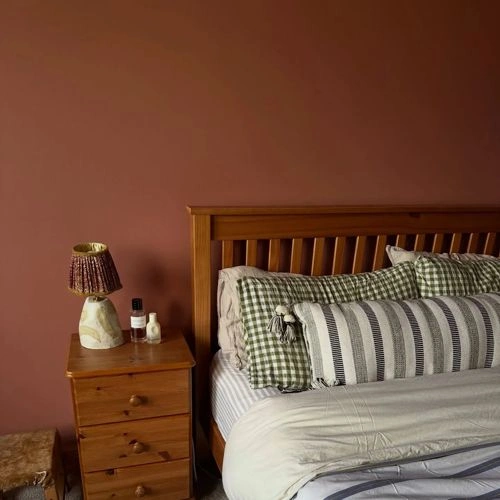
Red Earth for bedroom (6 photos)
We’ve hand-picked a beautiful collection of photos of this amazing red shade used in real bedrooms. Take a look and imagine how this wonderful warm mid-tone paint color could transform your own bedroom space.
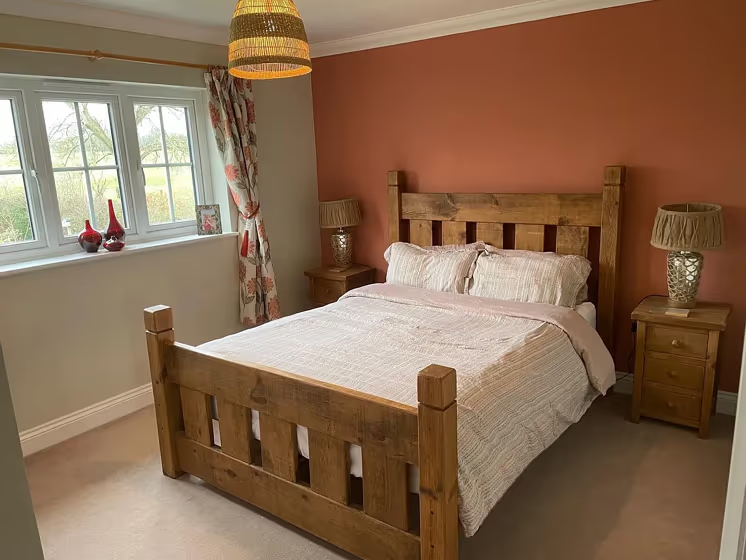
@ruralvillage.home
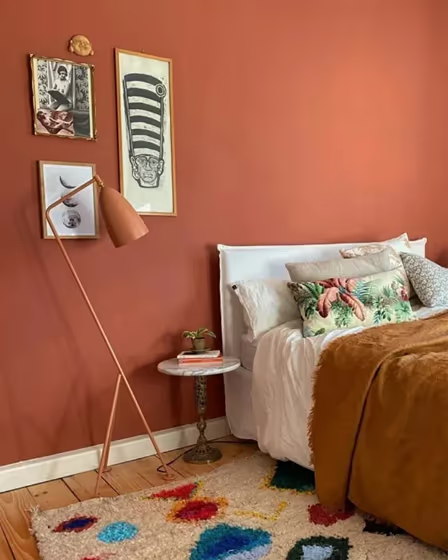
@patrickstreetinteriors
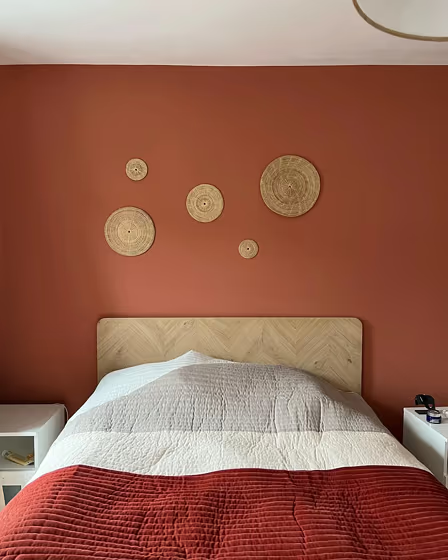
@ourlondoncottage
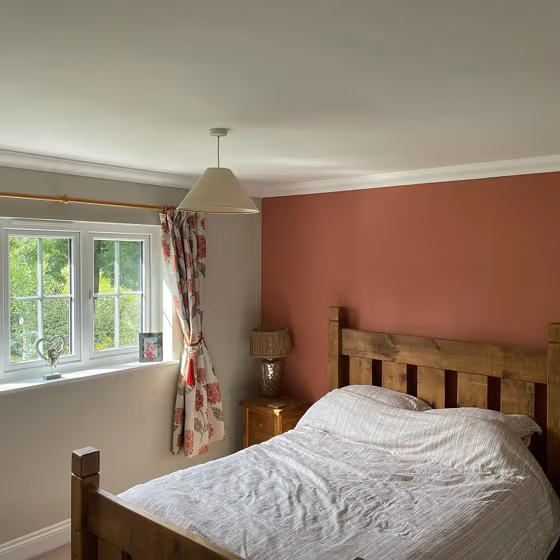
@ruralvillage.home
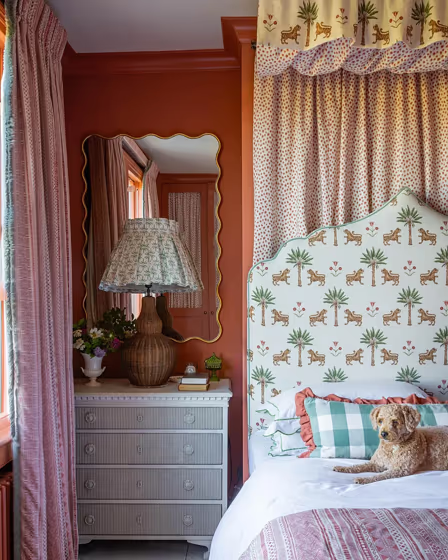
@seansymington
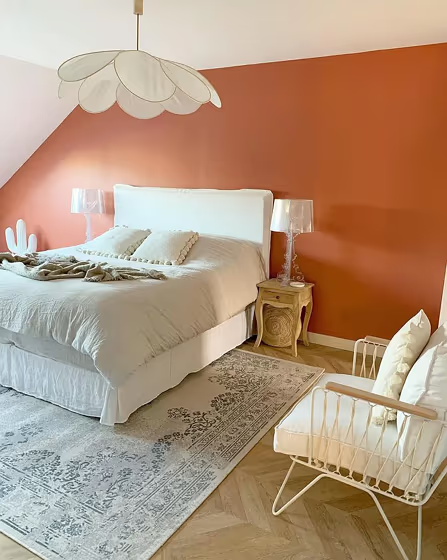
@etjohanna
Red Earth for living room (7 photos)
Check out this stunning mid-tone color used in real living rooms. Explore how this red shade can create a unique space
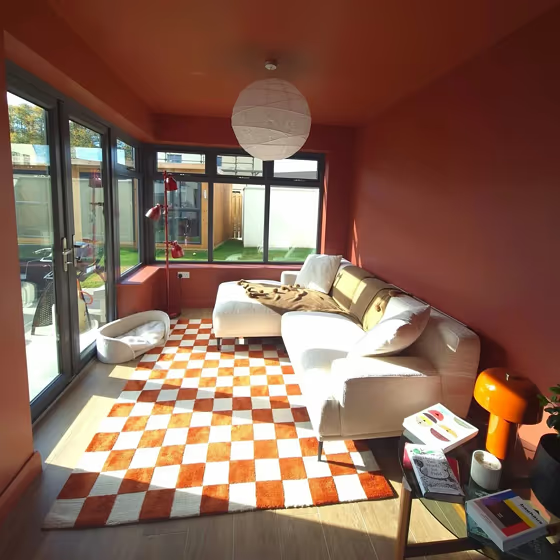
@dalton.interiors
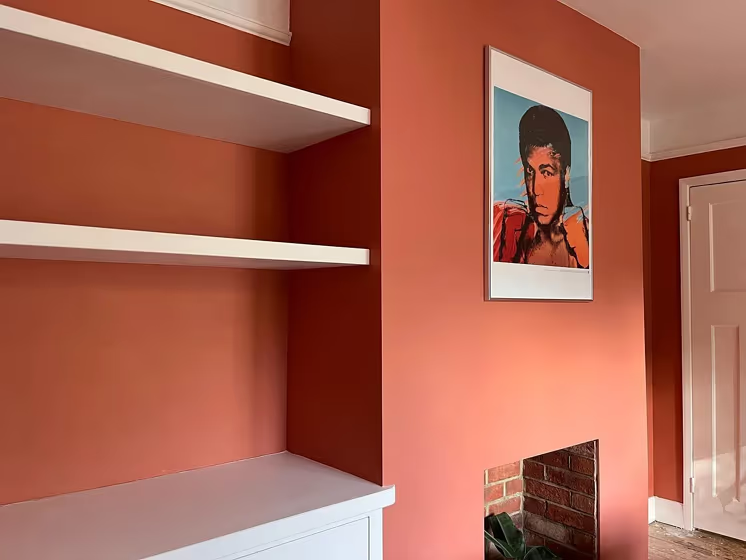
@spruce.decorating
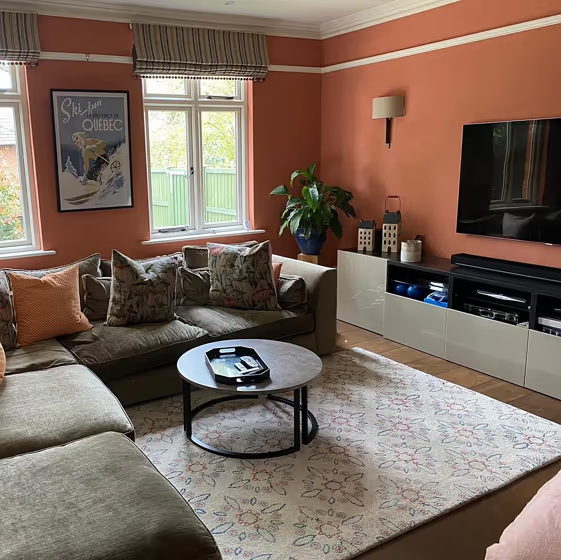
@french_and_son_ltd
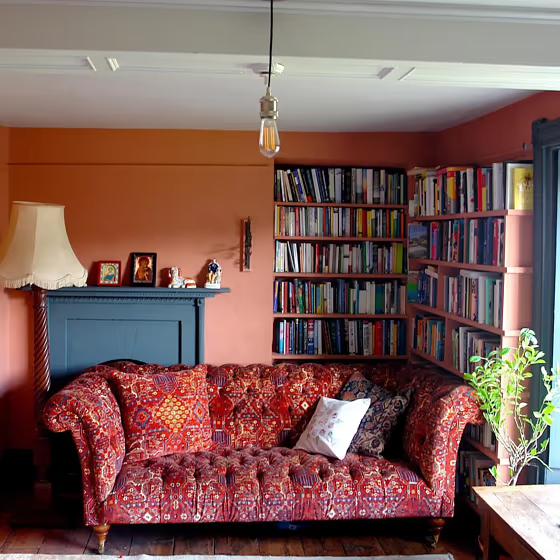
@simmondsdecorating
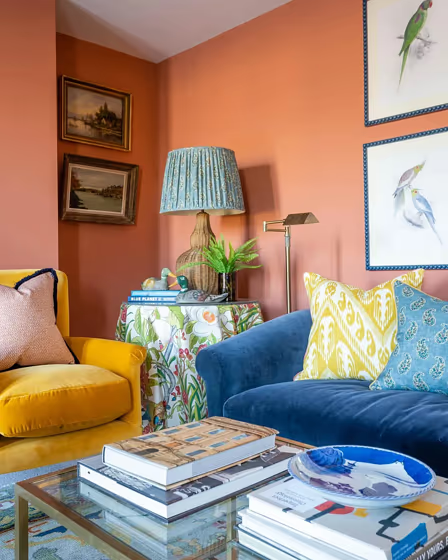
@seansymington
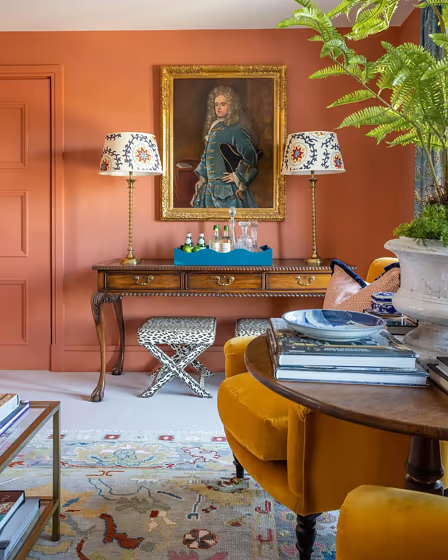
@seansymington
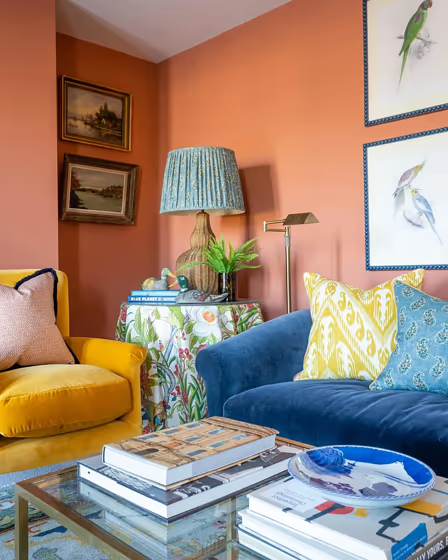
@seansymington
Farrow and Ball 64 for bathroom (8 photos)
Looking for inspiration for your dream bathroom renovation project? These beautiful handpicked photos will show you this delightfully warm mid-tone red real bathrooms.
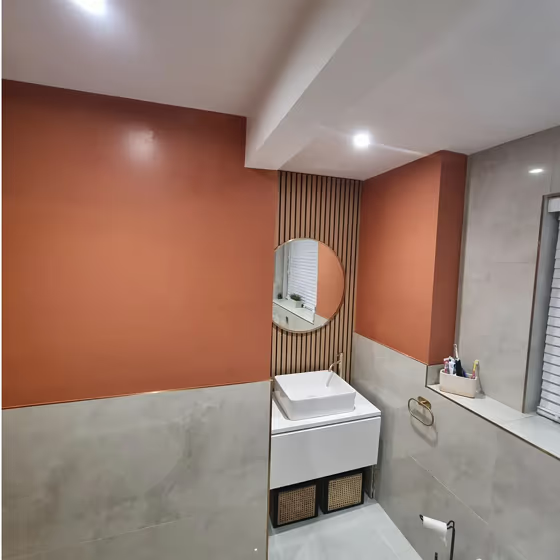
@opaldecorators
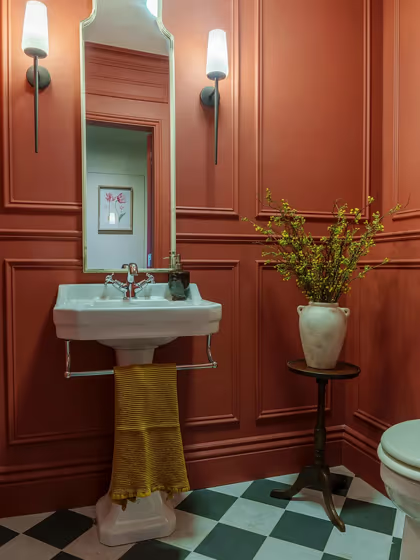
@deirdreoconnell_interiors
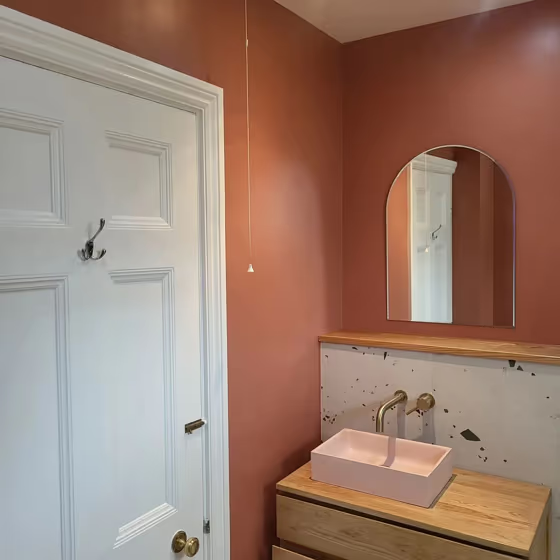
@t.gpainting
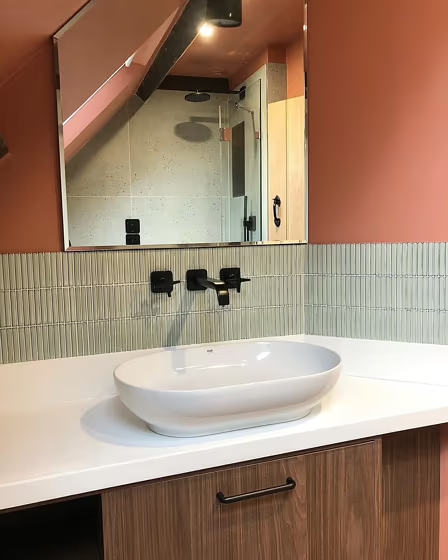
@room_design_build
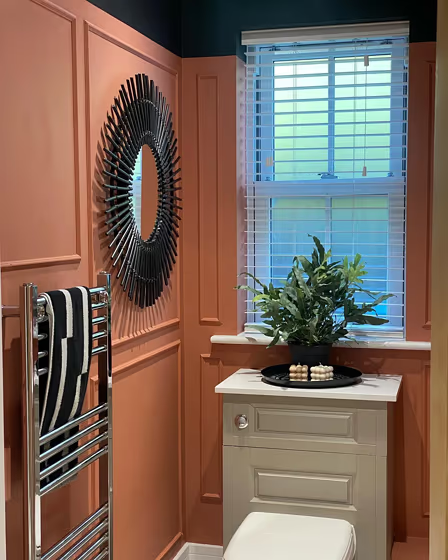
@hoxton_interiors
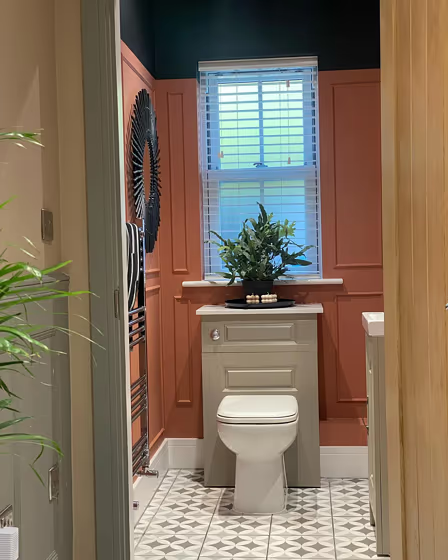
@hoxton_interiors
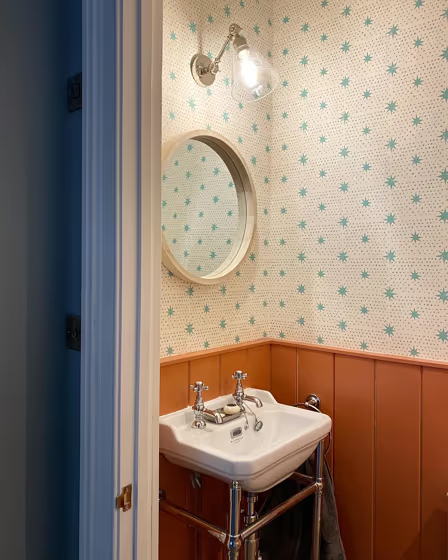
@gemabroch
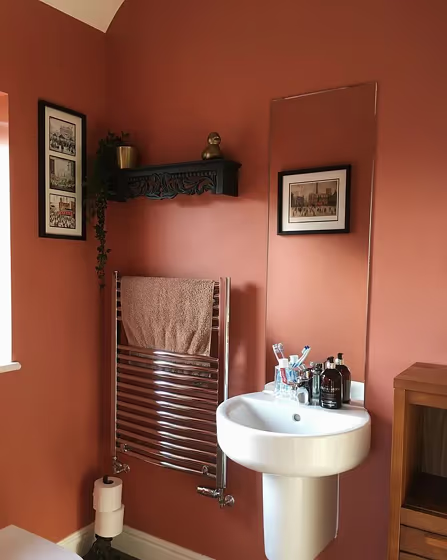
@the_johnson_residence
Farrow and Ball 64 on kitchen cabinets
Want a stylish kitchen? View real-life photo examples of this fascinating warm red hue is paired with backsplashes, countertops, and hardware.
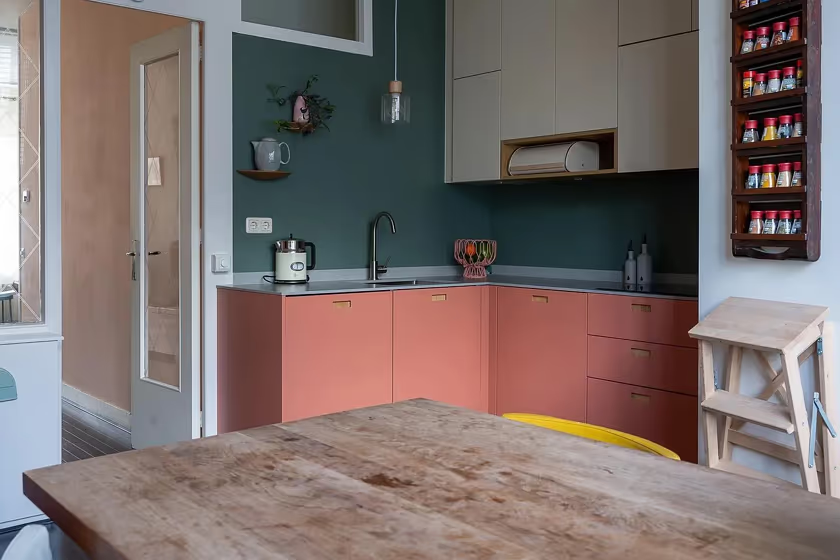
@baboon.amsterdam
Farrow and Ball Red Earth reviews (13 photos)
View the photos of real spaces painted with this red that were not included in specific categories. Close-ups, painted furniture, storages and dressers, hallways, stairs and ceilings.
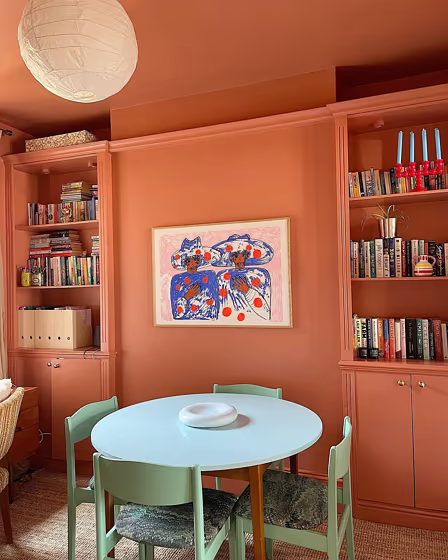
@chez.shez
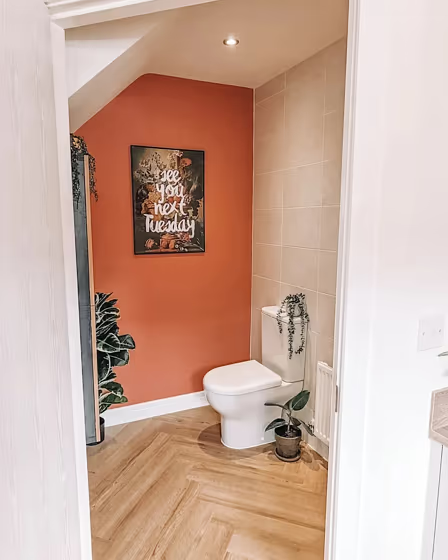
@my_littlewood_home
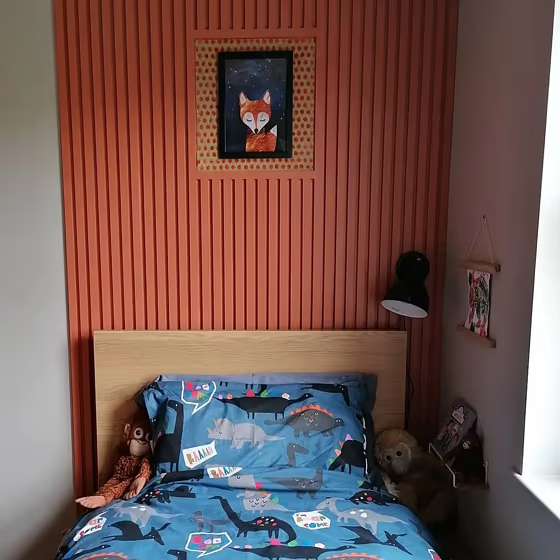
@diyanddreams
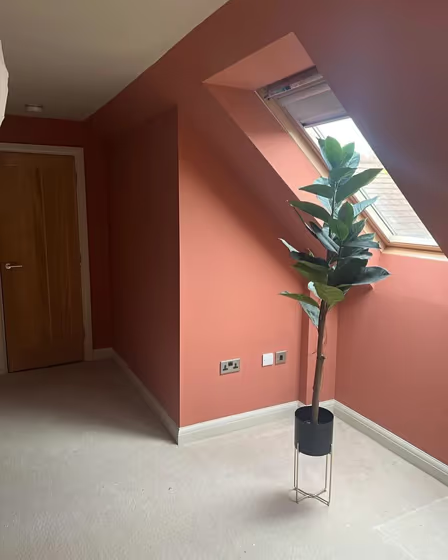
@french_and_son_ltd
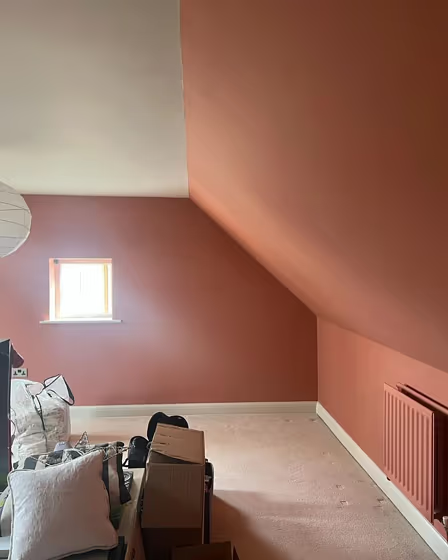
@french_and_son_ltd
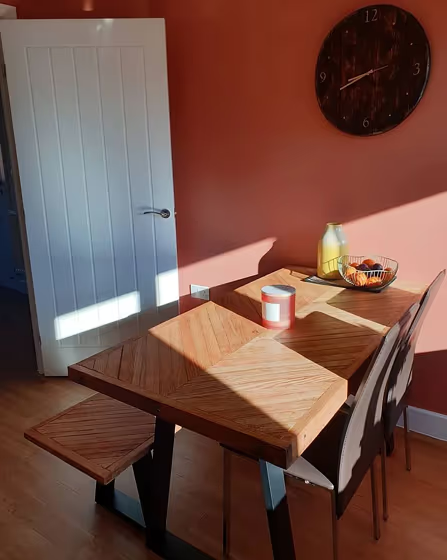
@theb.home
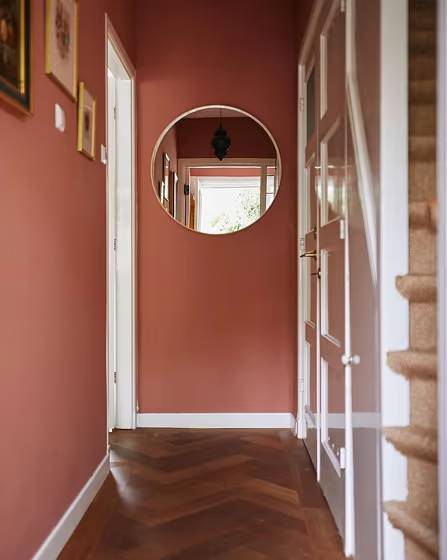
@studioelementsinteriordesign
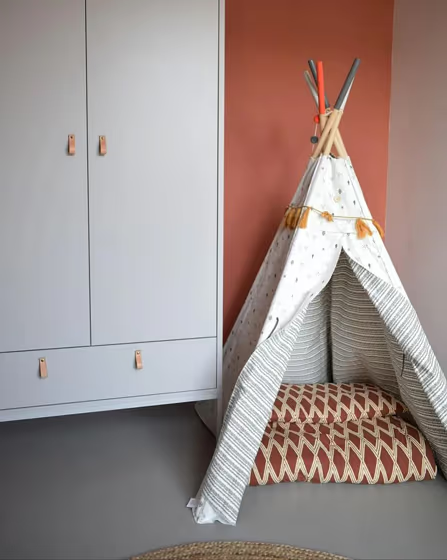
@studiochantalbune
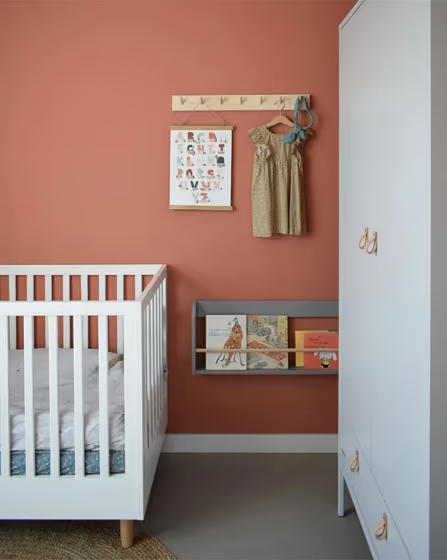
@studiochantalbune
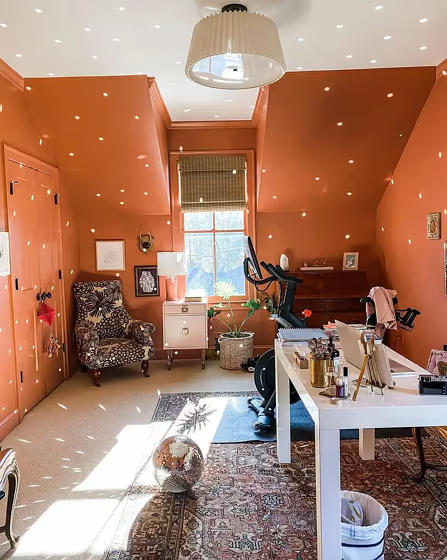
@lesleywgraham
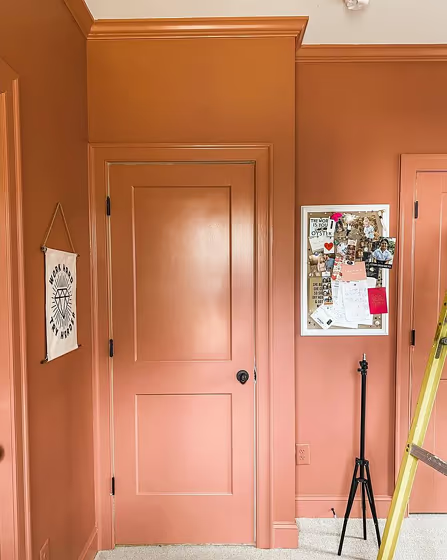
@lesleywgraham
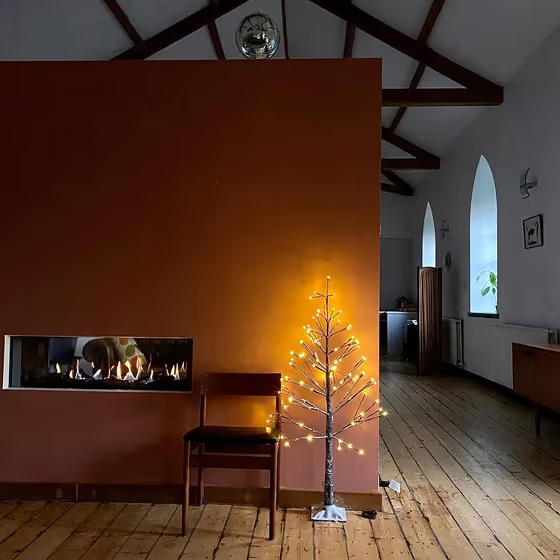
@bous_home
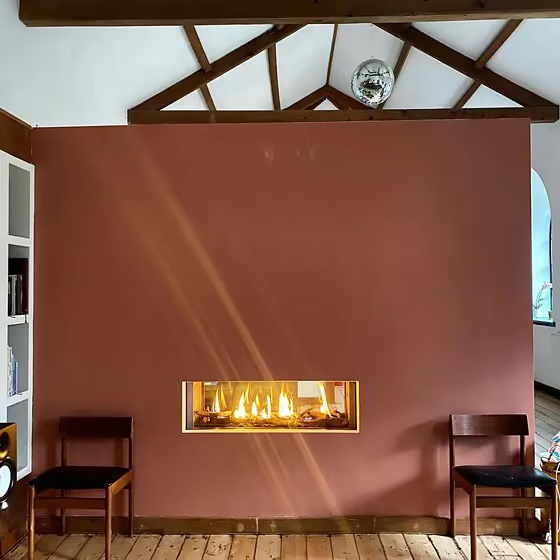
@bous_home
Try before you buy

100% accurate
reusable paint samples
Peel, stick,
and repeat
Twice painted
with real paint

Next day
delivery
What are Farrow and Ball Red Earth undertones?
Red Earth is a midtone, muted red with a clear warm, earthy character rather than a bright or sharp one. In the supplied digital sample, it reads as red with a slight yellow bias, which gives it a terracotta-leaning warmth. Farrow & Ball describes it as a blend of red and yellow pigments, and that description aligns with the visible warm cast within its red main color family. Warm artificial light may bring out more of its orange-yellow warmth, while cool daylight can make the red look a little more restrained.
Manufacturer information used in this description: official color page.
HEX value:
RGB code:
197, 123, 103
Is Farrow and Ball Red Earth cool or warm?
warm
cool
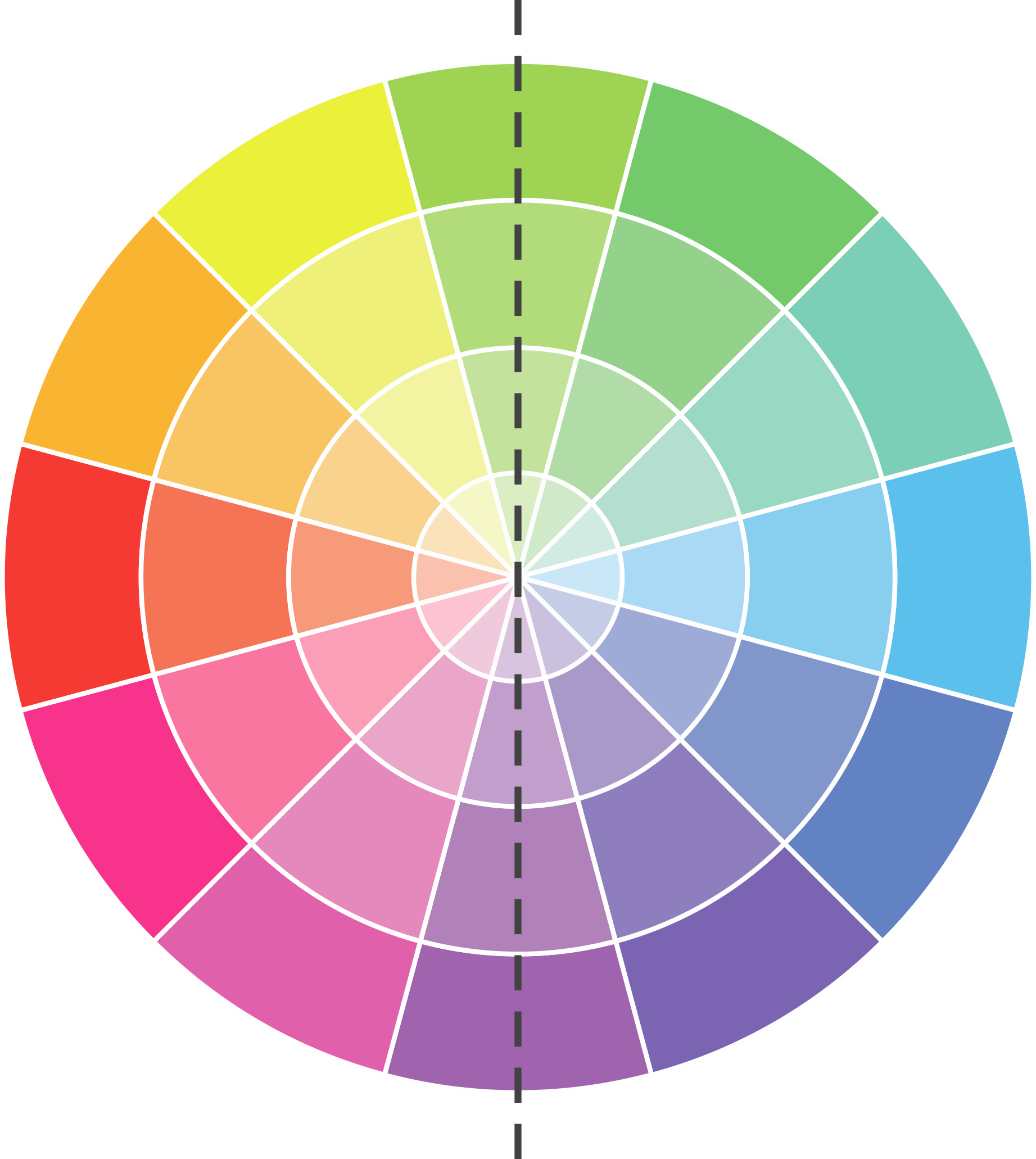
At 13° on the HSL hue wheel, this Red sits firmly on the warm side.
64 Red Earth HSL code: 13, 45%, 59%
Hue - degree on a color wheel from 0 to 360. 0 is red, 120 is green, and 240 is blue.
Saturation is expressed as a percentage. At 0%, it appears as a shade of grey, and at 100%, it is in full color.
Lightness is also a percentage value. 0% is black, and 100% is white.
How light temperature affects Red Earth
Natural Lighting. During the day, natural light shifts from about 2000 K at sunrise/sunset to 5500–6500 K at noon.
In addition, natural-light temperature depends on its direction:
| Direction of sunlight | Visible temp. | Hue | Duration |
|---|---|---|---|
| North | Cool | Bluish | All day |
| East | Warm | Yellow | Before noon |
| West | Warm | Orange-red | After noon |
| South | Warm | Orange-yellow | All day |
Artificial Lighting. When choosing bulbs, pay attention to their color temperature in Kelvins.
Use the slider to see how this Red shade looks under different lighting:
Coordinating colors.
Colors that go with Farrow and Ball Red Earth:
Monochromatic color scheme
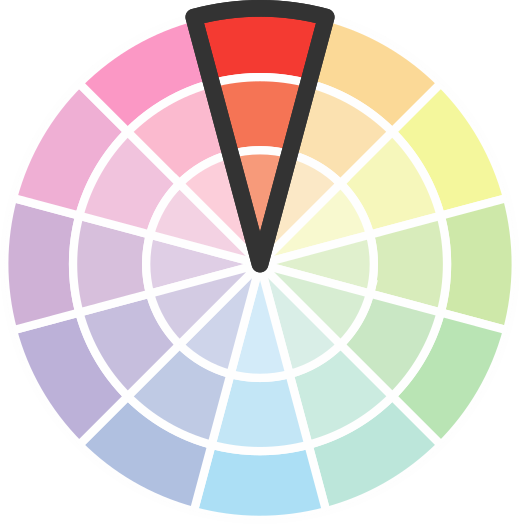
This scheme consists of various shades, tints, and tones of a single color. While it offers a perfect combination of hues, without accent décor it may become monotonous.
Lighter shades
64
Red Earth

Darker shades

Complementary color scheme
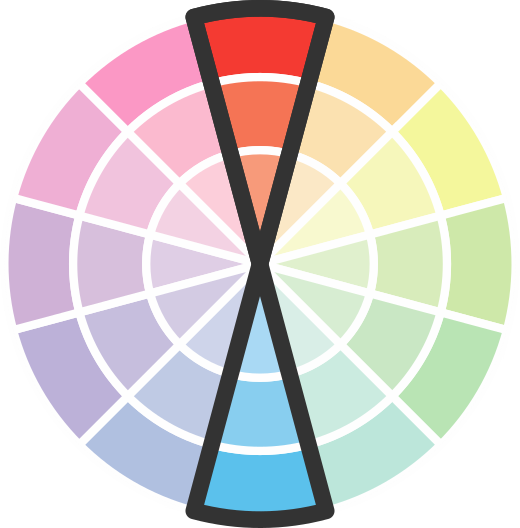
This color scheme is a combination of two shades that are opposite each other on the color wheel. The high contrast between these colors creates a vibrant and dynamic visual effect. For the color Red Earth with a red hue, complementary colors are those with a green hue close to 193, such as Farrow and Ball Black Blue and Hazy.






LRV of Red Earth
Red Earth has an LRV of 27.59% and refers to Medium colors that reflect a lot of light. Why LRV is important?
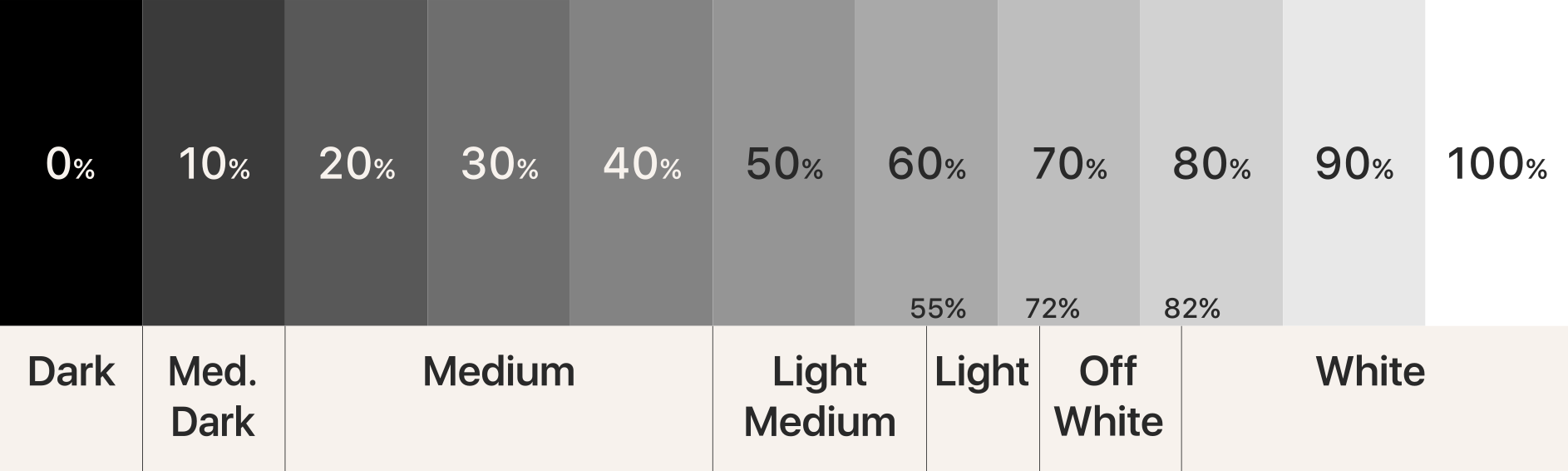
Light Reflectance Value measures the amount of visible and usable light that reflects from a painted surface.
Simply put, the higher the LRV of a paint color, the brighter the room you will get.
The scale goes from 0% (absolute black, absorbing all light) to 100% (pure white, reflecting all light).
Act like a pro: When choosing paint with an LRV of 27.59%, pay attention to your bulbs' brightness. Light brightness is measured in lumens. The lower the paint's LRV, the higher lumen level you need. Every square foot of room needs at least 40 lumens. That means for a 200 ft2 living room you'll need about 8000 lumens of light – e.g., eight 1000 lm bulbs.
Color codes
We have collected almost every possible color code you could ever need.
Not sure what the difference between HEX and RGB is? We break down color models in plain language. Understanding color models
| Format | Code |
|---|---|
| HEX | #c57b67 |
| RGB Decimal | 197, 123, 103 |
| RGB Percent | 77.25%, 48.24%, 40.39% |
| HSV | Hue: 13° Saturation: 47.72% Value: 77.25% |
| HSL | hsl(13, 44.76, 58.82) |
| CMYK | Cyan: 0.0 Magenta: 37.56 Yellow: 47.72 Key: 22.75 |
| YIQ | Y: 142.846 I: 50.524 Q: 9.43 |
| XYZ | X: 32.559 Y: 27.018 Z: 16.329 |
| CIE Lab | L:58.991 a:26.61 b:23.038 |
| CIE Luv | L:58.991 u:53.438 v:23.897 |
| Decimal | 12942183 |
| Hunter Lab | 51.979, 20.845, 17.76 |

Color equivalents
Blood Orange
Dulux


20217
Muted Coral
Jotun

30YR 26/330
Sicilian Summer 2
Dulux

30YR 29/421
Volcanic Splash 5
Dulux
RAL 3012
Beige red
RAL Classic

49
Porphyry Pink
Farrow and Ball
60YR 31/368
Frosted Papaya
Dulux

G14
Folly Pink
Farrow and Ball
9811
Bisque
Farrow and Ball
2587
Beat
Jotun
RAL 3022
Salmon pink
RAL Classic

50YR 23/365
Auburn Flame
Dulux
9911
Fruit Fool
Farrow and Ball
50YR 32/460
Flame Frenzy 5
Dulux
Copper Glow
Dulux
50YR 26/461
Jungle Ginger 2
Dulux
232
Loggia
Farrow and Ball
10YR 27/323
Gipsy Bloom 2
Dulux